
 ไทย
ไทย English
 中國人
中國人
Spain is gearing up to face Argentina on Sunday in the 2026 World Cup final. The European giants may be the current frontrunners to lift the trophy at MetLife Stadium, but the South American outfit won't surrender without a fight. They will be relentless in their quest for a second straight World Cup title, a milestone no country has accomplished in more than 60 years (Brazil, 1962).
The greatest challenge standing in Spain's path, however, is undeniably the one and only Lionel Messi. The 39-year-old football icon, despite supposedly being in the "twilight" of his storied career, is delivering his finest World Cup performance at his sixth attempt. He has netted eight goals and provided four assists, almost single-handedly carrying Argentina through four nerve-wracking knockout rounds. His late-game heroics have all but secured the Golden Ball award, regardless of whether he also claims the Golden Boot.
Spain head coach Luis de la Fuente is genuinely thrilled about the fierce competition and the opportunity for Spain to contend for its first World Cup title since 2010. That said, he is keeping Messi firmly at the center of his tactical preparations.
"Just reaching a final is a privilege. I'd sign up to make a World Cup final every year and lose," de la Fuente told reporters on Friday. "We want to fight to win it. We're going to savor this moment. They're a tremendous rival with an incredible track record."
What Is Spain's Plan for Messi?
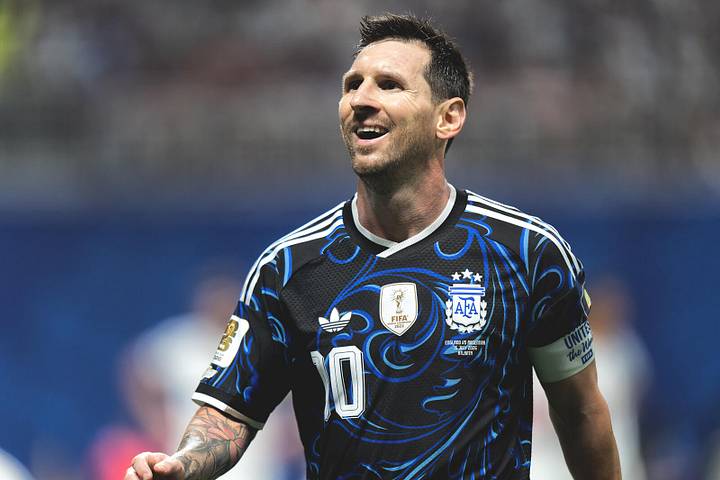
"We won't man-mark [Messi], but we'll be keeping a close eye on him," De la Fuente said. "[Argentina manager Lionel] Scaloni and I are two fierce competitors who hold each other in high regard. It's a privilege to go up against him."
With the Finalissima between the two nations — originally scheduled for March — having been called off, De la Fuente lost a valuable chance to test his tactical approach against Messi. Even so, the Spanish coach does have some prior history facing the football superstar, dating back to when Messi was just 16 years old.
It was May 2004. Messi was progressing through Barcelona's youth academy, and De la Fuente was in charge of the U-19 squad at Sevilla. The two sides clashed in a cup match at the Miniestadi. Ironically, the decision to remove Messi's man-marker during that game is precisely what cost De la Fuente in the end.
"Everyone had been talking very highly about a boy named Messi," De la Fuente recalled. "So, we assigned a man-marker to him. At the 70th minute, it was still 0–0. When the player marking him received a yellow card, I pulled him off. And within 15 minutes, Messi had scored four goals."
Just sayin'...
Turn 🔙 the 🕰 pic.twitter.com/OqVg3C2vIc
De la Fuente doesn't expect his team to suffer a similar outcome on Sunday, even without deploying a man-marker on Messi.
"Does that mean we are going to man-mark him? No," De la Fuente added. "Does it mean we will pay close attention to him? Yes, but in exactly the same way that they are going to have to pay attention to our players."
Enable functional cookies to see this feature.
Spain boasts dangerous attacking options in Lamine Yamal and Mikel Oyarzabal, among others that Argentina will need to account for. Furthermore, the reigning European champion will carry confidence in its defensive solidity, having conceded just one goal throughout the entire tournament.
Nevertheless, Spain will need to be especially alert during the final 15 minutes of the match. That is when Argentina, and Messi in particular, truly come alive, as though they thrive on leaving things to the last possible moment. It is a nerve-shredding approach, yet it has proven remarkably effective for the squad so far. Of their 19 total goals this summer, Argentina has scored 12 of them from the 75th minute onward. Of those 12, Messi scored four and set up three more.