
 ไทย
ไทย English
 中國人
中國人
The Premier League is set to introduce a series of new regulations for the 2026–27 season, all of which were first tested at this summer's World Cup.
Most of the updated rules are designed to curb timewasting and frequent interruptions to the flow of matches—an issue that has become increasingly prevalent in English football in recent years.
Efforts to crack down on these tactics should result in the ball being in play for longer during each game, but without extending the amount of added time at the end of each half, according to BBC Sport.
With that said, here is a full breakdown of the new rules fans need to know ahead of the 2026–27 season—and rest assured, there are no hydration breaks!
New Rules for 2026–27 Premier League Campaign
Substitutions

Starting with substitutions. One of the most common timewasting tactics used by coaches and players alike is set to be eliminated by the confirmed rule changes.
From next season, substituted players will be required to exit the pitch within 10 seconds at the nearest available point.
Should they fail to comply, the incoming substitute will be made to wait one minute before stepping onto the field, leaving their side temporarily reduced to 10 players. After that minute has elapsed, the substitute must then wait for the next stoppage in play before entering.
The time restriction is intended to stop players from slowly trudging off the pitch to kill time, as well as preventing managers from making late substitutions purely to disrupt the game's momentum.
The only exceptions to this new rule are if a player is dealing with an injury, or if there are safety concerns regarding them exiting the field at its nearest point.
Throw-ins

A five-second countdown will be introduced for throw-ins next season, with the clock starting once the referee determines that a player is deliberately stalling.
The referee will blow their whistle and instruct the player to speed up, signaling the start of the countdown, before physically counting down from five to zero using one hand.
If the player has not taken the throw-in within five seconds of the countdown beginning, the referee will blow their whistle and award possession to the opposing team.
It is worth noting, however, that this rule will not apply to players executing a long throw—unless they are deemed to be deliberately wasting time—as this is considered a legitimate set-piece strategy.
Goal Kicks
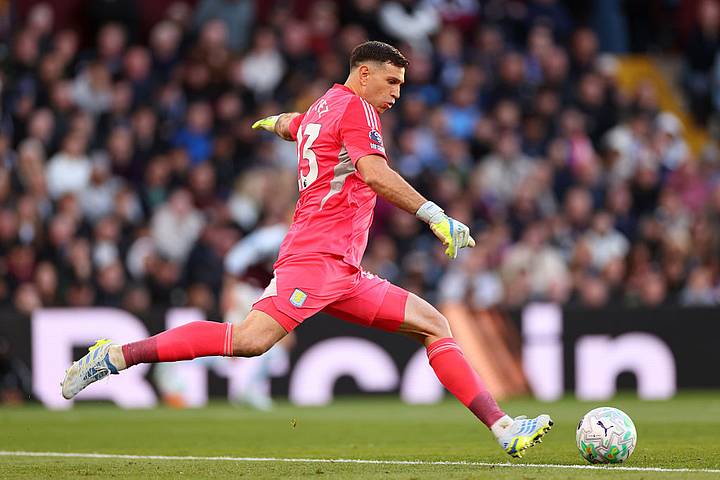
Goalkeepers are frequently guilty of delaying restarts at goal kicks, particularly as games approach their final stages.
While players could already be cautioned for taking too long over a goal kick, referees will now also have the option to award the opposition a corner kick in such situations.
Additionally, there has been a clarification regarding potential handball offenses at goal kicks.
On several previous occasions, a goalkeeper has played the ball to a center-back inside the six-yard box, only for the defender to handle it and attempt to retake the goal kick. In some cases this has resulted in a penalty, while in others it has gone unpunished.
Going forward, the goal kick will be considered taken the moment the goalkeeper or defender strikes the ball. From that point on, a defender handling the ball will concede a penalty, while a goalkeeper handling it will give away an indirect free kick.
Injuries and Timeouts

Last season, injured players requiring treatment from their club's medical staff were required to leave the field for 30 seconds. That period has now been doubled to 60 seconds.
In addition, injured players must now sit out for a full minute if they prevent the referee from restarting play, even if medical attention is not needed. This does not apply, however, if the ball goes out of play naturally—such as for a goal kick or corner.
The new rule does not apply if the player who committed the foul receives a booking or is sent off. In that case, the injured player may immediately return to the field.
Goalkeeper timeouts have become an increasingly frustrating occurrence in recent seasons, with stoppers going down injured to slow the game and allow managers to relay tactical instructions to their players.
This will no longer be permitted. If a goalkeeper requests medical assistance, the manager must designate an outfield player to leave the pitch for a minute within 10 seconds. If that window is missed, the team captain will be required to step off instead.
VAR Changes

The Video Assistant Referee (VAR) will take on a number of additional responsibilities next season.
First, when a player is dismissed for two bookable offenses, the second yellow card will now be subject to VAR review. However, the red card will only be rescinded if the original foul decision was a clear and obvious error, rather than on the basis of any subjective debate about whether a caution was warranted.
Second, the VAR will now be able to check whether a foul was committed before a set-piece was taken, but only in cases where it directly results in a goal, penalty, or disciplinary action.
For instance, if an attacking side scores from a corner but one of their players fouled an opponent before the ball was delivered, the VAR will recommend that the goal be disallowed and the corner retaken.
Finally, the VAR will also be empowered to intervene in cases of mistaken identity. For example, if the wrong team was penalized for a handball, that decision can now be corrected.