
Amorim Explodes at Man Utd's Young Stars: "They Think They're Entitled!"
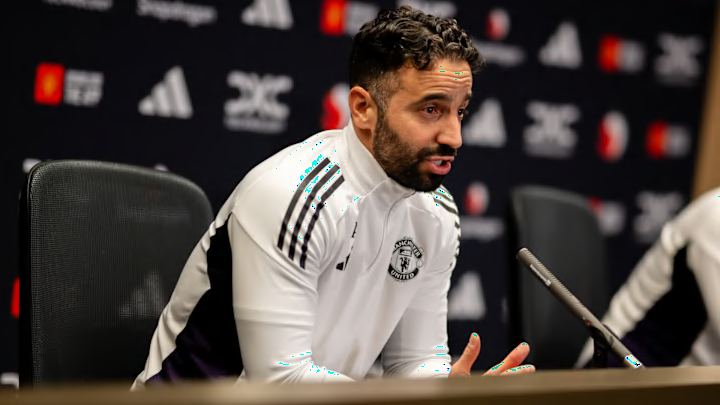
Manchester United boss Ruben Amorim delivered another critique of his young players' mentality at Old Trafford on Friday. This occasion saw him label certain academy prospects as having a sense of "entitlement" while revealing that none had approached his office to address his earlier comments.
Amorim's media sessions frequently contain pointed moments. Recent weeks have seen ongoing debate about Kobbie Mainoo's limited minutes, while he consistently deflects questions regarding his unwavering commitment to the 3-4-2-1 system, despite forcing players into unfamiliar positions.
Bruno Fernandes' explosive transfer statements created additional waves this week, though the skipper's bond with the club remains solid after Amorim revealed the 31-year-old had consulted officials before giving the interview—his comments not troubling the manager as he simply "expressed his feelings."
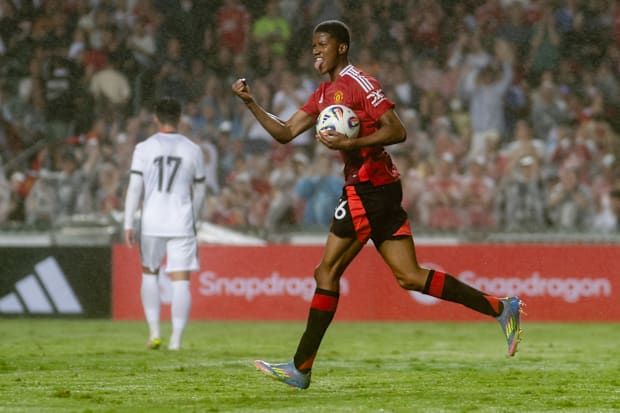
Focus returned to United's youth players following Amorim's previous criticisms. Chido Obi and Harry Amass specifically seemed displeased with their manager's feedback, sharing social media posts highlighting their achievements after suggestions they weren't reaching Manchester United standards.
Speaking to reporters before Sunday's encounter with high-flying Aston Villa, Amorim clarified his remarks weren't meant negatively, but the players' responses exemplified the cultural issues within the 13-time Premier League champions' academy system.
Man Utd's Problems Run Deep
"Occasionally firm language isn't negative language, sometimes challenging periods aren't harmful for young players," Amorim explained.
"We shouldn't constantly provide praise in every circumstance, as we're not being helpful. That's precisely why when you discuss numerous modern players who clash with their clubs—everything stems from their sense of entitlement.
"I constantly feel we must combat this mentality. Sometimes I'm first to acknowledge I'm disappointing this club on the field, I sense we're not performing as we should, but off the field, I assure you I'm not letting this club down.
"I believe it's embedded in our club culture, and when discussing players, we sometimes overlook what representing Manchester United truly means. As an organization, we occasionally forget our identity, and that's my perception. I recognize everything relates to the environment, the current moment for players—the youngsters feel entitled.
"They feel comfortable responding to their manager through social media posts, yet my door remains open and nobody visits to speak with me. That's how we could resolve issues. I believe we must transform as a club first, then everything else will follow."
Amorim: I'm Not Wrong to Speak Publicly
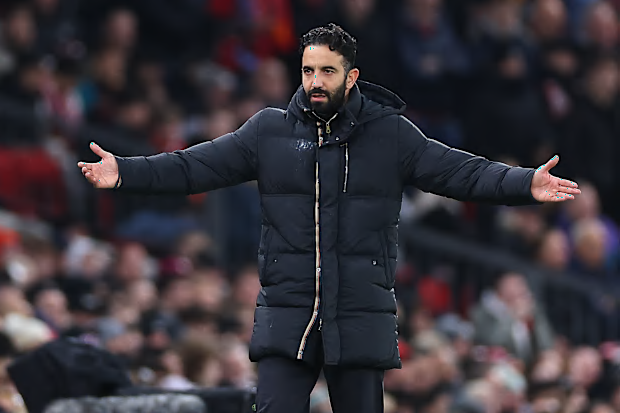
"My words weren't inappropriate. I simply discussed the privilege of representing Manchester United," he added. "Sometimes when you play for Manchester United and witness different situations, you realize football varies greatly and you're truly fortunate to be at Manchester United.
"That was my message, but again, let's progress and I believe these matters will improve with time."
While Amorim handles off-field challenges, he's simultaneously working to extract consistent displays from his current squad. United sit sixth in the Premier League—a significant improvement from last term—but continue disappointing as they follow encouraging spells with serious concentration lapses.
Mental switches were evident during Monday's wild 4–4 stalemate with Bournemouth, where United relinquished a 2–1 advantage to fall behind 3–2, surged ahead 4–3 rapidly, before allowing a late equalizer from Eli Junior Kroupi