
 ไทย
ไทย English
 中國人
中國人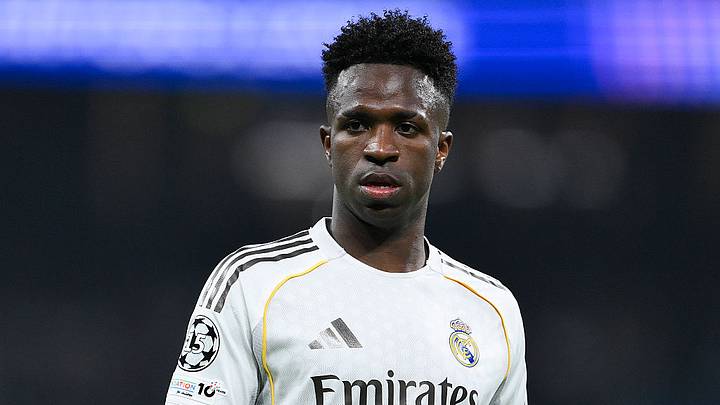
Arsenal landing Vinícius Júnior this summer would represent the ultimate transfer coup, taking advantage of one of football's finest talents entering the final stretch of his contract—to the extent that holding onto him could pose a genuine risk for Real Madrid, regardless of José Mourinho's preferences.
However, the fact that Vinícius Júnior finds himself in this position does not necessarily mean he will come at a bargain price.
With just 11 months remaining on his deal, the transfermarkt database estimates the Brazilian's value at $159.5 million (€140 million, £120 million).
That figure alone would set a significant new Arsenal record, surpassing the current benchmark of $140 million (£105 million) paid to bring Declan Rice to Emirates Stadium back in 2023.
Real Madrid agreeing to that sum would come as a shock, given it barely exceeds what was already spent this summer on Elliot Anderson and Morgan Rogers—players whose careers pale in comparison to what Vinícius Jr. has accomplished.
Any fee surpassing $166 million (£125 million) would shatter the Premier League record established last summer when Alexander Isak made the move from Newcastle United to Liverpool.
Due to standard accounting practices, a transfer fee—outside of release clause situations—is not paid as a lump sum upfront. The cost of a $166 million signing is distributed across the length of a contract, up to five years—Chelsea had briefly been issuing seven and eight-year deals before football authorities capped amortization in the summer of 2023.
That transfer fee then breaks down to roughly $33.2 million per season, further inflated by the player's wages. In Vinícius Jr.'s case, that figure could be comparable given a weekly salary potentially exceeding $600,000. Within the Premier League, only Erling Haaland commands higher pay.
Player Sales Would Help With Vinicius Jr. Affordability
Alongside spreading a transfer fee across annual installments, a club can record the full amount of a player sale immediately. For Arsenal, the combined $91 million outlay on Piero Hincapié and Christos Tzolis can be logged as an $18 million expense in the 2026–27 books. Meanwhile, the sales of Karl Hein, Jakub Kiwior, and Leandro Trossard bring in approximately $43 million.
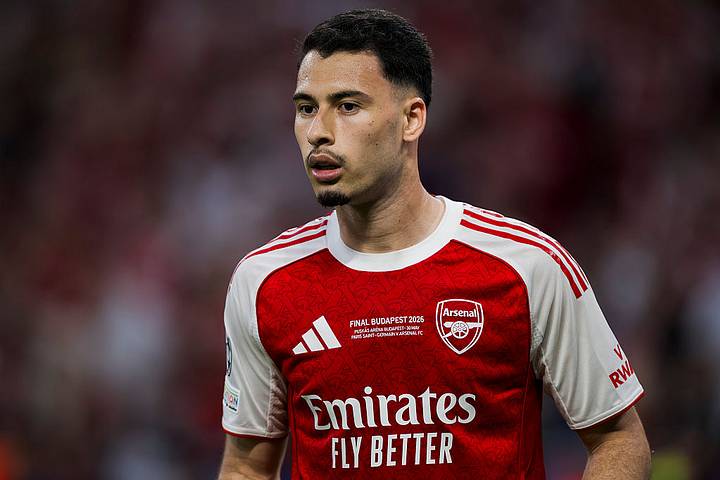
Should Arsenal choose to sell Gabriel Martinelli—a move that would be necessary to avoid an overcrowded left wing—their purchasing power would grow considerably.
The second-year amortization costs from last summer's $330 million expenditure must also be factored in, though Arsenal's annual revenue has surged dramatically in recent years and could potentially surpass $1 billion once the 2025–26 accounts are released.
Ben White, Gabriel Jesus, Fábio Vieira, Reiss Nelson, and even Ethan Nwaneri are among those who could be offloaded this summer. That is easier said than done, naturally, with little concrete transfer interest emerging for any of them at this stage.
Vinicius Jr. Could Destabilize Arsenal Squad

Given the reported sums he has already declined from Madrid in search of a more lucrative deal—and with Saudi Pro League interest expected to resurface—Vinícius Jr. could not arrive at Arsenal without instantly becoming the club's highest earner by a considerable margin.
Bukayo Saka currently leads Arsenal's wage structure at $400,000 per week, still roughly $200,000 short of what Vinícius Jr. would realistically demand.
Arsenal have seen firsthand how inflated contracts can unravel a squad, most notably with Mesut Özil and Pierre-Emerick Aubameyang, and the club has invested significant effort in recent years to eliminate such wage disparities. The next major contract negotiation will involve Rice, who could justifiably push for higher terms if Vinícius Jr. resets the salary ceiling.
The Gunners have built something genuinely promising, and pursuing a superstar of extraordinary individual talent might ultimately prove more disruptive than beneficial.