
 ไทย
ไทย English
 中國人
中國人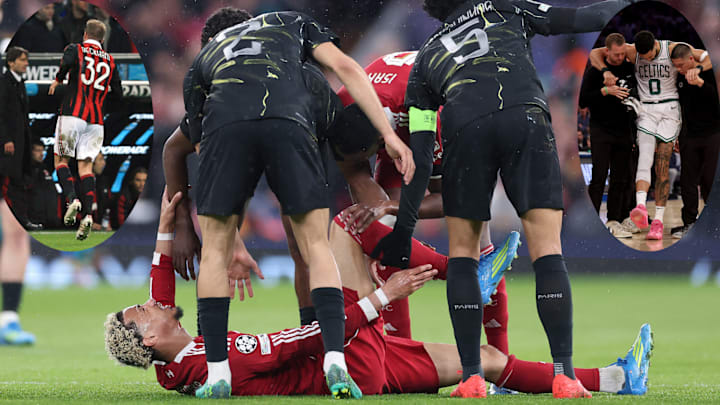
Liverpool's worst fears have been realized: Hugo Ekitiké has suffered a ruptured Achilles tendon in his right foot, ruling him out of the 2026 World Cup and potentially sidelining him for the rest of the year.
Ekitiké went down on the pitch during Tuesday night's Champions League loss to Paris Saint-Germain with no opposing players in his vicinity. He grabbed his heel, winced in agony, and was attended to by worried players from both sides before being carried off on a stretcher.
On Thursday, Liverpool confirmed the severity of the injury. A club statement noted that "scans on the issue have subsequently confirmed a rupture of the Achilles tendon."
Ekitiké will be absent from this summer's World Cup with France, which would have marked his first major international tournament since making his debut with Les Bleus last year.
Ekitiké's Debut Liverpool Season Ends Prematurely
It's hard, maybe even unfair… but I'm grateful this is happening to me here, among you. I'm not alone. Your strength and your love will be my driving force. See you again soon, Anfield ❤️ pic.twitter.com/uV3c6PREAv
The 23-year-old, acquired from Eintracht Frankfurt last summer in a deal valued at up to $107 million (£79 million), stands as Liverpool's only new signing that can genuinely be called a success.
While Alexander Isak struggled with fitness before picking up an injury, and Florian Wirtz found it difficult to transition from the Bundesliga to the Premier League, Ekitiké encountered none of those problems. Across 45 appearances, he netted 17 goals and added six assists—15 goal contributions in the Premier League alone. Dominik Szoboszlai and Mohamed Salah are Liverpool's next leading scorers with 12 and 11 respectively.
"It's hard, maybe even unfair," he wrote on social media following the announcement. "But I'm grateful this is happening to me here, among you [fans]. I'm not alone. Your strength and your love will be my driving force."
The timing of Isak's return from a broken leg—the PSG fixture this week marked his first start in his comeback—has arrived at a critical moment. However, with Isak still restricted in his playing time, the club's record signing may find it difficult to step into Ekitiké's role immediately, or perhaps at all this season.
Ekitiké Facing Lengthy Layoff
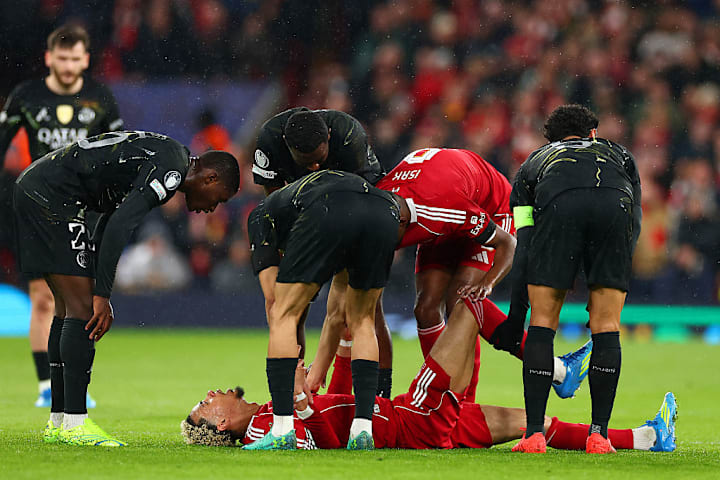
A ruptured Achilles ranks among soccer's most devastating injuries, and early projections suggest Ekitiké may not return to action until 2027. His rehabilitation timeline is estimated at anywhere between nine and 12 months.
Once he has recovered, the greater concern is what level he can perform at and whether this setback causes lasting damage to his career—whether through physical limitations, a loss of momentum, or the psychological burden it carries.
Achilles Injuries in Sport: Recovery Time, Career Afterwards
Liverpool supporters have witnessed this before. Former Reds left back Fábio Aurélio ruptured his Achilles during a Champions League match in April 2007. Initial optimism suggested the Brazilian could return for preseason that summer, but his comeback was pushed back to September. Even so, he didn't play consistently again until December, eight months after sustaining the injury.
Aurélio never truly recaptured his best form. He eventually departed Liverpool in 2012 following several more injury-hit seasons and was effectively finished by an ACL tear in his early 30s—though it should be noted he had endured injuries well before the Achilles rupture.
A more recent Premier League case is Callum Hudson-Odoi, whose Achilles gave way during his breakthrough campaign at Chelsea in 2018–19. He managed to return within five months and remained at Stamford Bridge until 2023, though he never fulfilled the promise he had shown before the injury.
Hudson-Odoi has since established himself in the Premier League with Nottingham Forest, though he is not a guaranteed starter, and his goal and assist numbers remain modest for a winger.
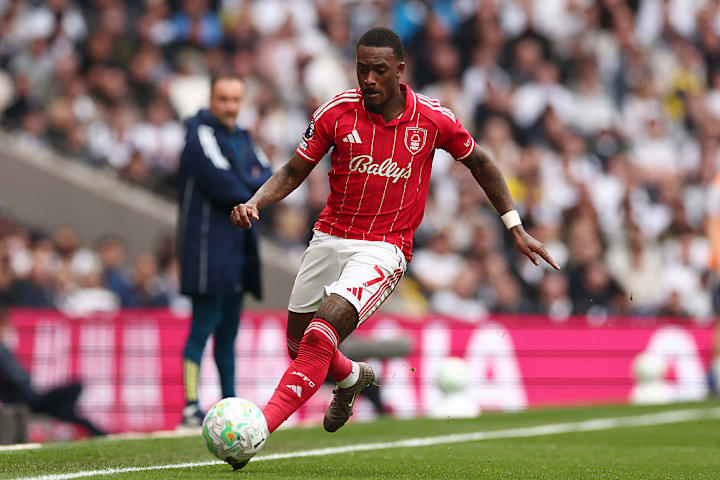
It is arguably harder for an explosive player who depends on sharp bursts of pace or rapid changes of direction to return to their previous level. Ekitiké may ultimately need to reinvent his playing style to remain as effective as possible in what could be a new reality.
Hudson-Odoi's former Chelsea teammate Ruben Loftus-Cheek suffered the same injury at the same time. His absence lasted considerably longer—nearly a year—and he struggled upon his return. "I came back from injury but didn't feel myself, didn't feel powerful, wasn't running past people and felt like I lost a lot of muscle and power," he recalled in 2021. He is now at AC Milan, though fewer than half of his Serie A appearances this season have been starts.
Slightly earlier, Arsenal defender Laurent Koscielny suffered an Achilles rupture that kept him out from May to December 2018, a recovery of roughly seven months.
David Beckham's hopes of featuring at a fourth World Cup with England were dashed by a torn Achilles in 2010, sustained while on loan at AC Milan from LA Galaxy just three months before the tournament. He attended the event only as a support staff member and made his playing return after a six-month recovery. The long-term impact is difficult to gauge, as Beckham was already 35 and competing at a lower intensity in Major League Soccer.
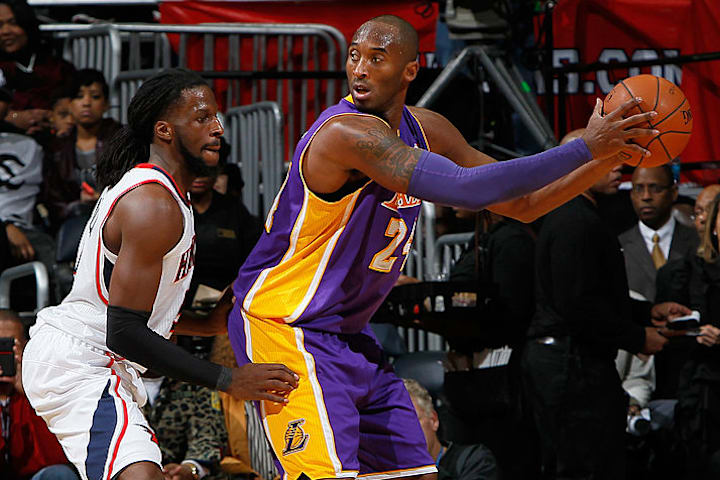
In the NBA, Kobe Bryant's torn Achilles in April 2013 may have signaled the beginning of his decline. His body never fully recovered, and subsequent injuries caused the LA Lakers star to miss nearly all of the 2013–14 season and a large portion of 2014–15. The 2015–16 NBA season proved to be his final one.
Kevin Durant's Achilles injury during the 2019 NBA Finals kept him out for the entirety of 2019–20 and half of 2020–21, a total absence and recovery period spanning 552 days. The Boston Celtics' Jayson Tatum made his comeback from a ruptured Achilles last month, following a 10-month spell on the sidelines.