
 ไทย
ไทย English
 中國人
中國人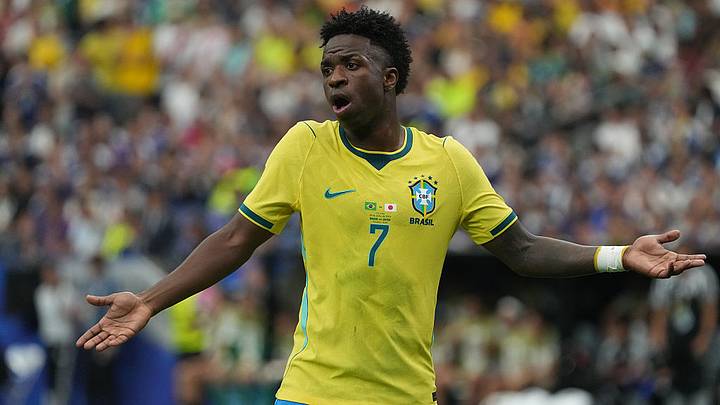
HOUSTON, Texas — Beyond the matchday atmosphere, the local food scene, and the cultural exchanges that typically define the World Cup, perhaps the most revealing aspect of this spectacular tournament every four years is how it can strip away the carefully constructed image that certain nations have built for themselves on the field.
Many fans who regularly watch the consistently elite Premier League, for instance, might struggle to reconcile an England squad that has spent well over half a century trying—and failing—to bring the trophy home. Germany boasts an impressive roster of talent yet has become rather ordinary in the twelve years since its last title, requiring multiple rebuilds of the national team since reunification. Much of the world continues to underestimate the quality emerging from Africa, a notion that can certainly be challenged this year with the confederation sending nine of its 10 qualified nations into the knockout rounds.
No country, however, has a wider gap between reputation and recent results quite like Brazil. The nation is a five-time World Cup champion and celebrated as the gold standard of what it means to play the beautiful game, blending attacking brilliance with defensive strength. Yet if any team is capable of falling short despite high expectations, it is the Seleção — whose standards remain unmatched and, frankly, unmet in the 24 years since they last claimed glory on this stage.
This year's Brazilian squad does not appear capable of fully reversing that trend, of magically replicating what they achieved in the United States back in 1994 and ending a similarly lengthy drought in the sweltering July heat. The team is aging and at times invisible in midfield. Its abundance of attacking talent feels fragmented for the most part. By the eye test alone, it does not resemble the conceptual Brazil that lives in everyone's imagination.
And yet, following Monday afternoon's stunning 2-1 victory in the Round of 32 over Japan deep in the heart of Texas, that may not matter in the slightest.

Suffering is Inevitable...

The atmosphere was electric in green and gold. Manager Carlo Ancelotti, projecting an air of serene composure (or that of a calculating mastermind, depending on your perspective) from his spot on the touchline, seemed incapable of making a wrong call. The Brazilians were equal parts fortunate and, for long enough stretches, genuinely impressive. Perhaps, just perhaps, even impressive enough to convince far more than the 68,777 in attendance that this seven-match unbeaten run has plenty more chapters left to write.
"I'm really proud. But what we did, it gives us confidence to move forward. Our team has a lot of quality," said Gabriel Martinelli, whose 95th-minute winner was the latest stoppage-time goal in the knockout stages of the World Cup since 1966. "This team is going to fight until the end. We're going to give it our very best. We're going to lay it all out in the field."
And so the Seleção did, against a Japanese side chasing its first-ever knockout round win in five attempts, performing well above expectations despite injuries that had sidelined at least three regular starters from Hajime Moriyasu's preferred lineup.
Still, Japan remained largely composed until the final moments, holding firm behind the relentless rhythm created by thousands of their supporters inside NRG Stadium — more than compensating for being outnumbered two to one.
After spending much of the opening half under pressure from Brazil's aggressive press — holding just a quarter of possession and repeatedly resorting to long balls — the Blue Samurai used the first hydration break wisely to regroup and send an early signal that they would not be pushed around.
Kaishu Sano capitalized on the extra space that opened up following the break, collecting possession after a poor pass from Danilo at the halfway line and driving virtually unchallenged through the rest of Brazil's midfield. Then, just past the 30-minute mark, he unleashed an unexpected strike past the right side of defender Gabriel to find the net just beyond the outstretched hand of goalkeeper Alisson. It was the Mainz midfielder's first international goal and could not have arrived at a more pivotal moment, sending the heavily favored opposition into a state of disarray.
Not only did it go completely against the flow of play, but it also defied the territorial dominance Brazil had established. The South Americans completed more passes in the opposition's half (224) in the first period alone than Japan managed across the entire match (166). That early strike was more than enough to send millions of supporters watching from abroad — and thousands inside the NFL venue — into a nervous frenzy by the time the halftime whistle sounded.
"Football has these moments," said Ancelotti with a smirk. "You have to go through suffering. It is normal. Suffering is part of modern football. As is relief. I have to remind myself of that sometimes."
...But Ancelotti Can Claw Brazil Out
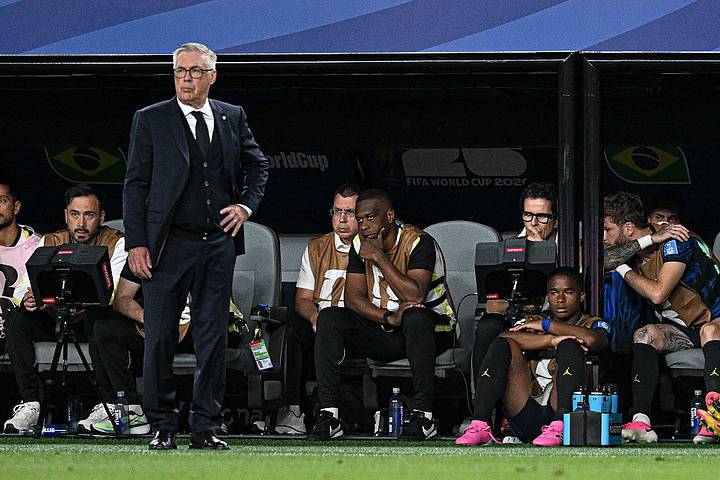
If anyone is equipped to draw on a wealth of experience to make the right calls under pressure, it is undoubtedly Ancelotti.
Beyond his distinguished playing career, he is widely regarded as one of the most decorated club managers in football history, with a trophy haul to back it up. He was a high-profile, mid-cycle appointment by the Brazilian federation ahead of this year's World Cup, yet skepticism remained due to questionable selection decisions (including Neymar) and uninspiring results that included a 4-1 defeat to Argentina in qualifying and a 1-0 loss to Bolivia. A draw with Tunisia in November and a group stage opener that ended identically against Morocco did little to silence the critics.
But now, after Monday's result, those doubts may need to be shelved entirely.
"In the second half, we overcame it," said Ancelotti. "We got our best foot forward so I believe that this is an evolution for sure. We struggled to find some space at first but we were able to solve this problem very well."
Much of that turnaround can be credited to the manager himself.

Ancelotti introduced Endrick at the break in place of Lucas Paquetá, and the young striker — who can barely take a step without a swarm of Brazilian journalists in tow — made a meaningful contribution with his pressing in the attacking third. While many had called for Casemiro to be dropped given his recent form, Ancelotti kept faith in him from the start and maintained that trust even after Sano bypassed him for Japan's opener.
That loyalty paid dividends as the outgoing Manchester United midfielder nearly leveled the score in the 54th minute with a diving header that fell just short of the line, before eventually putting the ball in the net five minutes later from a deep cross by Gabriel.
Perhaps the most astute decision of all was bringing on Martinelli. Although the dynamic winger typically operates out wide on the left for club side Arsenal, the presence of Vinícius Júnior makes a direct like-for-like replacement essentially impossible.
Instead, Martinelli was deployed in an unfamiliar role, functioning almost as a left No. 8 in the half-space. Whatever the reasoning, it proved inspired — he latched onto a perfectly weighted pass from Bruno Guimarães just inside former teammate Takehiro Tomiyasu and slotted home on the edge of extra time.
BRAZIL TAKES THE LEAD LATE IN STOPPAGE TIME 🇧🇷
Absolutely clutch from Gabriel Martinelli! pic.twitter.com/gdN7ns8tLA
"We know that we're going down the right path. We have to continue on this path," added the manager. "We have to continue to improve."
SI answers is our AI answer engine trained on human-created content.
Having overturned a deficit in the knockout stage for the first time since the 2002 World Cup — which they went on to win — Brazil still doesn't quite resemble the team it is capable of being at its very best.
For now, though, that is entirely beside the point. The mood is buoyant, the right decisions are being made, and they advance to the Round of 16 where further history could be written by a team that simply doesn't care about anything except keeping the football going.