
Can USMNT Rise to the Challenge When 2026 World Cup Arrives on Home Soil?
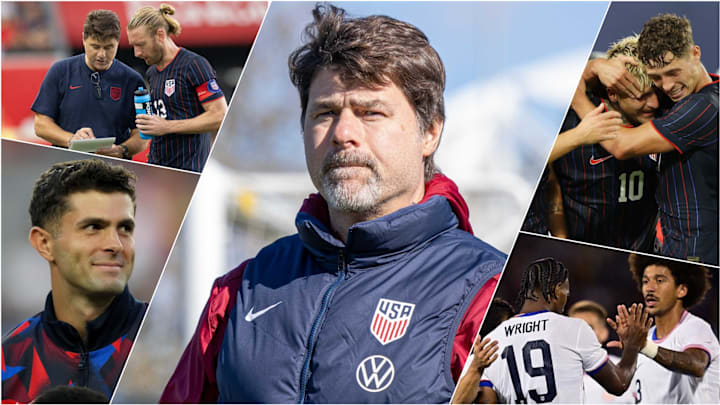
Mauricio Pochettino has accomplished numerous feats throughout his coaching journey, yet this particular challenge remains uncharted territory.
The Argentine tactician and his coaching staff face the monumental task of preparing the U.S. men's national soccer team for the World Cup. While this responsibility is substantial on its own, the stakes are amplified dramatically due to the heightened expectations surrounding host nations in the 2026 competition.
This tournament represents the pivotal moment meant to elevate soccer to mainstream prominence in America, the event that supporters and industry leaders hope will capture casual viewers and persuade them to switch from baseball or American football to soccer—at least occasionally. While numerous strategies exist for enhancing soccer's appeal nationwide, there's universal agreement that a strong showing from the U.S. men's national team this summer would be instrumental.
"We understand the pressure they're experiencing heading into 2026 because performing well in front of your home crowd is crucial," Cobi Jones, a former U.S. international who competed in three World Cups, including the 1994 home tournament, shared with Sports Illustrated. "You recognize the significance. A successful World Cup performance enables tremendous growth for the sport throughout your nation."
Therefore, is the United States prepared for the World Cup?
Final Training Camp to Complete Preparations
Final Training Camp to Complete Preparations
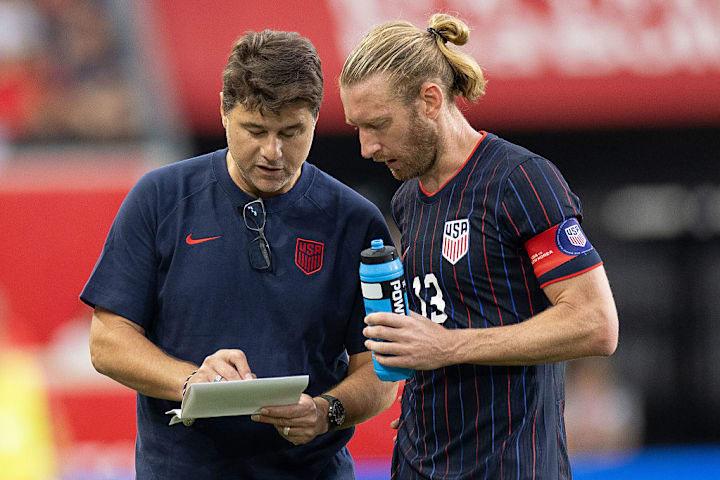
The squad will assemble one final time before Pochettino and his coaching team determine the ultimate roster, participating in two exhibition matches during March. Following this, the selected group will engage in another pair of preparation games before the June 12 opener against Paraguay in Southern California.
Although the U.S. failed to capture either regional championship they pursued in 2025, they concluded the year with strong momentum and encouraging results from autumn exhibition matches. The Stars and Stripes remained unbeaten in their final five contests and secured victories in their last three, highlighted by a commanding 5-1 victory over Uruguay, the same opponent that eliminated the U.S. from Copa América during summer 2024.
With circumstances appearing favorable, Pochettino expressed frustration about lacking additional direct contact with the squad throughout the winter months.
"Given how we concluded 2025, you desire to compete again immediately, to capitalize on the momentum, confidence, and energy within the group and team," he informed reporters recently. "To be completely candid, it's challenging, extremely challenging to spend extensive time analyzing matches, evaluating players, conducting meetings, handling various responsibilities, but not actively coaching. That represents the most difficult aspect of our current situation because coaching is our passion."
His regional counterparts, Mexico and Canada, didn't experience similar delays. El Tri manager Javier Aguirre and Canada's Jesse Marsch both arranged January exhibition matches to reconnect with their players for the World Cup year's beginning. Although these matches occurred outside FIFA windows, meaning clubs weren't obligated to release players and rosters primarily featured domestically-based talent, both managers were eager to evaluate potential squad members.
Establishing Consistency as World Cup Approaches
Establishing Consistency as World Cup Approaches
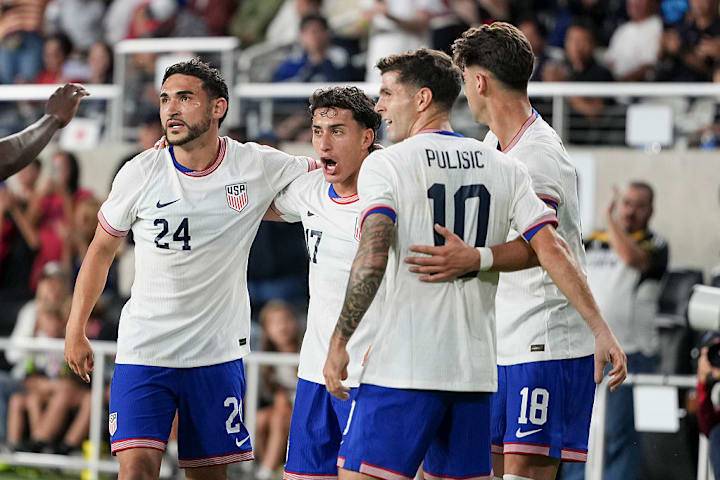
The U.S. chose against organizing a January training camp or scheduling matches, partly because Pochettino appears to have largely determined the group he'll select for summer competition. While no manager would completely exclude a player with months remaining, he's unlikely to introduce new personnel for March's encounters with Belgium and Portugal.
Rather, the U.S. aims to replicate the intensity they'll experience when competition begins and global attention focuses on them in June. Achieving this requires immediate seriousness and focus.
"The concept is that our World Cup begins in March when we reunite. It's time to demonstrate, as we've shown in recent camps, our identity, our playing style, and how we intend to perform at the World Cup," Pochettino explained.
A tactical adjustment to a 3-4-2-1 formation helped propel the U.S. to victories over Australia and Paraguay, along with that triumph against Uruguay. December's draw created a group featuring those two nations plus a European playoff qualifier. This should provide the U.S. with considerable confidence.
However, despite the U.S. appearing well-positioned for the World Cup, replicating the precise conditions of soccer's most demanding tournament remains impossible.
"We understand the minimum requirements, but achieving results will demand much more," U.S. center-back Tim Ream commented following the draw. "Those were exhibitions, though hardly casual, and now you introduce World Cup pressure, intensified aggression, and experience—every match becomes a final. Everything carries significance now. The intensity will increase exponentially."
Circumstances Have Evolved Since 1994 World Cup
Circumstances Have Evolved Since 1994 World Cup
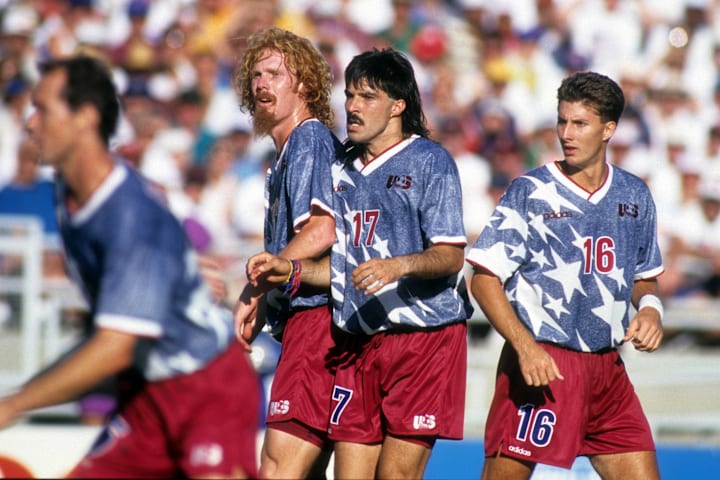
The U.S. finds itself in vastly different circumstances compared to their previous hosting experience. In 1994, the team maintained a consistent schedule of exhibitions, living and training together under federation contracts rather than competing with professional clubs. Fourteen of the 22 final roster players collaborated in that environment.
"We essentially functioned as a club team, except we represented the national team," Jones explained. "Such an arrangement will never occur again. The sport has advanced too significantly, and you'll never have the chance to keep a group of 18-24-year-olds together for eighteen months."
The Americans leveraged that experience to fulfill fan expectations, advancing from the group stage to avoid becoming the first host nation eliminated at that phase. They fell to Brazil in the initial knockout match, but this sparked the sport's growth throughout the country with MLS's establishment.
This time, with an expanded tournament format, expectations exceed merely reaching the knockout stage and losing. While nobody expects captain Christian Pulisic or Tyler Adams to lift the trophy on July 19, many supporters hope for at least a quarterfinal appearance. This would equal the U.S. achievement in 2002, their finest modern-era performance. Their greatest historical showing was a third-place finish at the inaugural World Cup nearly a century ago.
Converting the Skeptics
Converting the Skeptics

Although Pochettino may have felt pressure following the U.S. failure to secure Nations League or Gold Cup titles in 2025, the impressive second half of the year has earned him numerous supporters.
"Remember, he was a club manager, not a national team coach," noted Jones, who participated in four matches during the 2002 quarterfinal run. "As he begins understanding American soccer, he's developing this approach, learning these elements, and it's proving effective.
"It concerns desire and passion. Any team seeking World Cup success requires that quality. You must demonstrate that passion throughout the tournament, wanting victory above all else. I believe Pochettino has discovered the ideal combination of players to inspire everyone at this moment."
Pochettino has never undertaken this challenge before, but he possesses a strategy to prepare the U.S. optimally for the World Cup. If he succeeds, nations will queue up requesting his services again.