
 ไทย
ไทย English
 中國人
中國人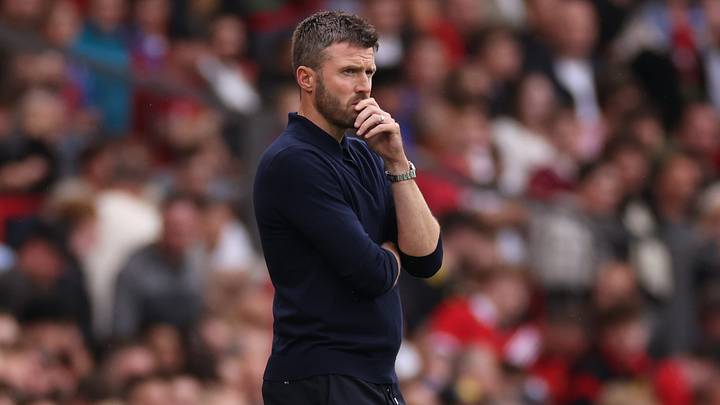
Manchester United head coach Michael Carrick acknowledged that the club faced numerous obstacles during the summer transfer window, with financial constraints proving to be the most significant hurdle.
The Red Devils have long been associated with lavish player spending with mixed results, but the new ownership has shifted focus toward cutting costs and establishing a more financially responsible model.
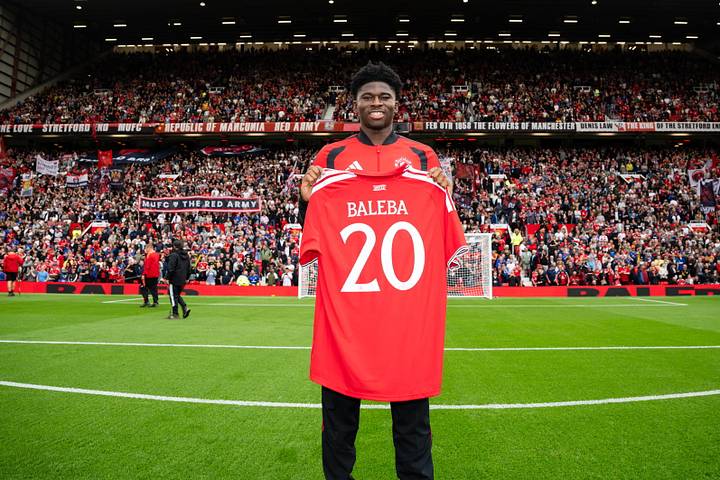
While the club did splash out on Andrey Santos, Youri Tielemans and Carlos Baleba to strengthen their midfield options—totaling $209 million (£155 million) in new arrivals—a large portion of the fanbase expressed frustration over the club's inability to secure a left back and address several other areas of need.
In a perfect scenario, United would have addressed every requirement this summer, but Carrick conceded that such an outcome simply doesn't reflect the club's current circumstances.
"I think we've brought some really quality players to the club and strengthened the squad in various ways, both individually and as a collective," Carrick told Sky Sports News.
"I think we've developed. You enter the window and when you exit it, you want to be in a stronger position than when you started. I'm confident we are exactly that.
"Transfer windows are never simple and this particular one has been demanding for various reasons. There's a huge amount of money circulating throughout the league, and I believe we've made the best of the circumstances we found ourselves in.
"That's the reality we operate in. Clubs at certain times are going to invest heavily. Sometimes it'll be more than what we spend, sometimes perhaps not. We have to maximize what we have available and be realistic about where we stand. I think we're a very strong team and we want to continue improving."
Man Utd's Money Problems Laid Bare
As The Athletic reporter David Ornstein pointed out during a recent segment on TNT Sports, United are likely to feel a degree of disappointment over their inability to strengthen in additional positions as they gear up for a return to Champions League football.
"But they don't have an endless supply of funds," Ornstein remarked. "They have to operate within reasonable financial boundaries."
The era of United being able to outspend virtually every club in Europe has passed. Even sides near the foot of the Premier League are investing heavily to bolster their rosters, with the financial power of England's top division frequently drawing criticism from clubs abroad.
Early complications in the window shed some light on the situation. United had targeted Mateus Fernandes from West Ham United but pulled out of negotiations when pressed to match Tottenham Hotspur's offer of $112 million (£85 million), deeming it poor value. Santos and Tielemans subsequently arrived for a combined $113.1 million.
ESPN reports that United also pursued Mamadou Sangaré, then at Lens, but fell victim to a growing trend of players opting for moves to mid-table clubs that offer a stronger platform for securing a bigger transfer down the line. Brentford were quick to capitalize on that preference.
To overcome the challenge of rival clubs' enormous budgets or players' preferences to move elsewhere, United could have dipped further into their resources to leverage the financial prestige associated with Old Trafford, but the current leadership does not consider that approach sustainable. There is a deliberate push to reduce expenditure across the board, with strict limits placed on all spending.
With midfield reinforcement taking priority following Casemiro's departure and Manuel Ugarte's extended injury absence, United ultimately felt unable to pursue a permanent left back signing, falling short in late loan attempts for Barcelona's Alejandro Balde and Manchester City's Rayan Aït-Nouri. Defensive recruitment is expected to be the primary focus when the next transfer window arrives.