
 ไทย
ไทย English
 中國人
中國人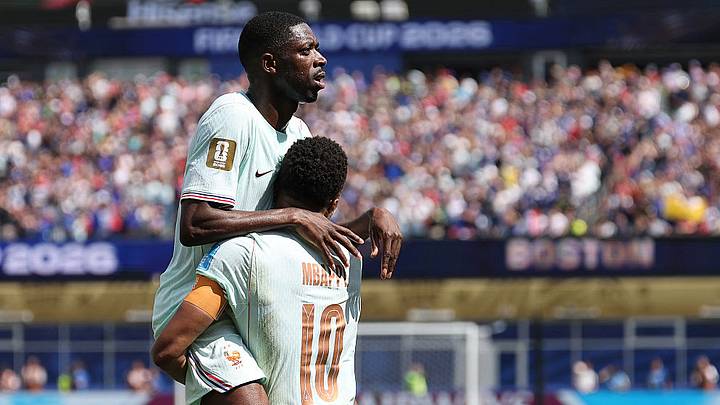
France dismantled a heavily rotated Norway side on Friday, cruising to a commanding 4–1 win at Gillette Stadium to complete a flawless group stage campaign, claim first place in Group I, and secure the most favorable possible route to World Cup glory.
Les Bleus wasted no time making their mark, with Ousmane Dembélé netting the first of his three goals as early as the seventh minute. Dembélé followed up with his second and third strikes within the next 25 minutes, capping off a historic spell for the 2025 Ballon d'Or recipient.
Though an Erling Haaland-free Norway—making 10 changes to their starting eleven and largely conceding any realistic hope of toppling the French—managed to slip one past Mike Maignan in the 21st minute, France never relinquished control. Young winger Désiré Doué, 21, headed home in the final moments of stoppage time to put the Norwegians to bed for good.
France now shifts its focus to the round of 32 on Tuesday, where it will face either the third-place finisher from Group F or G at MetLife Stadium, entering as the heavy favorite. Manager Didier Deschamps will be delighted with his squad's performance upon his return to North America, having briefly stepped away from the tournament following the passing of his mother.
Dazzling Dembele
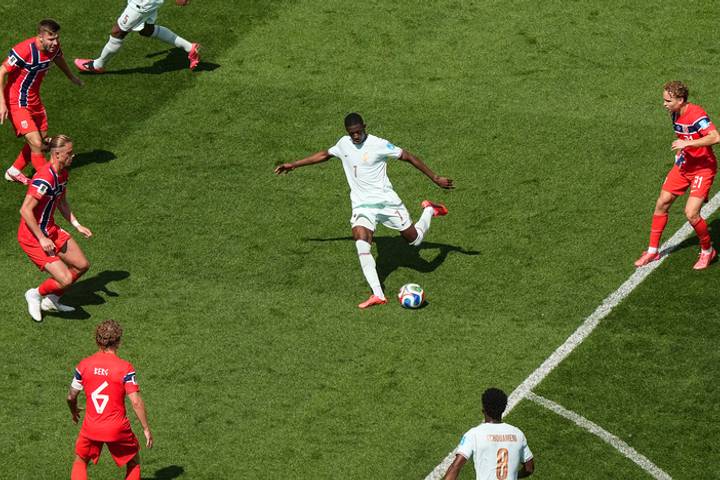
The floodgates have well and truly opened for Dembélé.
The Frenchman had carried the weight of expectation into this World Cup, having failed to find the net across his first four major international tournaments, including 11 previous World Cup appearances spanning the 2018 and 2022 editions.
That pressure only intensified during France's opener against Senegal, where Dembélé struggled to find room in the tight spaces the West Africans afforded him and never truly hit his stride. The display only amplified doubts and criticism surrounding the star's ability to perform on the biggest stage. The negativity reached its peak in the opening half of France's second group game against Iraq, when Dembélé endured another sluggish start.
Perhaps it was the extended halftime break, pushed back by thunderstorms, that gave Dembélé the chance to reset mentally, because he returned for the second half with a completely different energy. He set up Mbappé's second goal within the first 10 minutes before grabbing his maiden World Cup goal to round off a dominant 3–0 triumph.

That performance turned out to be precisely the spark Dembélé required. He burst out of the blocks from the first whistle against Norway. It took him fewer than seven minutes to open his account, drilling a powerful right-footed effort into the corner from just inside the penalty area. He wheeled away to the crowd and mimicked a talking gesture with his hand, as if to say, "Let the critics talk. It means nothing to me."
The Paris Saint-Germain forward soon added a second and third—both curling, left-footed strikes from distance—bringing his tournament tally to an impressive four goals and firmly inserting himself into the Golden Boot conversation. He now sits level with Mbappé and just one goal behind the current leader, Lionel Messi.
While a hat-trick is a remarkable feat, it was achieved by a Frenchman just four years prior. Mbappé famously struck a second-half treble in the 2022 World Cup final against Argentina, only for France to suffer a heartbreaking penalty shootout defeat. Messi, meanwhile, registered his first-ever World Cup hat-trick in Argentina's tournament opener against Algeria just last week.
Saliba's Absence
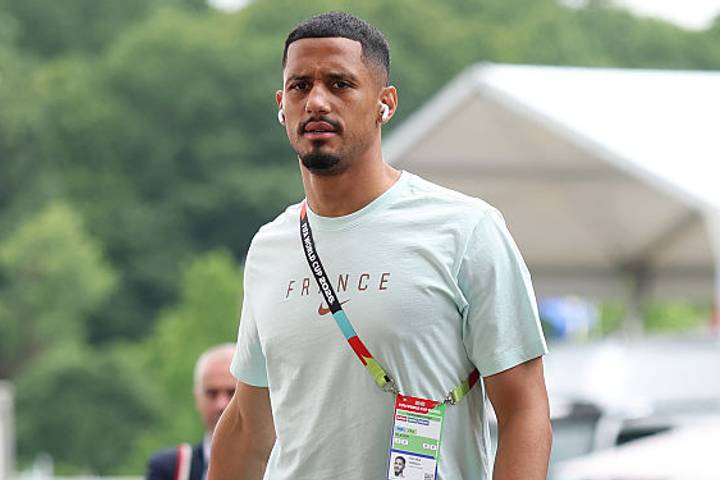
Having featured for every minute of France's opening two World Cup fixtures, star center back William Saliba was ruled out of the final group game with an injury.
Saliba has been managing a back problem for some time, having dealt with persistent discomfort during Premier League and Champions League action in the spring. He has grown somewhat used to playing through it.
"I've had some minor niggles for several months," Saliba said ahead of the Iraq match. "I've been gritting my teeth because there was the Champions League and the Premier League. But the coaching staff are handling it very well.
"The World Cup comes round only once every four years, so you've got to grit your teeth. I'm not at 100%, but there are plenty of players who aren't at 100% either. You can't make excuses."
Saliba plans to push through the discomfort this summer in pursuit of the trophy, but that doesn't mean aggravating the issue further. His absence on Friday was likely a precautionary measure, given that France had already booked their place in the next round and will face far greater challenges in the games ahead.
His presence was nonetheless missed. Losing the 25-year-old from the starting lineup was a tangible setback for France, as the Arsenal defender has quickly established himself as the cornerstone of the backline and arguably one of the finest center backs in world football.
He was replaced by Crystal Palace's Maxence Lacroix, who lined up alongside Dayot Upamecano in central defense. Despite Lacroix being the new addition, it was Upamecano who looked most unsettled by the reshuffle.
Norway's second-string attack carved out two clear-cut chances within the opening 14 minutes—opportunities Haaland would likely have dispatched without hesitation. Norway's goal, arriving just over a minute after Dembélé's second, saw Upamecano easily beaten by Thelo Aasgaard. Moments earlier, Upamecano had badly mistimed a headed clearance, gifting Norway a shot on target.
Fortunately, Mike Maignan was exceptional between the sticks, rising to the occasion when called upon with three saves, including a penalty stop in the second half.
France's Group Stage Review
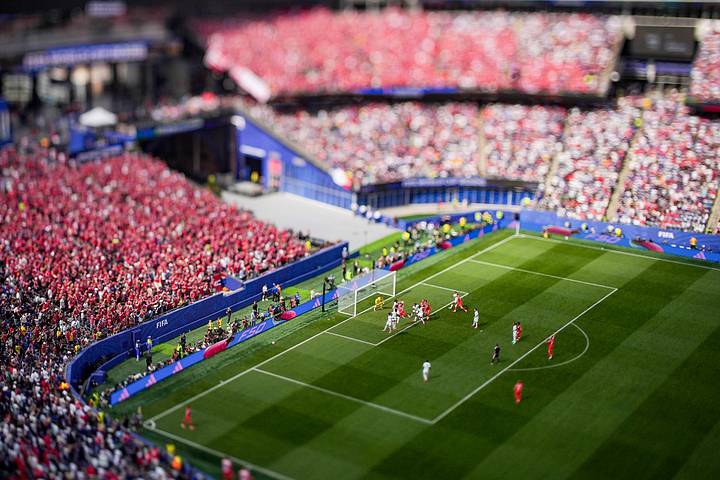
France has made a stunning start to the 2026 World Cup, wrapping up a perfect group stage, something Les Bleus failed to achieve in either 2018 or 2022.
This time around, France plundered a remarkable 10 goals against their Group I opponents while conceding just two, a reflection of the team's quality across every line of the pitch.
Dembélé emphatically proved his worth as a key tournament weapon, seizing the headlines with his hat-trick. Mbappé, meanwhile, continued his march toward World Cup legend status, bagging a brace in each of the first two group games and contributing two assists on Friday.
Yet amid all that star quality, the player who could prove to be the most decisive is Michael Olise. The 24-year-old Bayern Munich midfielder is France's creative engine and the true pulse of their attack. Though he was relatively subdued on Friday and was substituted in the 65th minute, he still tied for the most passes into the final third with eight. He finished the group stage with three assists in total.
When this trio of attackers has the freedom to move and express themselves, they are lethal and extraordinarily difficult to contain. The only realistic way for opponents to neutralize this French attack is by successfully clogging the central areas, as Senegal briefly managed in the opener, or by sitting deep and hoping for the best.
SI answers is our AI answer engine trained on human-created content.
Even winger Désiré Doué got in on the act in the closing seconds, scoring his first-ever World Cup goal—a sign that all of France's most potent attackers will be primed and ready when the knockout rounds begin next week.
The one potential vulnerability in France's game could be their own complacency, however. A lapse in concentration following Dembélé's second goal allowed Norway to break through barely 80 seconds later, leaving France momentarily stunned. Whether opponents can consistently exploit that tendency remains to be seen come Tuesday.