
 ไทย
ไทย English
 中國人
中國人
Atlanta authorities have "bolstered" security arrangements across the city ahead of Wednesday's World Cup semifinal at Mercedes-Benz Stadium, according to an official announcement.
The showdown between these two footballing giants has every element needed to become an unforgettable classic, given the enormous stakes and deep-rooted historical tensions.
The sides have not faced each other since 2005, and not at a World Cup since three years prior to that, yet they remain arguably the fiercest rivals in international soccer, with this fixture among the most eagerly awaited in the tournament's recent history.
Public Safety Measures Increased for Semifinal

In an official statement, Atlanta Police declared: "As Atlanta prepares to host an upcoming FIFA World Cup semifinal match and welcomes increased numbers of residents and visitors, the Atlanta Police Department has enhanced its citywide public safety and security posture.
"Additional personnel and resources are already deployed and will continue to be strategically assigned in and around the event venues, entertainment districts and other high-traffic areas to help ensure a safe and enjoyable experience for everyone.
"These proactive measures are designed to protect the public, deter criminal activity and ensure residents and visitors can safely enjoy this historic event."
Excitement surrounding the match since it was confirmed following both teams' quarterfinal victories has reached an extraordinary level, with The Athletic reporting that the lowest-priced resale tickets surged to $3,000 on Saturday evening, with many others commanding significantly higher prices.
History of Animosity
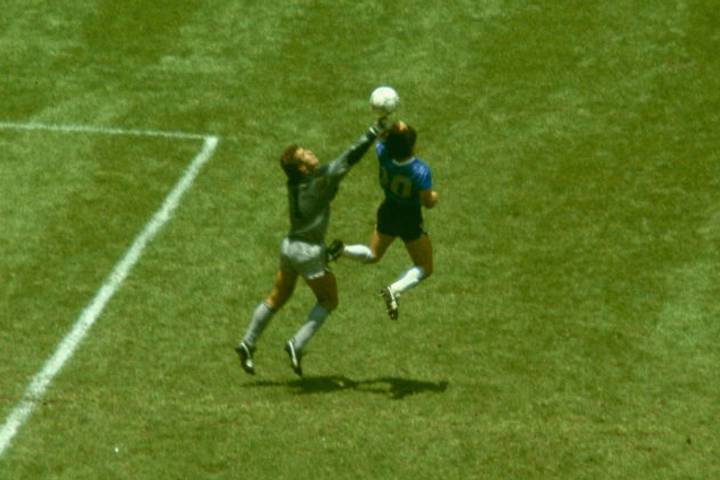
Wednesday's contest will mark the fifth meeting between the two nations at the World Cup, making Argentina England's most frequent opponent in the tournament's history.
Their first encounter dates back to 1962, with England claiming a 3–1 victory, but it was a match four years later that truly ignited a lasting rivalry between the two nations.
Geoff Hurst's decisive goal proved the difference in a heated quarterfinal at Wembley Stadium, as England went on to claim their only World Cup title to date.
Incensed by what he viewed as unsportsmanlike behavior from Argentina, England manager Sir Alf Ramsey instructed his players not to swap shirts with their opponents after the final whistle and notoriously described the opposing side as behaving "as animals." Widely condemned as arrogant and xenophobic, Ramsey's inflammatory remark marked a defining moment in England's relationship with Argentina and much of South America.
However, by far the most iconic encounter between the two sides came twenty years later in another quarterfinal at the 1986 World Cup. The bitterness of the fixture was intensified by the Falklands War—a 74-day conflict between the United Kingdom and Argentina over the sovereignty of the Falkland Islands (known as Las Malvinas in Spanish)—which had concluded just four years earlier. The war claimed the lives of 649 Argentine soldiers, along with 255 British soldiers and three civilians.
Against that charged backdrop, the match took on an entirely different dimension and was elevated to near-legendary status through Diego Maradona's extraordinary performance. Argentina's No. 10 scored both his notorious "Hand of God" and "Goal of the Century" in the very same game, as his team prevailed 2–1. He would later describe the 1986 victory as "revenge" for the Argentinians who perished in the Falklands.
England's goalkeeper that day, Peter Shilton, later said of Maradona: "I've seen other players cheat, admit to it and apologize. But he won't apologize and I won't shake hands with him or acknowledge him. I always say he's the greatest player in history but I don't respect him as a sportsman and I never will."
At the 1998 World Cup, Argentina knocked England out on penalties in the round of 16, after David Beckham was sent off for retaliating against Diego Simeone, who dramatically exaggerated the contact. Beckham earned a measure of revenge four years later, converting a penalty to secure a 1–0 victory over Argentina the last time the two sides met competitively in the group stage of the 2002 tournament.
The 21-year gap since their last meeting—a 2005 friendly—has done nothing to ease the tension. One of Argentina fans' most beloved chants translates as "whoever doesn't jump is English," while the players sang "for Las Malvinas, for Diego, for Leo's last one" as they celebrated their 3–1 quarterfinal victory over Switzerland.
Sovereignty over the Falkland Islands remains a point of contention for Argentina to this day, and the dispute continues to strain diplomatic ties between the two nations. Nevertheless, those directly involved in the football insist that politics stays off the pitch.
Calls for Calm Amid the Noise
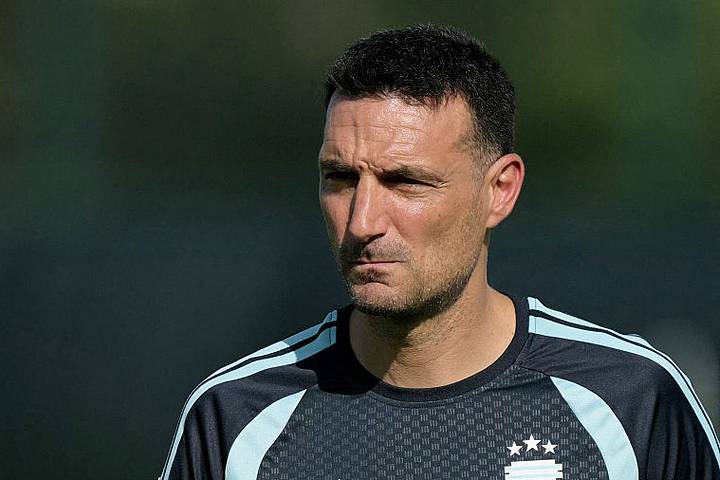
"It's a game of soccer, eh?" Argentina manager Lionel Scaloni said firmly when the magnitude of the occasion was raised at a press conference following his side's win over Switzerland.
"The message is that it's a game of soccer. We are not looking for anything else. We are going to play a game of soccer against a great team, with a great coach that I admire a lot. It's a game of soccer. Period. There's no more to say than this."
Midfielder Rodrigo De Paul reinforced his manager's sentiments, stating: "The Malvinas issue needs to be discussed elsewhere."
On the extent to which external narratives filter through to the players, Argentina legend Javier Zanetti—who featured in both the 1998 and 2002 clashes—told FourFourTwo: "Despite the media hype, we were focused on other things."
For England, the priority will be knocking out the reigning champion and reaching a first final since 1966.