
 ไทย
ไทย English
 中國人
中國人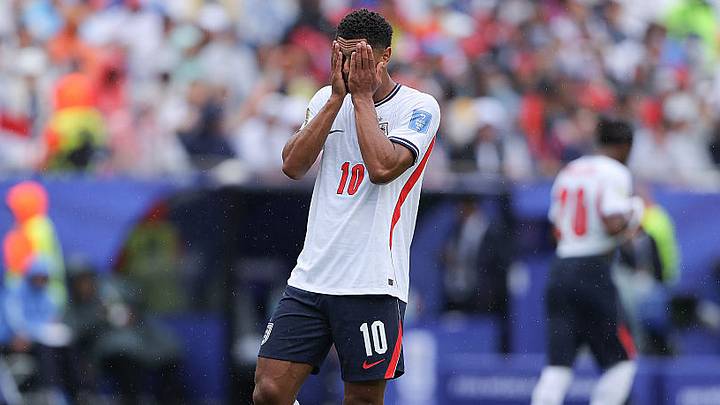
England missed the opportunity to secure top spot in Group L and advance to the World Cup knockout stage on Tuesday evening, held to a goalless draw by Ghana at Gillette Stadium in Foxborough, Massachusetts.
A win six days after thrashing Croatia 4–0 in Texas, paired with anything other than a Panama victory in the group's parallel fixture, would have been sufficient to clinch first place with a game still remaining. That scenario never materialized, as England failed to reproduce the impressive display it had already delivered once at this tournament.
England had been among the standout performers in the opening round of group stage action. The showing against Croatia wasn't perfect—notably stronger in the second half—but it offered genuine promise as a solid base with room to develop further. Against Ghana, however, the team appeared to regress rather than build on that encouraging foundation.
There was also a significant slice of luck involved, with Ghana denied what looked like an obvious penalty when Ezri Konsa took down Prince Adu on a counter-attack, a foul that somehow escaped the attention of the match officials.
A spot in the knockout rounds is virtually secured with this result—four points is widely considered sufficient to finish at least among the eight best third-place sides. Yet this was still a sobering reality check for the 1966 champions—still chasing their first title in six decades—and could lead to a number of lineup changes before England's next outing.

Clear Lack of Threat

On paper, this fixture looked more straightforward for England than the opener against Croatia. Ghana, ranked 60 positions below Thomas Tuchel's side in the FIFA rankings (64th versus fourth), were far from convincing in their own opening victory over Panama, needing to wait until the 95th minute to net the only goal of that game.
By the interval, England had dominated 78% of possession yet failed to register a single shot on target. Harry Kane was largely isolated up front, and Jude Bellingham struggled to make his presence felt on what was his record-equalling 50th senior international appearance. Noni Madueke was repeatedly stifled on the right wing, while Anthony Gordon was barely noticeable on the left.
Kane had reflected after the Croatia match—a game in which England improved markedly in the second half—that Tuchel's halftime message had been simple: "Let's just go, up the tempo."
78.8% - England's possession figure of 78.8% against Ghana was the most on record (from 1966) by any side in a FIFA World Cup match without managing to score.
Lacklustre. pic.twitter.com/ijqSDVRZL0
As the second half got underway, a visibly agitated Tuchel grew increasingly frustrated that his message wasn't being translated onto the pitch. Djed Spence and Gordon, perhaps due to their proximity on the near touchline, appeared to bear the brunt of his animated instructions before suddenly combining—11 minutes into the second half—to produce England's most promising moment of the match. The ball was moved quickly to Bellingham on the edge of the penalty area, whose effort was blocked, before Gordon drove the rebound goalward and forced the first save of the evening from goalkeeper Benjamin Asare.
The improvement was short-lived, and Spence and Gordon were soon substituted off as England's first withdrawals. Ultimately, a late surge of pressure in the closing stages proved too little, too late.
"You've got to find solutions," Declan Rice said in conversation with BBC Sport after the final whistle, acknowledging Ghana's disciplined defensive structure as one that proved impossible to break down.
Panama Handed England Blueprint

In terms of the scoreline and performance alone, it wasn't a catastrophic outcome for England. The greater concern is that Ghana may have exposed vulnerabilities that future opponents will now look to take advantage of.
England face Panama next—a side they dismantled 6–1 when the two teams met at the 2018 World Cup—and Panama will likely follow Ghana's lead rather than try to match a technically superior opponent. If England continues to struggle against a deep defensive block, that could have serious implications once the knockout phase begins.
There are plenty of well-organized sides in this tournament that this version of England—rather than the one that faced Croatia—could find difficult to break down.
From England's standpoint, Gordon, Madueke and Spence may well find themselves out of the starting XI for the Panama clash at MetLife Stadium. Bukayo Saka, Marcus Rashford and Nico O'Reilly all made a more immediate and positive impression in brief substitute appearances than the three starters managed across far more playing time.
Saka would likely have been in the starting lineup already were it not for an injury that disrupted the closing weeks of his club campaign with Arsenal. He has, however, been declared fit to start the next match. O'Reilly, despite operating at left back, struck the crossbar, while Rashford also showed glimpses of danger in just seven minutes on the pitch.
Weather Makes a Mockery of Hydration Breaks

FIFA's mandatory hydration breaks have already attracted criticism at this World Cup. While the underlying intention is valid—protecting player health and safety in the typically intense heat of a North American summer—the use of these stoppages to air additional television commercials has left many supporters frustrated at a tournament that already feels overly commercialized.
Traditionalists also take issue with the idea of soccer beginning to resemble a sport divided into four quarters, with complaints about disrupted momentum in the middle of each half.
FIFA maintains that consistency across all matches is essential for the integrity of the competition. But the breaks don't always feel warranted, and this fixture—another featuring England—was a case in point. The Three Lions defeated Croatia last week in the climate-controlled environment of AT&T Stadium. In this match, the early evening temperature at Gillette Stadium barely reached 70°F, with overcast skies and rain throughout.
Declan Rice was visibly shaking his head as players were called to stop for a drink during the first half—perhaps partly because there had already been a lengthy stoppage for an injury shortly before, and the game had only just resumed. The whole process felt rigid and unnecessary.
The second-half hydration break proved more useful from a tactical standpoint, and England looked more capable of scoring in the final 20 minutes than they had in the preceding 70.
SI answers is our AI answer engine trained on human-created content.
It felt particularly ironic that temperatures back in England on Tuesday nearly reached 95°F, with forecasts of 100°F before the week's end as Europe's ongoing heatwave intensifies.
At Euro 2028 in two years' time, UEFA plans to evaluate hydration breaks on a match-by-match basis.