
 ไทย
ไทย English
 中國人
中國人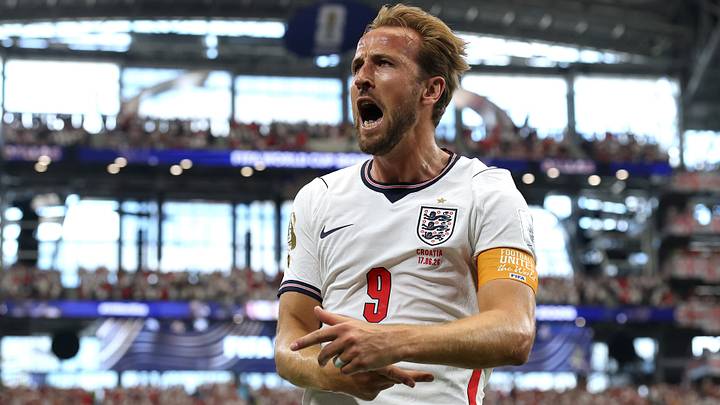
Unburdened by the weight of representing a nation carrying 60 years of World Cup suffering, England's German head coach Thomas Tuchel views the Three Lions squad for what it truly is: one of the strongest in the competition.
"We should play with courage and utilize the players' strengths," Tuchel said plainly, notably free of the hesitancy that has characterized so many previous national team managers.
England has only ever entered a World Cup with two other foreign managers, yet neither were fully insulated from the country's self-defeating cycle. Sven-Göran Eriksson was shaped by a Swedish footballing philosophy rooted in the teachings of two English coaches, Bob Houghton and Roy Hodgson. Fabio Capello stuck rigidly to 4-4-2. Tuchel comes from an entirely different footballing tradition.
That refreshing philosophy produced a strikingly unfamiliar England performance against Croatia—one that stirred emotions well beyond the usual anxiety and letdown. Tuchel's team was genuinely thrilling to watch. England had failed to score more than two goals in any single match throughout its run to the Euro 2024 final, playing a suffocating brand of defensive football throughout.
This reimagined England side laid siege to the Croatian goal, netting four times and claiming all three points against their closest rivals for top spot in Group L.
Tuchel's Twist on Set-Piece Formula
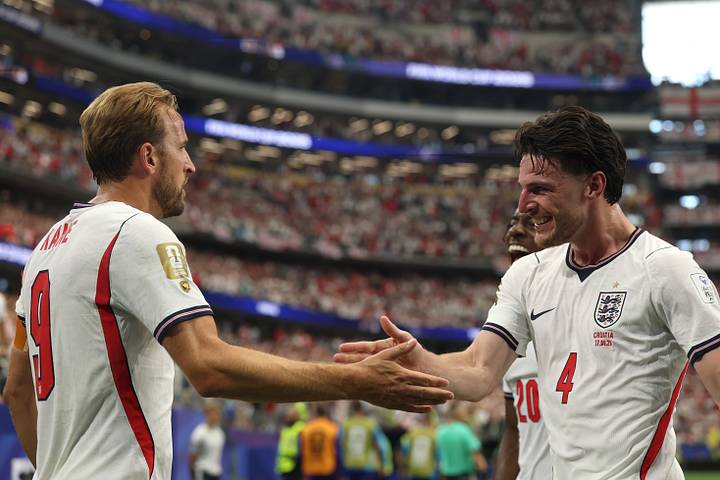
Declan Rice delivered 95 corner kicks for Arsenal during a record-setting season of set-piece dominance for the Gunners. All but seven were in-swinging deliveries from the left side of the pitch. Yet his first two corners at the World Cup were both out-swingers from the right.
This is nothing unusual for Rice under Tuchel. While Arsenal and the broader Premier League have collectively embraced in-swinging deliveries as statistically more productive, the German coach appears determined to have Rice curl the ball away from goal—and not without reason.
It was from one such delivery that Harry Kane powered home his second goal of a gripping group-stage encounter. In a strikingly similar move to his header against Serbia in a World Cup qualifier back in September 2025, Kane had an unobstructed run onto Rice's delivery thanks to a series of well-timed blocks from his teammates.
Croatia's coaching staff wouldn't have needed to revisit that autumn fixture for a preview of England's tactics: Tuchel had been running the same routine in both pre-World Cup warm-up matches. There's every possibility Croatia anticipated it—yet that knowledge did nothing to help them stop it. Croatia struggled even more to deal with Rice's in-swingers.



Midfield Hierarchy Set Early
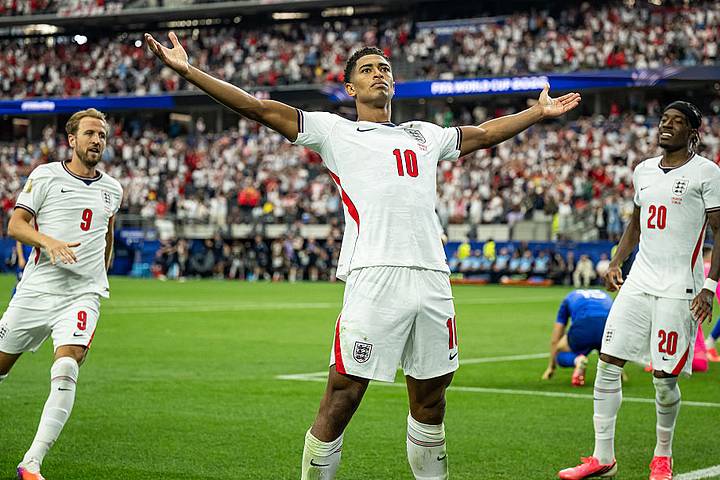
Much of the pre-match conversation ahead of Wednesday's game centered on the debate between Jude Bellingham and Morgan Rogers. In truth, the Real Madrid No. 10 was never seriously in danger of being dropped, and he quickly demonstrated exactly why Tuchel and every teammate given the chance speaks so glowingly of him.
It's easy to overlook that Bellingham is just 22—largely because this is already his fourth major tournament. The remarkably composed midfielder carries himself with a veteran's authority and the relentless energy of someone even younger, calmly finishing within two minutes of the second half after a searing run down the right flank.
Notably, Bellingham was given the license to surge forward thanks to a delightful clipped pass over the top from Elliot Anderson. The least celebrated member of the midfield trio is arguably the most vital, not only pressing tirelessly on the rare occasions his side lose the ball, but ensuring it is recycled quickly up the pitch to prevent the sluggish passing that so frequently creeps into England's play.
The Short Blanket Conundrum

For all of England's attacking ambition—and it should not be understated that this was arguably the most incisive display by any side at this World Cup so far—the Three Lions remained vulnerable defensively.
Croatia's two goals stemmed from two very different errors: over-commitment and excessive caution.
By deploying Nico O'Reilly at left back with the freedom to drift into midfield during possession, there is always an exposed channel in behind immediately after losing the ball. This is a calculated risk Tuchel is prepared to accept, but one Croatia clearly targeted throughout the match. It paid dividends in the 36th minute, when Petar Sučić slipped in behind O'Reilly to lay the ball off for Martin Baturina's thunderous equalizer.
After England regained the lead, Tuchel's side was guilty of sitting too deep. This was likely a product of the approaching halftime whistle—it is human instinct to protect a lead with so little time remaining—but it opened up vast stretches of space for Croatia to exploit.
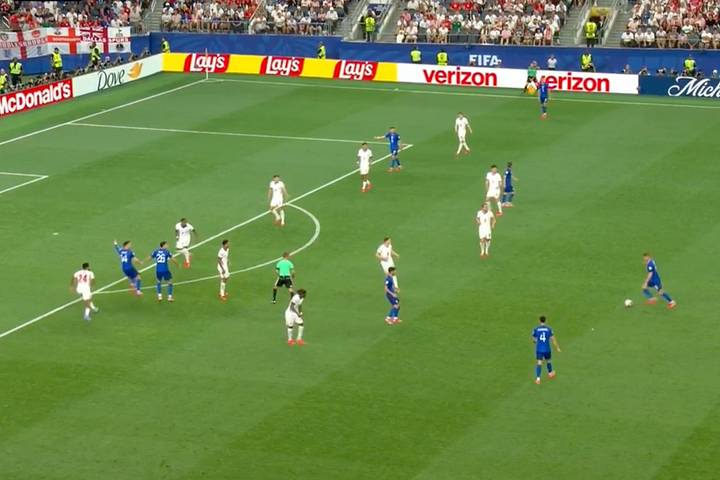
Mario Pašalić had acres of room to operate in (see above) when he chipped the ball into the box for Ivan Perišić to latch onto. A breakdown in communication between Reece James, Ezri Konsa and Bellingham only made things worse, but Petar Musa would surely never have been in a position to level on the stroke of halftime had someone stepped up to press Pašalić.
This double-edged dilemma called to mind the short blanket analogy that former Liverpool and Newcastle United manager Rafael Benítez made famous in English football. Finding the right balance in a team is like trying to stay warm with a blanket that's too small: "If you cover your head, you have your feet cold," Benítez explained, "but if you cover your feet, you have your head cold."
Tuchel has at least two more group fixtures to figure out the best way to plug all the gaps in England's defensive line.
Should Harry Kane Change His Penalty Technique?

The last time Kane stepped up from the spot for England at a World Cup, he watched his wayward effort disappear into the air-conditioned night at the Al Bayt Stadium in Qatar. "I'm looking forward to the next World Cup to try and put that right," Kane had vowed after qualification for 2026 was confirmed, his thoughts still haunted by that missed kick against France in the quarterfinals. Four years later, he faltered again—if only momentarily.
Kane's miss against France persuaded him to overhaul his penalty approach, incorporating a stutter step into what had previously been a straightforward run-up. The technique prompts the goalkeeper to commit early, allowing the taker to direct the ball into the opposite corner. It has largely served him well: Kane converted 48 of his next 51 attempts from 12 yards, though there is a growing risk that goalkeepers are beginning to read him.
The Bayern Munich captain had three penalties saved at club level last season, and Dominik Livaković picked up on his hesitant intentions on Wednesday. Kane was rescued by a VAR review that detected the Croatian goalkeeper had stepped off his line, forcing a retake which he dispatched with a more traditional run-up.
Whether Kane will be persuaded to return to that stripped-back approach when England inevitably earn another spot kick—or worse, find themselves in a penalty shootout—remains to be seen.