
 ไทย
 English
 中國人
Manchester City have received a warning from England's Independent Football Regulator (IFR) that it possesses the "stomach" to take on the club's ownership following the guilty verdict on nearly all of the 115 Premier League charges related to financial rule violations.
The regulator was established in 2025 and is charged with upholding "governance standards for English football safeguarding the game's heritage and identity." On its official website, the body states: "We have already introduced stronger, statutory Owners, Directors' and Senior Executives' tests to ensure club custodians are fit and proper. We have robust powers to act where they are not."
Should the IFR decide to proceed following its own investigation—once City's appeal has been heard—it could potentially compel Sheikh Mansour to sell the club in the most extreme outcome. This would fall under the remit of protecting English soccer "in the interests of clubs, fans and the wider game" from an ownership structure found guilty, as things stand, of serious cheating.
In September, a statement from IFR chair David Kogan declared: "The IFR has powers to assess the suitability of owners, directors and executives and we will use these powers where appropriate, in the interests of protecting the sustainability, honesty and integrity of English football where there is clear evidence of wrongdoing by individuals."
The concept of "honesty and integrity" takes on considerable weight given the blatant disregard for the rules that has been established.
Regulator Will 'Act Appropriately' Without Political Pressure
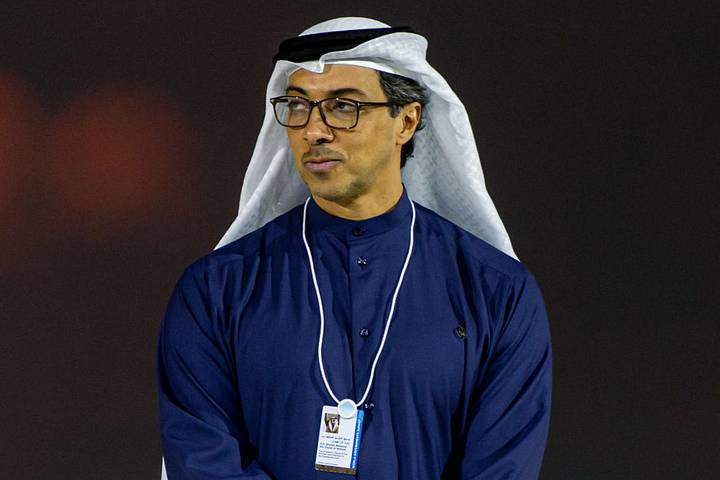
Despite reported threats from the United Arab Emirates—Sheikh Mansour serves as the country's incumbent vice president and is a member of the royal family—regarding future relations with the U.K. and the potential withdrawal of other investments, the regulator has made clear it will not yield on matters of principle.
"If we don't act, what is the purpose of having a football regulator?" Kogan posed rhetorically to MPs on the Digital, Culture, Media and Sport select committee this week.
He acknowledged that a confrontation with Manchester City is far from ideal for a "relatively new, fairly young staff that's been going for less than a year," but insisted it is one for which they "absolutely have the stomach."
"We have to absolutely clearly be seen to be doing the job that you, as legislators, have asked us to do, and we absolutely will do that, whatever that means," he pledged. "Forget the name of the club. Forget the size of the club. Forget the scale of the issue. We cannot simply ignore our statutory duties in relation to a club because it happens to be of a certain size."
In due course, the IFR would reach its own conclusions regarding City and its ownership "depending on the circumstances as they come to us, which are the evidence that's been presented and collated by the independent commission of the Premier League, and by any judgment that takes place on that evidence through an appeal."
Kogan continued: "Does the evidence, if we come to assess it in relation to individuals, stand up in terms of the legislation as being a cause for concern? And if it is, we will have to act appropriately. And that is the only test, not the politics around it, not the place where it came from, not the size of the club. It is the only test because without that, you cannot have an effective regulator."
Roman Abramovich was the last Premier League owner forced to sell his club, giving up control of Chelsea in 2022. That situation predated the creation of the IFR in England and stemmed from an entirely different set of circumstances—namely, U.K. government sanctions imposed on the Russian billionaire following Russia's invasion of Ukraine.
Abramovich was disqualified as a director of Chelsea by the Premier League, which would ordinarily have triggered the sale of shares had he not already initiated the sales process approximately three weeks prior. Strict restrictions were also imposed on the club for as long as he remained its owner.