
 ไทย
ไทย English
 中國人
中國人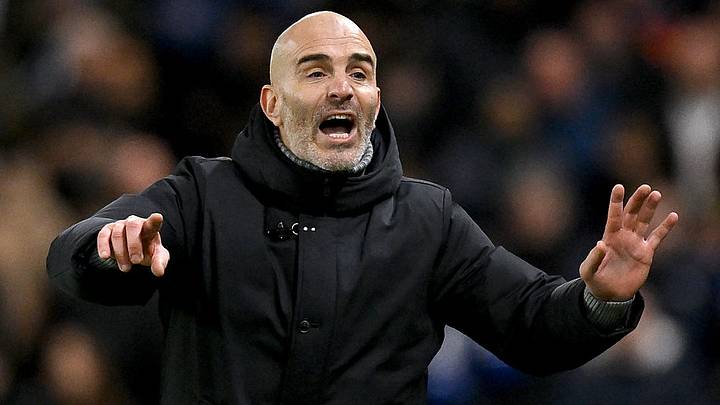
Pep Guardiola's ten-year reign of dominance has come to an end at Manchester City, with the Spaniard leaving the Premier League having reshaped the tactical fabric of the division more than anyone before him.
The Cityzens were, for so long, virtually assured of silverware thanks to the man occupying the home dugout (the financial backing of a petrostate certainly played its part) at the Etihad Stadium. His legacy will undoubtedly hang over — and could potentially overwhelm — whoever is handed the task of succeeding him.
Enzo Maresca, briefly one of Guardiola's assistants in Manchester, faces that daunting challenge. Matching such achievements is near impossible, and many will question whether a barren spell awaits, not unlike what befell their cross-city rivals following Sir Alex Ferguson's retirement in 2013.
The squad he inherits is far from flawless and lacks many of the cornerstones from City's peak years. Maresca won't be tearing up the blueprint entirely, but measured adjustments will be needed to prevent any regression in 2026–27.
Here's a look at how they might line up under their new boss.
Enzo Maresca's Preferred Formation
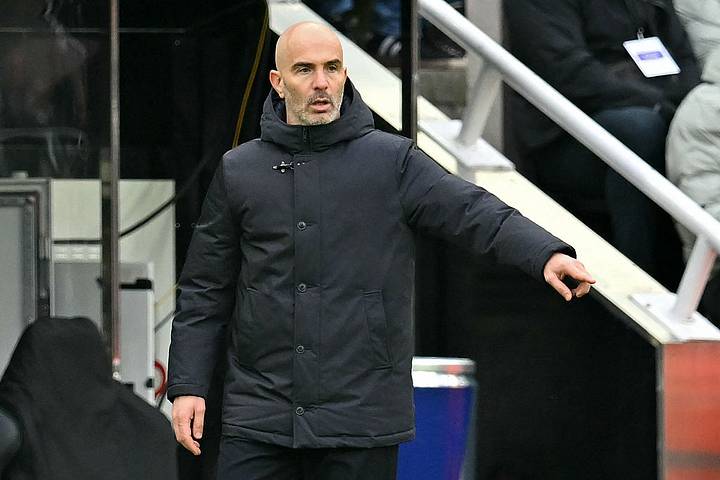
A Guardiola protégé in 2022–23 following an earlier stint managing the U21s, Maresca was firmly a 4-3-3 advocate at Leicester City, before adjusting his preferred system at Chelsea to incorporate a No. 10.
In possession, his sides tend to shift into a 3-2-2-3 shape to enable a box midfield, though other structures can also be identified. Wingers maintain width, with one fullback instructed to join the midfield pivot while the other tucks infield to create a back three. At Chelsea, Enzo Fernández was granted the freedom to operate between the lines and drive into the opposition's penalty area.
Maresca employed a disciplined form of positional play in west London, something the Cityzens were once strongly associated with under Guardiola. However, the composition of his final squad led the Spaniard to evolve and embrace an alternative approach — one that was more direct and vertical in nature.
It remains to be seen whether the incoming manager continues along the path Guardiola had begun to chart, or simply returns to City's traditional methods. His Chelsea side were frequently criticised for slow, laborious build-up play that lacked cutting edge.
Without the ball, Maresca's teams don't rigidly press on a man-to-man basis. They defend with high intensity and look to funnel opponents into wide channels.
How Enzo Maresca Could Set Up at Man City
GK: Gianluigi Donnarumma—City's acquisition of Donnarumma signalled Guardiola's tactical evolution, and despite the Italian not being particularly commanding in his first season, Maresca will likely keep the elite shot-stopper as his first choice between the sticks.
RB: Tino Livramento—Matheus Nunes did show improvement at right back, with Guardiola reluctant to trust other options for much of the campaign. However, the Portuguese midfielder remains the weakest link in City's backline, and the club will look to strengthen that position this summer. Livramento has emerged as a transfer target, with Maresca expected to be drawn to the Englishman's pace and athleticism.
CB: Abdukodir Khusanov—After a turbulent introduction to Premier League football in early 2025, Uzbekistan's trailblazing defender Khusanov has settled well in Manchester. Though still a work in progress, the young centre-back is an exceptional recovery defender with the physical attributes to thrive at the elite level. He also offers considerable promise as a ball-playing defender.
CB: Joško Gvardiol—Despite John Stones's departure, competition for the two starting berths at the centre of City's defence will be fierce. It could come down to a straight contest between Marc Guéhi and Gvardiol for the left-sided role, with the former arriving in January after the latter sustained a broken leg. Guéhi is an excellent defender, but Gvardiol is a cut above.
LB: Nico O'Reilly—Gvardiol could be selected at left back, but that would likely push Nico O'Reilly aside — a player who appears tailor-made for Maresca's inverted fullback role. O'Reilly came through Man City's academy as a midfielder, and his attacking instincts were on full display during a breakthrough season.
CM: Rodri—Key figures continue to filter out of Manchester, and there's no certainty that Rodri won't be a Real Madrid player before the summer transfer window closes. He has openly entertained the prospect. Should he remain, Rodri will be eager to put a difficult 2025–26 campaign behind him and rediscover the form that earned him the Ballon d'Or.
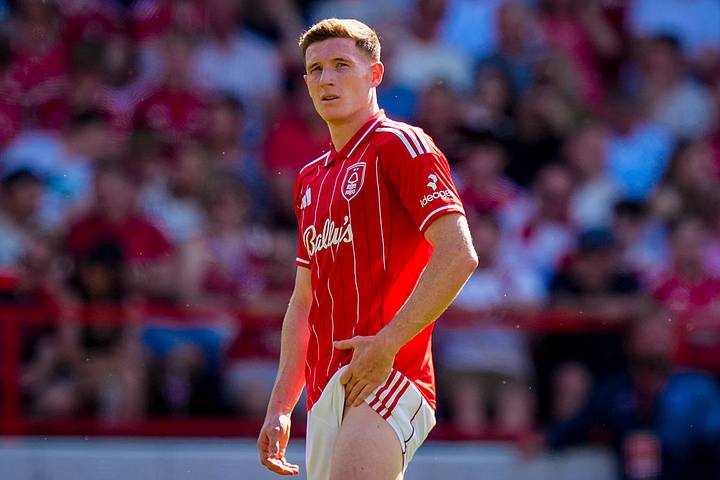
CM: Elliot Anderson—City don't necessarily need to pursue Enzo Fernández. They are reportedly at the front of the queue for Nottingham Forest midfielder Anderson, who has the potential to develop into a similarly dynamic box-to-box presence in Manchester. The Englishman is also considerably more dependable defensively.
RW: Antoine Semenyo—Semenyo's output can be inconsistent at times, making him an occasionally frustrating player to watch, but the electrifying threat the Ghanaian brought to Bournemouth didn't diminish upon his move to Manchester. His versatility is a genuine asset, with Guardiola deploying him across multiple positions. He's a danger in and around the penalty area, while also capable of stretching play and beating his man in wide areas.
AM: Rayan Cherki—Maverick Cole Palmer struggled under Maresca, and Cherki may face a similar challenge. Nevertheless, this is a talent Guardiola simply couldn't overlook, and the new manager would be unwise to stifle the Frenchman's brilliant individualism with excessive positional demands.
LW: Jérémy Doku—Doku came into his own during Guardiola's final season in charge and is set to be a pivotal figure under the new management.
ST: Erling Haaland—There is no question about who will lead the line for Man City in 2026–27, with Haaland having claimed his third Premier League Golden Boot. He has found the net under every manager he has played for, and that record is unlikely to change once Maresca takes the reins in Manchester.
