
 ไทย
ไทย English
 中國人
中國人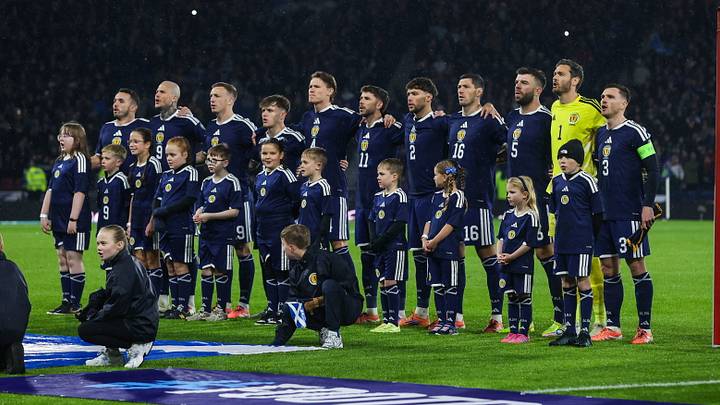
Scotland's national football team has been accompanied by a wide variety of musical choices throughout its history.
Opposition supporters are frequently baffled when the Tartan Army launches into an enthusiastic rendition of "Do-Re-Mi" in the style of the Von Trapp family, while Del Amitri's "Don't Come Home Too Soon" did little to fire up the 1998 World Cup squad—a track that was more melancholic than uplifting.
Yet the song most closely identified with the team is the anthem sung before every international fixture: "Flower of Scotland."
Technically, "God Save the King" serves as the official national anthem of the United Kingdom—Scotland included. However, Scotland's sporting sides have long distanced themselves from it due to its ties to England, preferring instead the song penned by Roy Williamson of The Corries at 69 Northumberland Street in Edinburgh during the 1960s.
Here's everything you need to know about "Flower of Scotland," the unofficial yet widely recognized national anthem.
"Flower of Scotland" Full Lyrics
O Flower of Scotland,
When will we see
Your likes again,
That fought and died for,
Your wee bit Hill and Glen,
And stood against them,
Proud Edward's Army,
And sent them homeward,
Tae think again.
The Hills are bare now,
And Autumn leaves lie thick and still,
O'er land that is lost now,
Which those so dearly held,
That stood against them,
Proud Edward's Army,
And sent them homeward,
Tae think again.
Those days are past now,
And in the past
they must remain,
But we can still rise now,
And be a nation again,
That stood against them,
Proud Edward's Army,
And sent them homeward,
Tae think again.
Flower of Scotland Lyrics Explained
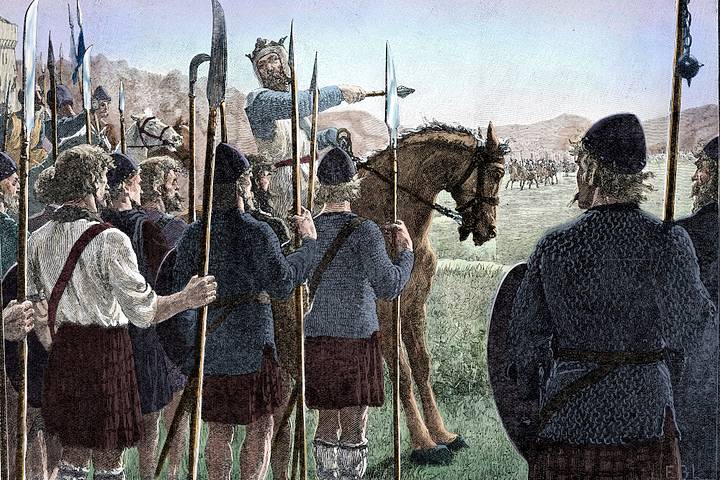
"Flower of Scotland," first used by Scotland's national football team in 1993 and officially adopted in 1997, is rooted in the Battle of Bannockburn, which took place in June 1314 during the First War of Scottish Independence.
The song makes repeated mention of "Proud Edward's Army," the English force commanded by King Edward II, thought to have been the largest invading army Scotland had ever faced, numbering approximately 25,000 men. Despite fielding only around 6,000 troops, Robert the Bruce overcame Edward, protecting "your wee bit hill and glen"—a reference to Scotland's rugged terrain. As the lyrics proclaim, the Scots "sent them homeward."
The song then shifts to a more sorrowful tone, noting that "the hills are bare now" and lamenting "land that is lost now," implying that although Scotland triumphed in battle, the wider quest for enduring independence remained unfinished.
SI answers is our AI answer engine trained on human-created content.
A Gaelic version of the song exists, though it is typically performed in English before matches, with the exception of the Scots word "tae" (meaning "to").
Former Scottish Conservative deputy leader Murdo Fraser has described the lyrics as "jingoistic," and some critics have objected to what they see as the "vindictive" nature of the chorus. Nevertheless, Ronnie Browne of The Corries, who first performed the song in 1967, maintained that supporters desire a "combative sentiment" before going into battle on the pitch.
READ THE LATEST WORLD CUP NEWS, PREVIEWS & ANALYSIS HERE






Barnaby Lane is a highly seasoned sports journalist who has contributed to The Times, FourFourTwo Magazine, TalkSPORT, and Business Insider. Throughout his career, he has had the opportunity to sit down with some of the most prominent figures in global sport, among them Usain Bolt, Rafael Nadal, Christian Pulisic, and many others.