
 ไทย
ไทย English
 中國人
中國人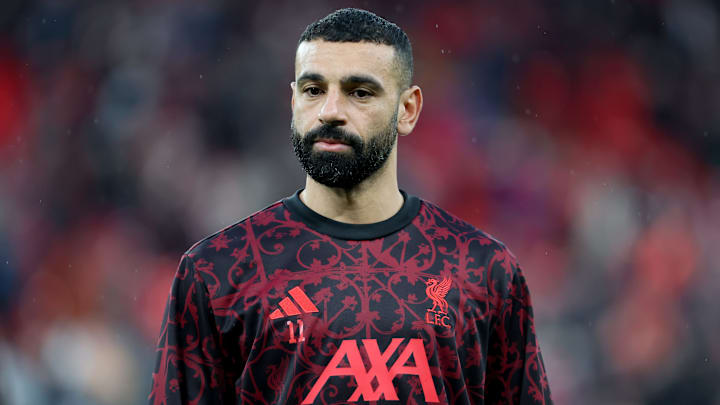
It was Mohamed Salah who initiated discussions with Liverpool regarding the early termination of his contract this summer, according to a new report.
Salah penned a fresh two-year deal last summer but has since confirmed he will walk away from the remaining 12 months of that lucrative agreement at the end of this season. Having suffered a hamstring injury against Crystal Palace, it's possible he has already featured in his final match at Anfield.
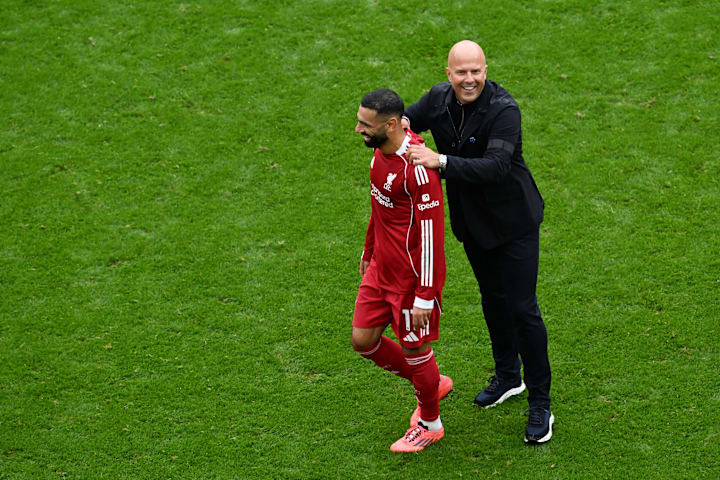
According to The Times, it was Salah himself who brought up the subject of contract termination with Liverpool, having made up his mind that he no longer wished to play under manager Arne Slot.
Salah notably called out Slot in December after being dropped for three consecutive matches, claiming he was being pushed out and used as a scapegoat for Liverpool's underwhelming start to the season. That episode was the catalyst for Salah's decision to leave.
Slot has since acknowledged that he doesn't mind being cast as the "bad guy" in Salah's departure, though he deflected blame by highlighting the periods Salah spent out of the side under his predecessor Jürgen Klopp.
Why Would Liverpool Agree to Terminate Salah's Contract?
Salah has been Liverpool's standout performer over the last decade and ranks among the club's greatest players of all time. Allowing him to leave is not a decision that would have been made without considerable thought.
Liverpool were clearly willing to back Salah when they handed him a two-year extension last summer following one of the finest individual campaigns in recent memory, but circumstances have shifted dramatically over the past year and the club has found itself in a difficult position.
From the very start of the current season, it was evident that something was off at Liverpool. Once a run of fortunate results came to an end, questions about Salah's form began to surface rapidly.
Salah felt he was bearing a disproportionate share of the blame for Liverpool's difficulties and, to his credit, there is some merit to that view. Anyone who has watched the Reds this season would acknowledge that the rest of the squad is far from blameless—some would argue that Dominik Szoboszlai is the only player who has truly distinguished himself.
The problem for Salah is that he is held to a higher standard. His new deal carries a weekly wage of approximately $540,000 (£400,000), which is staggering even by today's Premier League benchmarks. Such a figure demands an extraordinary level of performance—the kind Salah delivered last season but has been unable to replicate this time around.
If Salah is no longer the player he was in 2024–25, Liverpool cannot justify paying him a salary surpassed only by Manchester City forward Erling Haaland among all Premier League players.
Financial considerations will have played a significant role in Liverpool's thinking, but there is also an emotional dimension to this. After all, Salah has been instrumental in Liverpool's rise back to the summit of English football and will rightly go down as one of the Premier League's all-time greats. When he expresses his unhappiness, it demands attention.
Once Salah made clear his wish for this to be the conclusion of his time at the club, Liverpool recognized that something had to give. Rather than dismiss Slot, signal a willingness to yield to star power, and continue paying a record-breaking wage to a soon-to-be 34-year-old who may be entering a steep decline, they took the difficult step of honoring Salah's request for an early departure.