
 ไทย
ไทย English
 中國人
中國人
The debate over the reversal of Folarin Balogun's red card shows no signs of dying down, with reports emerging that a single member of FIFA's 18-person disciplinary committee was solely responsible for lifting the USMNT forward's suspension.
Balogun received a red card during the round of 32 clash against Bosnia and Herzegovina after inadvertently treading on the Achilles tendon of defender Tarik Muharemović. Under FIFA's tournament regulations, the decision should have automatically triggered a non-appealable one-game ban, sidelining what many consider the United States' most dangerous attacking threat for the round of 16.
However, just one day before the United States faced Belgium, FIFA announced it had placed Balogun's red card suspension on hold for one year, clearing him to feature in the knockout stage fixture. It was an unprecedented move — the first time since automatic red card suspensions were introduced at the 1970 World Cup that such a ban had been lifted mid-tournament. The 25-year-old went on to start and play the full 90 minutes in the 4–1 defeat to the Red Devils.
FIFA's extraordinary reversal drew swift condemnation, particularly from UEFA and the Royal Belgian Football Association, who described themselves as "astonished" by the ruling. The backlash intensified when it emerged that U.S. President Donald Trump had personally called his close associate, FIFA President Gianni Infantino, regarding the red card decision.
Infantino and FIFA maintained firmly that the ruling had been reached exclusively by the organization's independent disciplinary committee, free from any political influence. The committee chose to invoke Article 27 of the FIFA Disciplinary Code, which states that "the judicial body may decide to fully or partially suspend the implementation of a disciplinary measure."
"During our conversation, I explained that there was an ongoing legal process involving FIFA's independent judicial bodies and that the case would be decided in due course by the competent bodies," Infantino said regarding his exchange with Trump. "That is how FIFA's system works, and it is a principle that I will always uphold."
It has now emerged, however, that the historic suspension decision rested entirely with one individual — committee chairman Mohammad al-Kamali of the United Arab Emirates, according to a report by The Times. The remaining 17 committee members were not consulted or involved in the case, raising serious additional questions about how FIFA managed the situation. Significant cases typically require at least three committee members to convene before reaching a verdict.
FIFA has yet to issue a response.
The Consequencees of FIFA's Decision
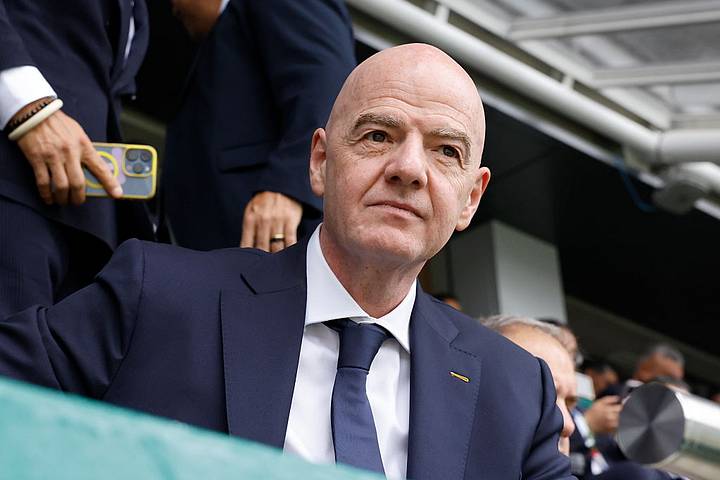
The overturning of Balogun's red card opened the door for other nations to submit comparable appeals.
France requested that FIFA rescind the yellow card issued to star midfielder Michael Olise, while Labour MP Noah Law penned an open letter to Infantino calling for England's Jarell Quansah's red card to be suspended, explicitly referencing the Balogun case as precedent.
"Whilst I believe that it was right for Jarell Quansah to have received this red card and that refereeing rules must be applied consistently, I believe it would be right to delay his suspension until after the completion of the World Cup," the letter read. "We know that a similar situation arose earlier in the competition when United States forward Folarin Balogun received a red card during the Round of 32."
NEXT: What Language Do Referees Speak With Players?
England head coach Thomas Tuchel even quipped that calling Trump "might be a good starting point" when it came to addressing Quansah's ban.
Enable functional cookies to see this feature.
"Where does it start, and where does it end?" Tuchel asked last week. "Can we overturn it or not overturn it or what? What is going on?
"Where to draw the line is the question I asked. I have no answer to that. Where does this end now? Do we appeal if the yellow card is not a yellow card?"