FIFA Under Fire as 2026 World Cup Ticket Prices Shatter Records and Ignite Global Outrage
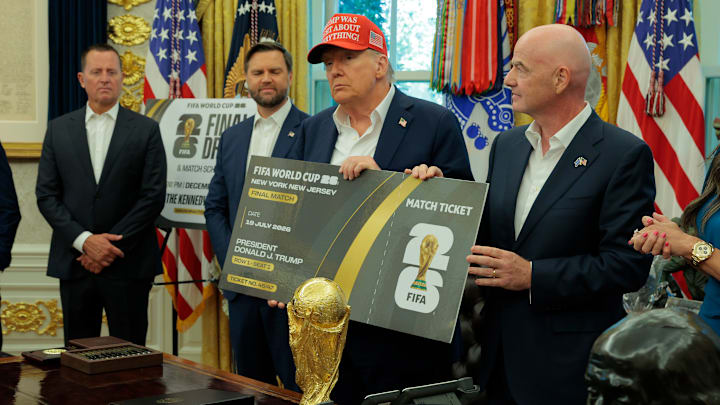
FIFA, the global football governing organization, faces criticism for allegedly acting as "ticket touts" through an extraordinary resale ticketing system for the 2026 World Cup.
The criticism regarding ticket pricing for this summer's international tournament was immediate and harsh. Supporters were initially shocked by the base prices attached to seats, with costs quickly escalating toward four-figure amounts as early as the quarterfinal stage. However, those staggering amounts would soon appear modest compared to the charges generated by FIFA's unlimited resale mechanism.
Exploiting regulations (or their absence) specific to the United States and Canada—two countries that will collectively stage 91 of the 104 World Cup matches in 2026—FIFA is legally permitted to operate their own official resale marketplace that earns them 30% from each secondary sale. This has sparked outrage.
Football Supporters Europe (FSE) and advocacy organization Euroconsumers sent a sharply critical letter to FIFA's chief operating officer Heimo Schirgi this week, condemning the federation's abuse of these regulations.
"Just because ticket scalping is permitted doesn't mean FIFA should become the scalper," the correspondence stated, as reported by The Times.
The same document continues: "Adopting such an approach will be viewed as profit maximization disguised as adapting to market conditions. The World Cup isn't merely another commercial commodity: it represents a worldwide cultural phenomenon that relies on the enthusiasm, dedication and accessibility for regular supporters.
"We worry that fans will increasingly feel marginalized and taken advantage of by a pricing structure that doesn't honor the essence of the World Cup."
FIFA's Profitable Resale Marketplace
Over 4.5 million requests were submitted for FIFA's initial resale ticket window when it launched in October. The massive crowds of competing online purchasers delighted the global organization's financial team, partly due to the unprecedented commission FIFA has granted itself.
While resale costs were previously limited for earlier World Cups, FIFA has removed all constraints this time—leveraging the uncontrolled markets in the U.S. and Canada. FIFA had historically collected no more than 10% of these resale commissions, but now expects to collect 15% from purchasers and 15% from vendors.
This structure means FIFA collects $300 for every $1,000 transacted on their resale platform.
Imagine an unsatisfied customer attempting to dispose of their ticket—maybe the possibility of VAR reviewing corner kicks is unbearable—they can visit FIFA to monetize it. Permitted to price their seat at any amount they choose, suppose this theoretical vendor lists their ticket for $1,000.
Any VAR supporter seeking to reach North America would need to spend $1,150 for that seat—with the 15% markup ($150) flowing directly to FIFA's coffers. The disappointed fan disposing of their ticket, meanwhile, would only receive $850, with 15% of their selling fee ($150) also benefiting, naturally, FIFA.
The governing organization maintains they are simply following the regulations of this competitive environment. "This also represents how the secondary ticket market is handled, which receives different legal treatment than in numerous other global regions," a FIFA declaration stated.
FIFA also contends that resale charges will discourage people from purchasing large quantities of tickets solely to resell them for profit. FIFA reserves the exclusive right to generate revenue.
FIFA Retreating from Dynamic Pricing
The ticketing situation isn't entirely negative.
Even before reaching the resale phase, supporters have objected to FIFA's dynamic pricing mechanism—which causes prices to swing dramatically (typically upward) based on demand. FSE and Euroconsumers declared this system "has no business in football."
FIFA has retreated on this matter and promised to avoid using dynamic or variable pricing when they launch the subsequent ticket release.
However, FIFA wouldn't shoulder complete responsibility. According to the governing body, their approach "mirrors the current market standards for major entertainment and sporting occasions within our host nations on a regular basis, including soccer."
READ THE LATEST WORLD CUP NEWS, PREVIEWS & ANALYSIS HERE