
 ไทย
ไทย English
 中國人
中國人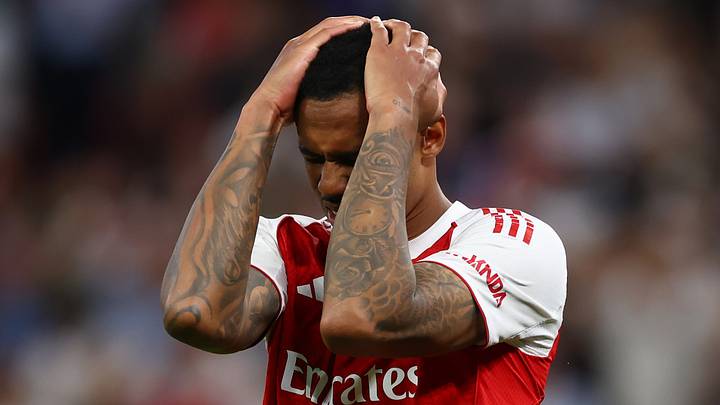
At the close of the film The Commitments, when the band that came so close to making it falls apart, the takeaway is: "Sure, we could have been famous and made albums and stuff, but that would have been predictable. This way it's poetry."
After 22 years of heartbreak and anguish, Arsenal had the opportunity to wipe away all that pain within the span of 11 days. Clinching the Premier League title put an end to their domestic torment (admittedly a very privileged form of suffering where finishing eighth represented rock bottom) and Champions League triumph less than a fortnight later would have cemented the greatest season in the club's history. But where's the story arc in that?
The festivities across north London and beyond were so jubilant and long-lasting largely because those supporters had been made to wait two decades to celebrate being England's finest team. To then be crowned kings of Europe in Mikel Arteta's debut final might have felt somewhat rushed. There is more poetic suffering yet to come.
Not that this will be a widely held view. As the response in The Commitments bluntly states: "It's a pisser is what it is, Joey."
Nobody felt that more acutely than Gabriel, the player who missed the decisive spot kick in Arsenal's penalty shootout loss to Paris Saint-Germain. Yet, no other member of the Gunners' squad is better placed to not only absorb that pain but transform it into something constructive.
What Happened Before Gabriel's Penalty Is More Telling Than His Miss

"I always say, 'When you go and take the penalty I will always have respect for you,'" Arsenal legend Thierry Henry reflected following the spot kicks. Yet, the club's all-time leading scorer remained puzzled as to why Gabriel, a center back who had never previously taken a penalty for the Gunners in any competitive situation, was handed the responsibility at such a critical moment of the shootout.
"I don't know why he went," Henry admitted, "I don't know how he arrived to be the fifth guy. But he went."
Gabriel stepped up because he had volunteered for it. "He wanted to take number five," Arteta confirmed after the match. Could you fault him for that?
Off the back of an individual campaign that saw him rightfully nominated for the Premier League Player of the Season award, Gabriel once again delivered when it mattered in Budapest. After finding themselves 1–0 ahead with 84 minutes of the final played, Arsenal were forced to sit deep and defend against the most potent attacking side on the planet. It wasn't Arteta's intention—"They force you to do that," he explained—but Gabriel undeniably thrived in that challenge.
The "King of Brazil," as he has been dubbed by Arsenal supporters, leapt from his throne to repeatedly repel the elegant advances of PSG's forward line. There were last-ditch blocks, desperate lunges and wild celebrations for each and every one.
Shootouts are as much a test of confidence as technique at the elite level of a Champions League final. Few could have been riding higher than Gabriel after restricting this star-studded PSG side to a non-penalty xG of 0.93. Fortune didn't smile on him this time around, but Arsenal's resilient leader has demonstrated the ability to bounce back from numerous setbacks before.
Gabriel's History of Bouncing Back
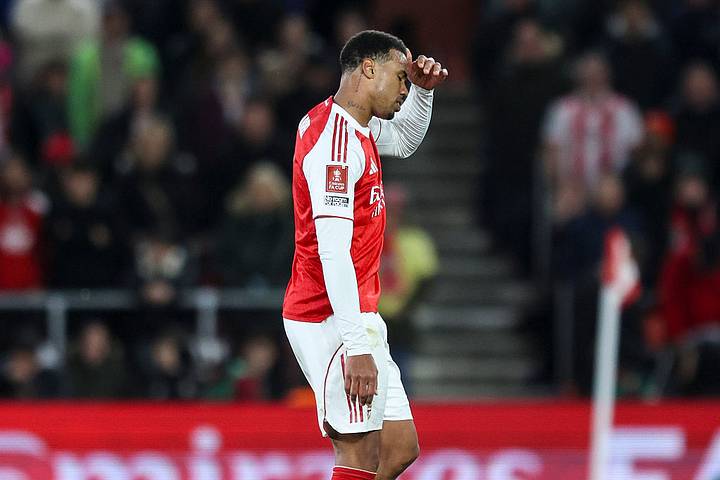
During his second season as an Arsenal player, Gabriel was asked by the club to name his most memorable atmosphere from any match across his first 18 months in north London. It was revealing that his thoughts immediately turned to a comeback win over Wolverhampton Wanderers, a game defined—in Gabriel's mind, at least—by his error for the opening goal.
"Only if you're on the inside can you know what it feels like to make that type of mistake," Gabriel recalled. "That's something you can watch back and learn from."
That ability to learn and correct his errors is one that has played out visibly over the years that followed.
After again gifting a goal against Fulham in August 2022, Gabriel sprinted to the opposite end of the pitch to score. "After I lose the ball, my head is down," the Brazilian explained at the time. "But I look at my brothers, they say, 'Gabi, let's go, let's go!', and I put my head up."
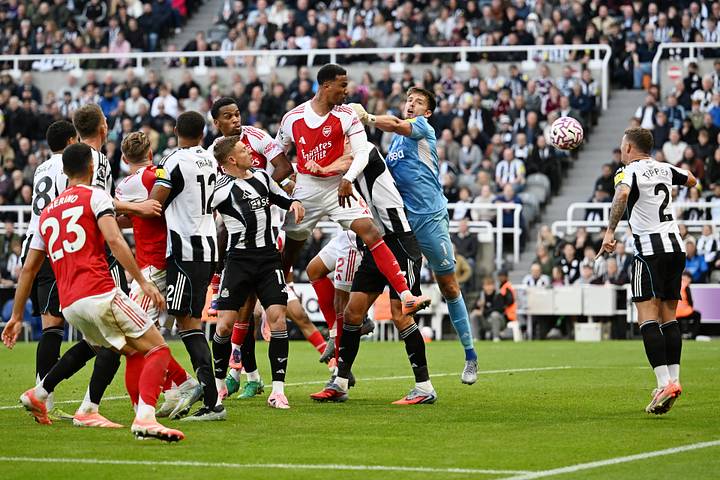
This season alone, Gabriel was culpable for opening goals conceded against Newcastle United and Bournemouth. On each occasion, he personally made amends with a goal of his own. As Arteta noted: "It's not a coincidence with Gabi."
It can be overlooked that Arteta briefly lost confidence in his defensive cornerstone. Following a summer filled with speculation over a lucrative switch to Saudi Arabia, Gabriel was dropped for three league matches during the 2023–24 season.
"Sometimes you just need to sit down on the bench and realize things," Arteta pointedly observed. Gabriel accepted the decision and has rarely been omitted since, becoming, in his manager's own words, "a much better player."
This capacity to respond to adversity is one that has been a constant thread throughout Gabriel's professional career.
Arsenal's Very Own Mentality Monster
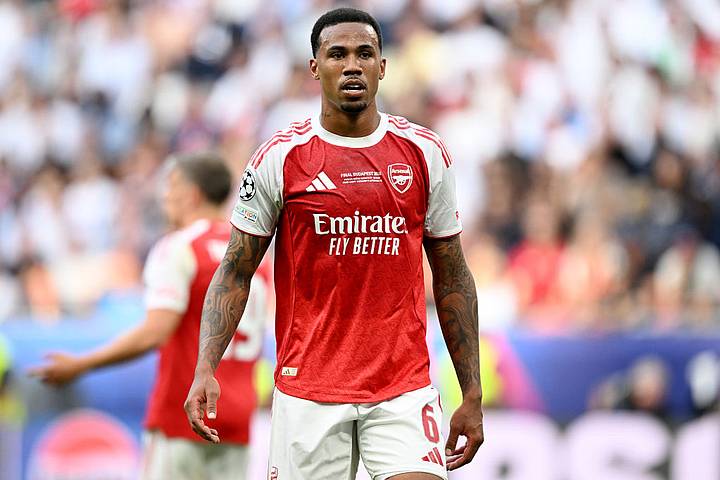
Homesickness overwhelmed Gabriel when he first relocated 300 miles across Brazil to play for Avaí FC in Florianópolis. He lasted just one week. After some soul-searching, the teenager was persuaded to once again leave the comfort of São Paulo, this time persevering for five years before earning his move to Europe with Lille.
"It was a period when I learned a lot and it made a big difference in terms of helping me become the player I am," Gabriel later reflected. "When I'm on the pitch now, I think back to those difficult times and use them to help me."
The commanding center back encountered another obstacle upon arriving at Lille, struggling to break into the first team and being sent on loan to Dinamo Zagreb. Having settled into life in Croatia, Gabriel was eager to remain only to be firmly directed back to France by Luís Campos.
The highly regarded sporting director—who just so happens to have engineered PSG's remarkable transformation under Luis Enrique—was not about to allow Gabriel's talent to go untapped. Campos evaluates a player on his mentality just as much as his technical ability—and few shine as brightly in that regard as Gabriel.
pic.twitter.com/m176B7tcIv
Campos revealed the question he poses when assessing "adversity capacity." When a mistake occurs, is it corrected quickly? In Gabriel's case, the answer is almost always a resounding yes.
The cruel circumstance of stepping up last in the shootout means that Arsenal's mentality monster will be left to dwell on his failure for weeks. This is where a player celebrated by his teammates as the squad's "bodyguard" is in need of some protection himself.
Declan Rice was the first to provide that. "Obviously it's not nice," the midfielder acknowledged when reflecting on the misses of Eberechi Eze and Gabriel. "But we love them and we're with them. It happens in football."
"Gabriel," Rice added, "I've ran out of words for him as a person, as a player."
There was also the moving sight of PSG captain Marquinhos being the first to embrace his tearful compatriot. The seasoned international understands Gabriel's pain all too well, having watched his own spot kick strike the post as Brazil were eliminated from the 2022 World Cup by Croatia. Much like Gabriel, that had been the first penalty of his senior career.
There will be more tears and sleepless nights for Arsenal's defeated warrior, but if any player is capable of carrying the weight of this heartbreak, it is Gabriel.