
 ไทย
ไทย English
 中國人
中國人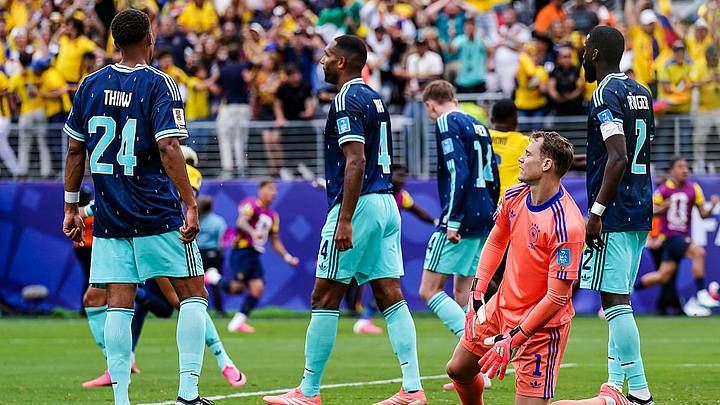
EAST RUTHERFORD, N.J. — Germany's defenders trudged back toward the sideline with their heads hanging low, as MetLife Stadium thundered with deafening cheers from the overwhelmingly pro-Ecuador crowd.
Gonzalo Plata had just slotted home the decisive goal in the 77th minute for an Ecuador side desperately needing three points to keep its tournament dreams alive. Drinks cascaded down from the upper tiers, screams pierced the air and flags soared as sheer jubilation swept through the wave of yellow shirts filling the stands.
A similar eruption had occurred at the nine-minute mark, when Nilson Angulo unleashed a breathtaking long-range strike to draw La Tricolor level after Die Mannschaft had taken an early advantage through Leroy Sané. Germany, who had already secured their place in the round of 32 before kickoff, had no answer as the match wore on.
The 2–1 loss for Julian Nagelsmann's side had no impact on their final position in Group E; they had already been confirmed as group winners following their victory over Cote d'Ivoire in their previous outing. Nevertheless, the match threw a glaring weakness into sharp relief, one that threatens to undermine the nation's World Cup ambitions this summer.
Schlotterbeck's Injury Leaves Germany Floundering

There were already red flags surrounding Germany's defensive unit before the World Cup even got underway. Last summer, Die Mannschaft shipped eight goals during the 2025 UEFA Nations League knockout rounds, narrowly edging past Italy before being eliminated by Portugal and France.
The squad then recorded four clean sheets during their World Cup qualifying campaign a few months later, though those shutouts came against Luxembourg (twice), Northern Ireland and Slovakia. Once 2026 arrived and Germany began facing stiffer opposition, Nagelsmann's backline once again looked exposed.
The four-time World Cup champions conceded three goals against Switzerland alone, then failed to keep a clean sheet against Ghana and the U.S. men's national team. The only side they shut out in the lead-up to this summer's tournament was Finland.
That pattern carried into the World Cup itself, where both Curaçao and Côte d'Ivoire exploited Germany's porous defense—and that was when the backline was at its most solid, with Nico Schlotterbeck marshaling the unit. Misfortune struck when the 26-year-old, unquestionably Nagelsmann's finest defender, sustained a medial ankle ligament injury that brought his tournament to a premature end.
An already inconsistent defense suddenly became even more fragile—and Ecuador wasted no time exposing that in New Jersey.
Germany Bends—And Eventually Breaks

Ecuador entered Friday's fixture without a single goal to their name at the 2026 World Cup; both Côte d'Ivoire and Curaçao had kept Enner Valencia and company at bay in their first two matches. Yet Germany couldn't even hold La Tricolor scoreless for 10 minutes.
There was a complacent edge to Die Mannschaft's play following Sané's opener, and Angulo punished them almost immediately. Germany managed to regroup and contain the damage in the first half, but they crumbled again after the break, adding another blemish to an already troubled defensive record.
Conceding twice at MetLife Stadium may not have cost Nagelsmann's men anything in terms of standings, but the knockout rounds are fast approaching. Every upcoming opponent will fancy their chances against a Germany side that has managed just one clean sheet in their last seven matches.
A Talented Attack Can Only Take Germany So Far
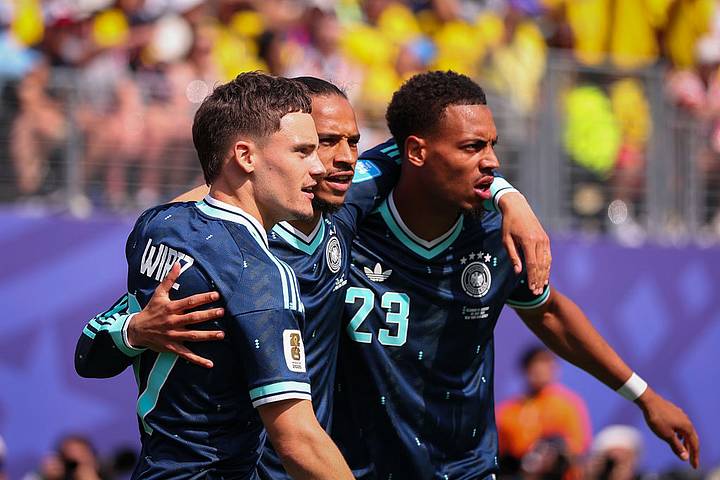
Certainly, Germany's attacking unit is capable of carrying the team through difficult moments. From impact substitute Deniz Undav and the experienced Kai Havertz to the dazzling Jamal Musiala and Florian Wirtz, Die Mannschaft boasts clinical finishers, creative dribblers and dynamic playmakers all performing on the grandest stage.
Yet uncomfortable questions, growing harder to ignore, continue to hang over the squad: What happens when the forwards fail to deliver? What happens when the opposition quality steps up?
As things stand, Nagelsmann's men are projected to face France in the round of 16. Even if Musiala and company perform brilliantly and find the net, what happens when the likes of Kylian Mbappé, Ousmane Dembélé and Michael Olise come charging at Germany's defensive line?
Dembélé, who leaves even the world's finest defenders grasping at thin air, will be licking his lips at the prospect of going up against Nathaniel Brown or David Raum. Jonathan Tah is probably still haunted by memories of facing Mbappé, Dembélé and Olise in last season's Champions League. Antonio Rüdiger, meanwhile, has little hope of matching Mbappé's explosive pace in transition.
Suddenly, even a transcendent display from Havertz, Wirtz or Musiala doesn't appear sufficient to carry Germany past France—or any of the other tournament contenders standing between them and the World Cup final.
History Is Not on Germany's Side
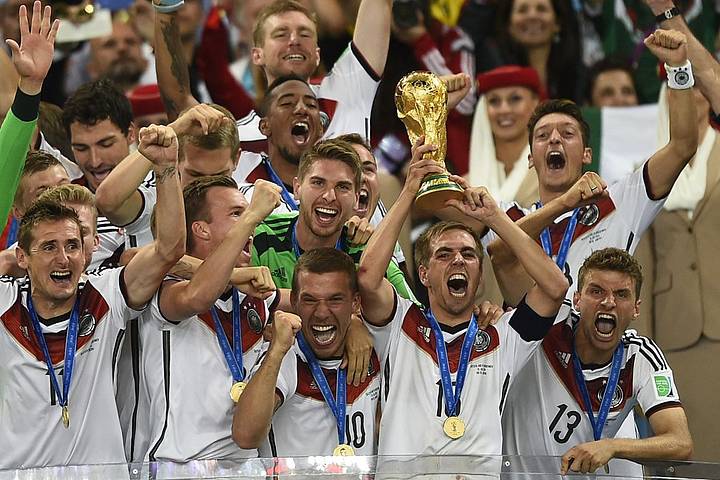
Much was celebrated about this Germany side being the first to advance beyond the group stage since Die Mannschaft's 2014 World Cup-winning generation. Yet that squad which added a fourth star to the national crest was built on an elite defensive foundation.
The center-back partnership of Jérôme Boateng and Mats Hummels formed the spine of Joachim Löw's team, with Benedikt Höwedes and the iconic Philipp Lahm providing width on either flank. In the knockout rounds, that defense held Algeria to a single goal, shut out France entirely, conceded just once against Brazil on home soil and then stifled Lionel Messi and Argentina over 120 minutes to claim the ultimate prize.
Back in 1990, it was Andreas Brehme who shone at the back, helping his side keep a clean sheet against Argentina in the World Cup final—before also converting the match's only goal from the penalty spot.
SI answers is our AI answer engine trained on human-created content.
In 1974, it was Franz Beckenbauer who played the hero by neutralizing Johan Cruyff and helping Germany defeat the Netherlands in the World Cup final. Before that, Werner Liebrich was the key figure in 1954 on the path to the nation's first-ever World Cup title.
In each of Germany's four previous World Cup victories, there were exceptional defenders capable of shutting down the planet's most dangerous attackers. Schlotterbeck had the greatest opportunity to etch his name alongside those legends, but his ankle injury denied him that chance—and in all likelihood, denied Germany theirs of hoisting the golden trophy this summer.