
Gerrard Reveals How Alexander-Arnold's Absence is Crippling Liverpool's Performance
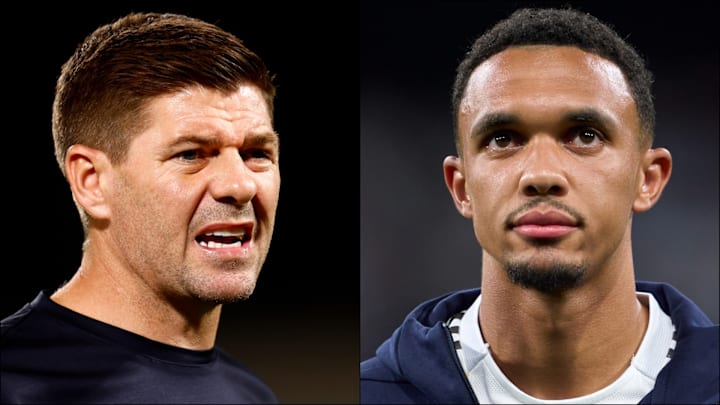
Steven Gerrard contends that Liverpool's current season difficulties stem partly from losing Trent Alexander-Arnold's exceptional passing ability.
Alexander-Arnold drew criticism from Liverpool fans last summer when he allowed his contract to expire before joining Real Madrid, leaving the Reds with only €10 million (£8.4 million, $11.3 million) in transfer fees.
The defender has faced a challenging beginning at Madrid, featuring in merely 11 matches since the summer's Club World Cup due to two extended injury spells—he's presently out with a hamstring problem.
Liverpool has also faltered in 2025–26 during a catastrophic title defense, with Alexander-Arnold's departure being deeply felt. While his defensive weaknesses haven't been mourned, the loss of his exceptional creative talents has impacted Arne Slot's team.
'Predictable' Liverpool Struggling Without Alexander-Arnold

Liverpool legend Gerrard, who rejected a Santiago Bernabéu transfer during his career, argues his former club has grown "predictable" offensively without Alexander-Arnold, while questioning if the defender's Spanish move was wise.
"I'm devastated he departed. I believe we're missing him," Gerrard shared with The Smith Brothers Podcast. "I feel we've grown somewhat predictable moving laterally without truly unlocking defenses where one pass or magical moment would terrify opponents when he possessed the ball.
"So from my perspective as a supporter, and I've mentioned this previously, I'm uncertain it was his best choice."
Alexander-Arnold recorded 12 goal contributions for Liverpool in all competitions last season, bringing his club total to an impressive 23 goals and 92 assists from the right-back position. The England star's brilliant long-range distribution and precise crosses into the box were crucial to the Reds' system.
Liverpool would have undoubtedly benefited from such creativity this season given their struggles at both ends, though their defensive shortcomings have been their primary obstacle to success.