
 ไทย
ไทย English
 中國人
中國人
The 2026 World Cup generated unprecedented interest in soccer across the United States and Canada, with more than 50 million viewers tuning in for the USMNT's round of 16 clash against Belgium, and 69% of Canadians watching at least some portion of the tournament.
If anything became evident over the past month, it's that North American sports fans have developed a deeper passion for soccer than ever before, and there may well be a desire to keep watching the beautiful game rather than waiting for next summer's women's World Cup or the next men's edition in 2030. Fortunately, there's no shortage of options, from Europe's elite leagues on television to Major League Soccer right at home.
For North Americans hoping to sustain the excitement on home soil, MLS is the obvious choice. The 30-club league is scheduled to restart with rivalry fixtures on July 17, with the second half of the season still to play before the push toward the MLS Cup playoffs, which will conclude with the trophy being lifted in mid-December.
Here, Sports Illustrated breaks down five reasons why a World Cup fan might want to explore MLS for the remainder of 2026, before the league transitions to a winter-based calendar in 2027–28, kicking off with a 14-game sprint season in the first half of 2027.
Lionel Messi and the World Cup Players

Even at 39 years of age, Lionel Messi demonstrated throughout the World Cup that he remains among the finest players on the planet. His time at Inter Miami kept him in top form and primed for this summer's marquee event, and the effort paid dividends; Messi has already netted more goals at a single World Cup than at any previous tournament.
After posting 29 goals and 19 assists in 28 appearances to help guide the Herons to the 2025 MLS Cup and claim his second consecutive MLS MVP Award, Messi has contributed 12 goals and 8 assists in 14 games this year, continuing to chase personal milestones and team glory. His displays have been mesmerizing, and with his career entering its final chapter, every performance is worth savoring.
Yet he's far from the only World Cup participant in MLS. He is joined by 46 others, making MLS the leading league outside of England, Germany, France, Spain, and Italy in terms of World Cup representation, with nine players each from the USMNT and Canada.
In total, five World Cup champions are currently active in MLS, including Germany's Thomas Müller with the Vancouver Whitecaps, France's Hugo Lloris and Antoine Griezmann with LAFC and Orlando City respectively, and Argentina's Messi and Rodrigo de Paul with Inter Miami.
The Parity and Playoffs
If you enjoyed the World Cup knockout rounds or the surprise runs from Norway and Switzerland, you're in for a treat—MLS produces underdog stories every season, and clubs battle through knockout rounds in the MLS Cup playoffs to determine a champion, rather than simply crowning the team that finishes top of the regular season.
While it differs from Europe's top divisions, the playoff format delivers high-stakes matches to close out the campaign. Meanwhile, the competitive balance means that almost every year, a team emerges from nowhere to challenge for honors, whether in the regular season, cup competitions, or the ultimate prize of the MLS Cup.
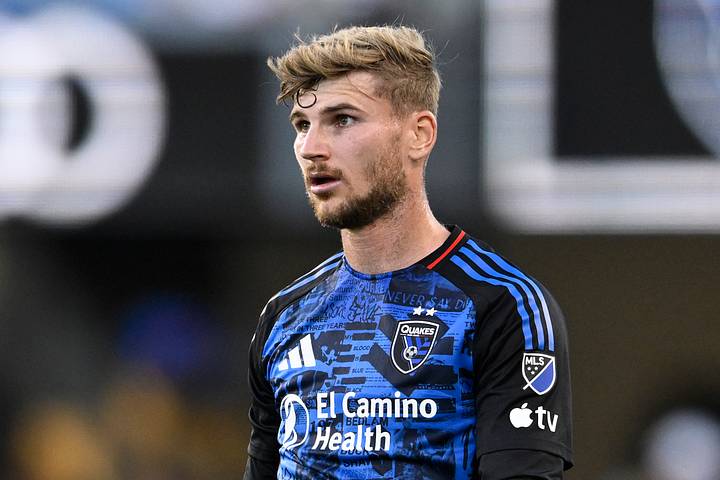
Take the Vancouver Whitecaps, for instance—after more than a decade of underwhelming results, they surged to the MLS Cup final last season, bolstered by the signing of Müller and a series of shrewd acquisitions. This season, last year's regular-season leaders, the Philadelphia Union, have slipped to the bottom of the table, while the San Jose Earthquakes—who finished 20th a year ago—now sit second and have just added Scotland World Cup goalkeeper Aaron Gunn. The league moves at a rapid pace.
For those who take issue with MLS lacking promotion and relegation, that element undeniably adds a distinct layer of drama. Meanwhile, the salary cap—which limits overall spending, aside from three Designated Players and certain other mechanisms—keeps all clubs operating within a broadly comparable financial framework.
You Can Go to the Games

World Cup tickets were financially out of reach for many North Americans, but MLS provides a more affordable and accessible way to experience top-level soccer throughout the U.S. and Canada. And unlike European leagues, kickoff times and the overall fan experience are designed with North American audiences in mind.
At the same time, the supporter cultures across all 30 clubs bring a blend of European and South American energy to the stands, creating a truly distinctive atmosphere.
Some MLS venues offer better atmospheres than others, and certain stadiums are more conducive to socializing. Nevertheless, each provides a unique, locally rooted experience while remaining welcoming and accessible to newcomers. Some clubs even offer complimentary tickets to first-time attendees as a way of drawing in new supporters.
For the most electric atmospheres in MLS, few clubs consistently match the Seattle Sounders, Portland Timbers, LAFC, Nashville SC, and FC Cincinnati—or the Vancouver Whitecaps, Toronto FC, and Atlanta United when those sides are performing well.
The Young Stars

Think MLS is just a retirement league? While there are certainly veteran stars like Messi, Müller, and Son Heung-min, the league also features youthful talents who could one day shake up European football.
It has taken several decades for MLS academies to fully develop into consistent producers of elite talent, but the 2026 season has already thrust some of those promising names into the spotlight.
Sixteen-year-old Cavan Sullivan has been earning more playing time and has registered three goals and four assists across 772 minutes in all competitions, attracting interest from Manchester City, which he is set to join upon turning 18. Then there's 18-year-old Julian Hall, who has nine goals in 15 appearances, and 19-year-old Zavier Gozo, who has contributed six goals and five assists in 14 matches—he was even in late consideration for the USMNT's 2026 World Cup squad.
Other emerging talents include Red Bull New York's 17-year-old midfielder Adri Mehmeti and Vancouver Whitecaps' 21-year-old Tate Johnson, among others. Given recent precedent, several of those players could be on the move to bigger stages before long.
At just 20 years old, Obed Vargas departed the Seattle Sounders earlier this season for Atlético Madrid and represented Mexico at the World Cup. Alex Freeman, meanwhile, broke through at Orlando City last season before making his mark at Villarreal and with the USMNT.
The Unexpected

Cast your mind back to some of the most memorable World Cup matches. Are you thinking of Argentina's narrow escapes against Egypt and Cabo Verde, England's 3–2 victory over Mexico at the Estadio Azteca, or perhaps some of the other nail-biters? Perfect—because that kind of unpredictability is what you'll find in MLS almost every single week, for better or worse.
While Europe's top leagues boast the finest attackers and defenders in the world, MLS clubs—constrained by salary restrictions—tend to field far more accomplished forwards than they do defenders or goalkeepers. The result is a diet of high-scoring games, the occasional eye-catching error, and a stream of random moments that rarely occur in Europe's elite competitions.
As MLS continues to evolve and attract higher-caliber players, the overall quality will rise and mistakes will become less frequent. For now, however, that unpredictability means you simply cannot look away. This season alone, we've witnessed former NCAA defenders outfox World Cup winners, and even a goalkeeper score in stoppage time to salvage a draw.