
 ไทย
ไทย English
 中國人
中國人
After years of being sidelined in the transfer market due to a fragile financial state, Barcelona are suddenly splashing the cash this summer and have emerged as the dominant force in the transfer window so far. So what has changed?
Just days after the conclusion of the 2025–26 season, England international Anthony Gordon touched down in Catalonia as Barcelona's first summer signing for a fee of $93.2 million (€80 million). To put that into context, the reigning Spanish champions had spent just over $105 million (€88 million) in total transfers since the beginning of the Hansi Flick era.
Yet all indications suggest Barcelona are far from finished. An initial $116 million (€100 million) offer for Atlético Madrid forward Julián Alvarez has already been turned down, but the Catalan club are not expected to abandon their pursuit of their top target, with negotiations likely to press on in the weeks ahead.
Several other elite players have been firmly linked with a move to Barcelona, and their summer business appears nowhere near complete. But after such a prolonged period of operating under severe financial restrictions, how can Barça suddenly re-emerge as one of the biggest spenders in the transfer market?
Meeting La Liga's Financial Fair Play Rules
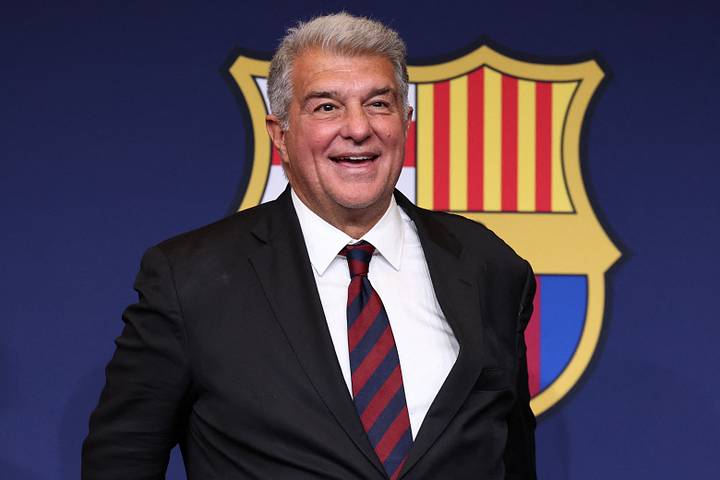
Despite carrying a staggering $1.68 billion (€1.45 billion) in debt, per The Athletic, a lack of liquid funds hasn't been Barcelona's core problem in recent years — as evidenced by Forbes ranking the Catalans as the second most valuable soccer club on the planet. The real obstacle has been their failure to comply with La Liga's financial fair play regulations, specifically the 1:1 rule, which permits clubs to spend $1 for every $1 they earn.
Nevertheless, president Joan Laporta has long pledged that Barça would finally operate within La Liga's 1:1 rule this summer, enabling the club to sign — and crucially register — players without significant complications.
La Liga executive Javier Gómez effectively confirmed that Laporta's pledge would come to fruition, according to The Athletic. La Liga have since informed Barcelona that they are now free to operate without restrictions after satisfying the 1:1 rule, per Sport.
Revenue generated by the reopening of the Camp Nou, along with La Liga's decision to count VIP seat sales at the stadium as part of the club's income, combined with player departures — most notably Robert Lewandowski — freeing up significant space in the wage bill, all contributed to Barcelona finally satisfying La Liga's financial fair play requirements. This has created greater room in their salary structure to register new players.
Previously, Laporta relied on creative "palancas," or financial levers, to help Barcelona sign and register players since taking over as president in 2021. Now, however, the club's financial health appears to be improving in a far more transparent and sustainable way.
Barcelona Need to Seize the Opportunity While They Can
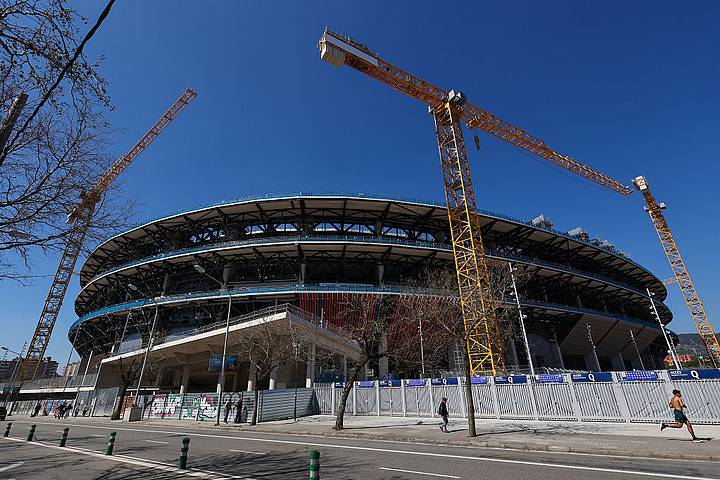
Despite the notable improvement in Barcelona's financial standing, there is a strong sense within the club that they must act decisively now to secure top-tier reinforcements, as they may not have the same opportunity in the not-too-distant future.
Renovation work at the Camp Nou is ongoing, and while Barça will play at their iconic home ground in 2026–27 — with the third tier of seating gradually reopening — it is understood that the Catalans will need to relocate and return to the Estadi Olímpic Lluís Companys in the summer of 2027 while the roof is installed on the redeveloped Camp Nou.
Vacating the Camp Nou once more will take a toll on the club's revenue and, as a result, they could find it difficult to comply with La Liga's financial fair play rules, potentially forcing Barça back into operating under transfer market restrictions.
Beyond the clear need to fill gaps in the squad — such as replacing Lewandowski — Barcelona's summer 2026 strategy is to assemble a squad capable of competing over the next two seasons, per Sport.
A significant boost in the club's income streams makes it feasible for the Catalans to invest heavily and fulfill their ambitious transfer window goals. But if they fail to take advantage of this window now, they are unlikely to be in a position to do so again until at least 2028.