
 ไทย
ไทย English
 中國人
中國人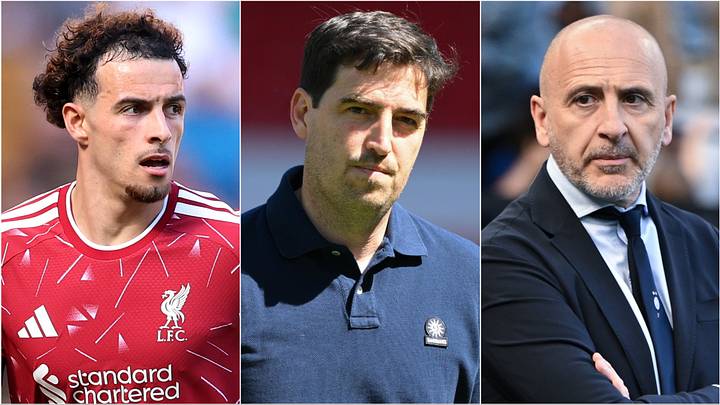
Offloading a peripheral player in the final year of his deal might seem like an easy call, but when it comes to Liverpool midfielder Curtis Jones, the situation is far more complicated than it appears.
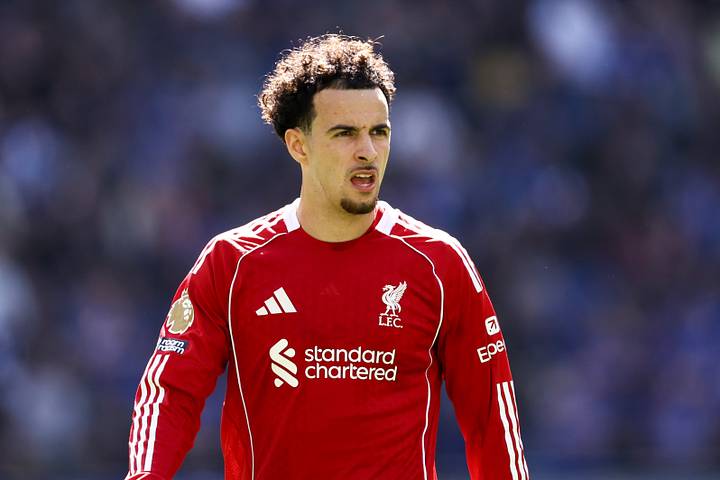
Jones, who turns 25 this year, racked up 49 appearances across all competitions last season, though he was predominantly deployed as a substitute, with many of his starts coming as makeshift cover in multiple roles, including eight outings at right back.
Serie A powerhouse Inter Milan took notice of Jones's limited playing time in January, pursuing a move that ultimately failed to materialize. The Italian club are back at the table this summer, however, with sporting director Piero Ausilio confirming that a renewed approach is imminent.
"The interest in the boy was there in January and remains now," he admitted. "Jones is a player we've had our eye on for quite a while. We attempted to negotiate in January and we'll try once more. If we can find common ground, perfect. If not, we'll look elsewhere."
Reports indicate that an offer of $23 million (€20 million, £17 million) has already been rejected by Liverpool, who are reportedly holding out for $35 million (€30 million, £26 million). Ausilio was visibly amused when told there is "minimal distance" between the two clubs' assessments of Jones's value.
"You say minimal distance, but they're not your millions!" he quipped.
On the surface, this looks like a routine, low-profile transfer saga, but the reality is considerably more complex.
Why Selling Curtis Jones Could Shape Liverpool's Season
Liverpool have faced considerable scrutiny over their squad-building strategy in recent years, allowing their core group to age together while neglecting to secure their younger talents on extended deals. Trent Alexander-Arnold departed last summer and is set to be followed to Real Madrid by centre back Ibrahima Konaté on a free transfer.
The club's approach to player exits came back to haunt them last season during Champions League squad registration. UEFA regulations mandate a minimum of eight homegrown players—those developed at an English club for at least three years between the ages of 15 and 21—and Liverpool simply fell short of that threshold.
The penalty for failing to satisfy those registration requirements is not monetary. Instead, for every homegrown slot a club cannot fill, they are barred from registering one non-homegrown player. In Liverpool's case, what could have been a 25-man European squad was ultimately capped at 22.
Jones is among the very few homegrown players currently at Liverpool, and his potential exit would force the club to accept yet another reduction in their European squad capacity unless a homegrown replacement can be sourced. It is not as simple as signing a marquee name from the continent to plug the gap.
Being limited to just 21 senior players for a Champions League campaign would pose a serious headache for incoming manager Andoni Iraola. Conversely, while retaining Jones would provide a significant boost from a registration standpoint, the prospect of another discontented player walking away for nothing in 12 months raises its own set of concerns.
Jones also holds the distinction of being the sole academy product in the current first-team setup. Last summer's exits of both Alexander-Arnold and Jarell Quansah left Jones as the lone representative of the club's youth system, and allowing him to leave this year would create a glaring void. Losing him on a free transfer in a year's time would be little better.
There is far more at stake in this deal than just the "millions" referenced by Ausilio. Liverpool face a genuinely difficult decision, one that could have significant ramifications for the entire trajectory of their upcoming season.