
 ไทย
 English
 中國人
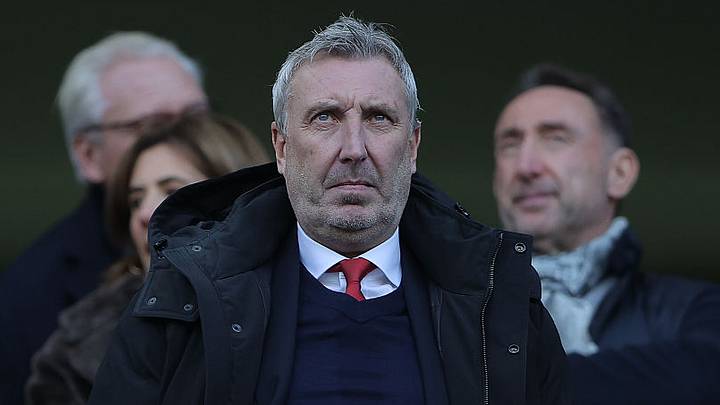
Jason Wilcox has become a go-to subject for TV broadcast cutaways in recent months. Manchester United's increasingly embattled sporting director wears a perpetually dejected expression and appears to sink deeper into his coat with every loss.
He was called out in Lisandro Martínez's fiery outburst last month, with the defender thrusting Wilcox further into the limelight by declaring, "I expect more from our technical director."
While Michael Carrick has since departed Old Trafford, Wilcox remains one of the most visible symbols of United's recent struggles; TV cameras standing by to zoom in on him at the next sign of crisis when domestic soccer returns after the international break.
In many respects, Wilcox was simply in the wrong place at the wrong time for United. The former Blackburn Rovers winger arrived from Southampton in 2024 as technical director, operating under then sporting director Dan Ashworth, as part of INEOS's restructuring of the club's leadership.
His role was seemingly to execute the strategy crafted by Ashworth and CEO Omar Berrada. However, after Ashworth lasted just five months in the position, Wilcox was abruptly elevated and found himself holding the club's most critical role, having only spent a year in a comparable position previously — at Championship-level Southampton. He quickly found himself out of his depth.
Above him, INEOS and Berrada have undoubtedly mishandled the broader picture, but Wilcox must accept a share of the blame for United's historically dismal start to the season, which has left the club in the relegation zone after 10 Premier League matches.
Here are four areas where United's sporting director's decision-making fell short.
Appointing Michael Carrick Full Time

Handing Carrick a permanent contract felt like a case of recent history repeating itself at Old Trafford.
The club icon had overseen a remarkable turnaround during his half-season interim stint, guiding the side to a third-place Premier League finish and a return to Champions League football.
It closely mirrored how Ole Gunnar Solskjær was handed the permanent role back in 2019.
While United's revival under Carrick in the latter stages of the 2025–26 campaign was impressive, it was also clearly built on unsustainable foundations. The players had ridden a wave of momentum, aided by the absence of European fixtures and early cup eliminations.
Carrick, though he performed admirably as caretaker, lacked the experience required for the top job and should never have been a genuine contender at an elite club with aspirations for long-term success.
Following the failures of Erik ten Hag and Ruben Amorim, United required a clear philosophy and direction. Carrick's appointment was an admission from Wilcox that he had no coherent plan beyond the immediate moment.
Neglecting the Defense

United's transfer activity over the past two summers has been defined by a peculiar approach: addressing only one area of the squad at a time.
In 2025, the Red Devils focused heavily on attacking reinforcements, bringing in Bryan Mbeumo, Matheus Cunha and Benjamin Šesko, along with goalkeeper Senne Lammens.
This past summer, Wilcox and his team concentrated on central midfield, with Carlos Baleba, Youri Tielemans and Andrey Santos the only outfield players acquired for fees.
Few would dispute that the attack and midfield required an overhaul, but the strategy left the rest of the squad largely unaddressed.
Multiple positions were crying out for reinforcement this summer, particularly the full-back slots, with the injury-prone Luke Shaw's fitness remaining a persistent concern and both Diogo Dalot and Noussair Mazraoui struggling to convince.
At center back, Martínez, Harry Maguire and Matthijs de Ligt's combined form and fitness problems have left the backline dangerously exposed.
Left backs Lewis Hall and Alejandro Balde were among the names linked during the window, but no deal materialized, with Wilcox apparently deferring defensive reinforcement to a future transfer window.
... And the Strikers
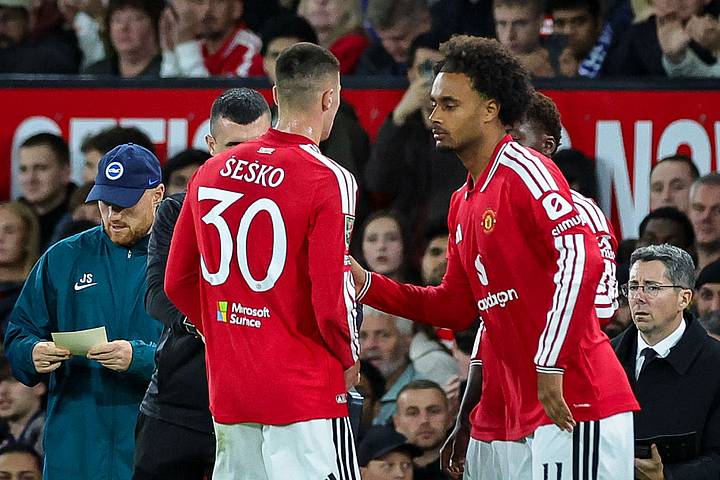
Centre forward was another glaring area that required at minimum a depth signing this summer.
Šesko's shin injury, which is now expected to sideline him until the new year, has placed enormous additional pressure on Mbeumo — a natural wide player — to serve as the primary attacking outlet.
Joshua Zirkzee, with just six Premier League goals across 62 appearances, is the club's only other senior striker option.
Following Šesko's setback, speculation emerged linking United with Leeds United's Dominic Calvert-Lewin, though this felt like yet another reactive scramble that exposed a lack of clarity over what the sporting director actually envisions for his squad.
Not Shifting the Deadwood
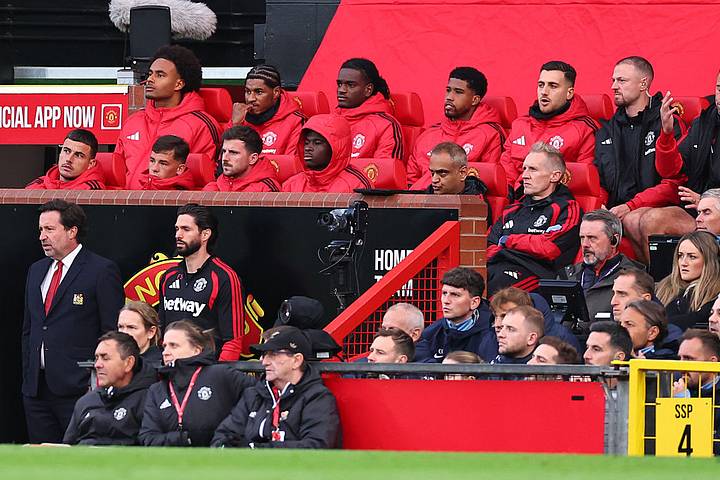
Manchester United's squad is a Frankenstein's monster, stitched together from players recruited for different managers with different tactical visions across different eras.
There has been a notable absence of the ruthlessness needed to strip the squad of its weakest elements and cut loose players who are no longer up to the required standard.
While supporters may have welcomed the departures of Antony, Alejandro Garnacho, Rasmus Højlund, Jadon Sancho and Tyrell Malacia over the past two summers, many more underperforming players remain on the payroll collecting substantial wages.
Marcus Rashford, 29, returned this past summer with no clear plan for his reintegration, while Maguire, 33, and Shaw, 31, increasingly appear to have been left behind by the pace of the modern game.
De Ligt, Mason Mount and Manuel Ugarte's persistent injury troubles have reduced them to little more than costly fixtures in the treatment room. Mazraoui and Zirkzee, meanwhile, are both entering their third seasons at Old Trafford having never truly established themselves.
Wilcox's reluctance — or inability — to offload the squad's surplus players has squandered resources, eroded standards and contributed to a damaging culture of complacency.