
 ไทย
ไทย English
 中國人
中國人
Two years after departing Liverpool citing burnout, Jürgen Klopp has returned to management by taking charge of the Germany men's national team.
In the first summer following his exit from Anfield, Klopp acknowledged the possibility of returning to football but dismissed the idea of enduring the day-to-day demands of coaching. "I'm going to do some work. I'm too young to only do padel tennis and grandchildren," he told the International Coaches' Congress in Wurzburg, Germany in July 2024. "Will that be coach again? I would actually rule that out at the moment."
Klopp stayed true to his word, accepting the position of Red Bull's head of global soccer. Despite being consistently linked with every major vacancy — whether at club or international level — the 59-year-old repeatedly emphasized the fulfillment he derived from his new, behind-the-scenes role.
Yet that firm stance of "ruling out" a return to coaching gradually eased as the hours of padel and family time accumulated. Manchester United, Chelsea, England, and the U.S. men's national team all attempted and failed to lure Klopp back to the touchline. Germany, however, has now succeeded.
The widely anticipated announcement was officially confirmed on Friday, with Klopp unveiled as the national team's new head coach three weeks after Julian Nagelsmann's resignation following a disappointing World Cup exit in the round of 32. Klopp has signed a four-year deal, which will encompass the 2028 European Championship and the 2030 World Cup.
'So Special'—Klopp Explains Why Germany Job Is Different
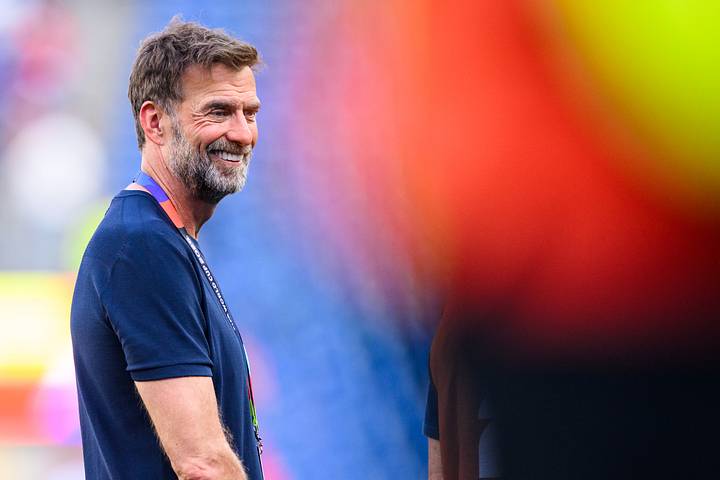
Ahead of his official first day in the role on Aug. 15, 2026, Klopp held an introductory press conference in Leipzig. After turning down so many offers, the most pressing question was why he was prepared to trade his comfortable lifestyle for the immense pressure that comes with managing a national team.
"The national team can unite us Germans like almost nothing else," Klopp explained. "That's exactly what makes this task so special to me. I'm grateful for everything I've been able to experience and learn over the past year and a half at Red Bull, and for the openness that made this agreement possible in the first place.
"Now I'm looking forward to this special challenge in German soccer, which we will tackle together with humility and patience: to develop a team that fights for one another, that enjoys playing soccer, and that the people of our country can rally behind with full conviction."
Klopp, who will be joined by his former Liverpool assistant coaches Peter Krawietz and Pepijn Lijnders, as well as retired international Sven Bender, added: "It's a great honor to be sitting here today.
"What's been happening to me over the last few days is that a movie is playing in my head—thoughts are running through my mind. Where did it all begin? Where do I come from? I already had an idea of how significant the role of national team coach is. But when you're actually associated with it, you feel the magnitude and the responsibility even more."
In an unusual shift into the third person, the celebrated Champions League and Premier League winner offered a bold prediction about the final chapter of his managerial career: "Jürgen Klopp has no career after the national team. Ideally, this is the highlight of my career."
Klopp's Arrival Comes With a Threat
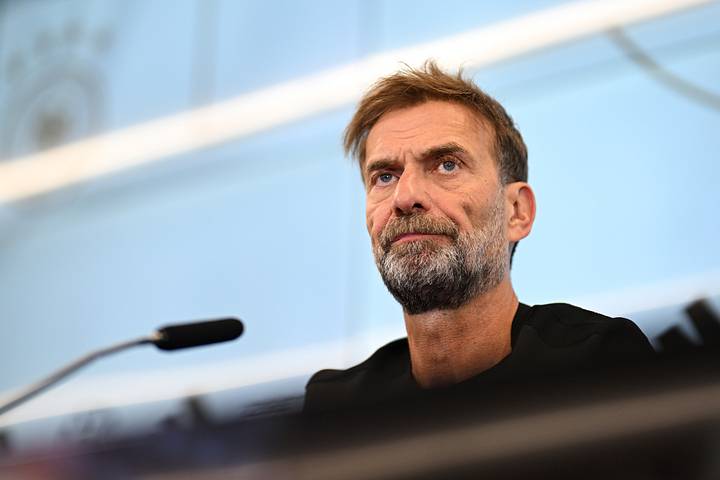
Amid the upbeat tone, there was a familiar sharpness to Klopp's introduction. Alongside a dig at German Chancellor Friedrich Merz, the former Liverpool boss issued a stern warning to the press. "The day you no longer want this, just say so. And I'm out. No severance pay," he threatened.
"If you say tomorrow, 'He's terrible,' I'm out. Not just a few of you—it would have to be more than that. If the DFB says, 'He's terrible,' I'm out. If you act out of line and don't leave my family alone, I'm out."
"We have a mission to fulfill," Klopp added. "I've given interviews here and there, but I can't say I've missed it."
Enable functional cookies to see this feature.
That mission must remain grounded in reality, Klopp stressed: "We need realistic expectations. People ask: Are we as good as France? And the answer is no—so that's not true."
France were eliminated in the World Cup semifinals but impressed neutrals with their attacking brand of football. The man who popularized the term 'heavy metal football' is inclined to pursue a similarly aggressive approach: "I'm eager to work with guys who play a style of soccer that everyone enjoys. It doesn't always lead to immediate success, but I want people to go home after the game and say, 'Wow!'"