
 ไทย
ไทย English
 中國人
中國人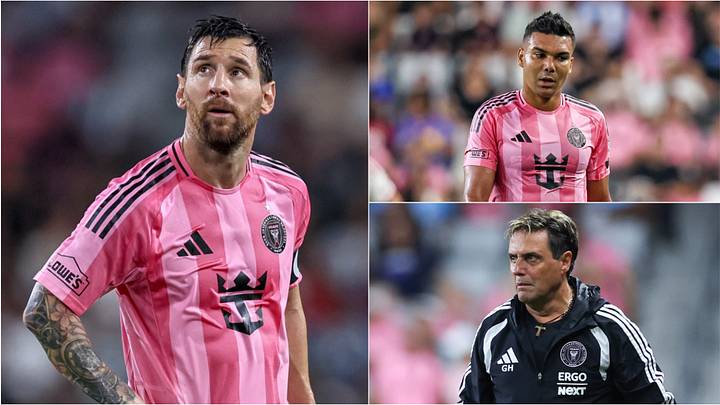
When Lionel Messi publicly berated Rodrigo De Paul during Saturday's eventual 2–1 defeat, it became abundantly clear just how frustrated the eight-time Ballon d'Or holder has grown throughout this season.
Less than a year after guiding Miami to the MLS Cup—claiming both the Golden Boot and MVP honors along the way—Messi has displayed visible signs of exasperation. Inter Miami now resemble the struggling outfit they were before the soccer icon's arrival in 2023—sitting bottom of MLS—rather than the title-chasing powerhouse they were expected to be.
The defeat to Toronto FC extended Miami's winless run to five consecutive matches, with two of those coming in Leagues Cup and three in MLS. Combined with Nashville SC's outstanding recent form, the Herons now trail the Eastern Conference and Supporters' Shield leaders by 10 points—with their title hopes rapidly fading.
There's no questioning that Miami possess one of the finest players on the planet, with Messi still performing at an elite level at 39, having netted once more against Toronto for his 14th goal in 18 league outings. Yet with 13 regular-season games remaining and the Supporters' Shield seemingly beyond reach, Miami no longer appear to be genuine MLS Cup contenders. The squad lacks the sharp edge that defined their brilliant 2025 campaign—but what has caused this collapse, and where do they go from here?
Ironically, the problem may be Messi himself.
A Bad Team With Messi

Messi has shouldered the biggest moments this season, contributing directly to 49% of the team's regular-season goals, including two in the past three matches. He continues to dig deep and step up, but it's no longer sufficient to rescue his side—precisely because it is his team.
Miami have constructed a deeply problematic roster, one that appears driven by the atmosphere it creates for Messi in training and the dressing room, rather than by what would forge a dangerous, well-organized unit on the field for the long term. The result has simply been a team that isn't very good.
Messi may have accumulated 24 goal contributions this season, but he is surrounded by underwhelming players largely of his own choosing, and they are unable to function beyond the reach of his individual brilliance.
For instance, against Nashville in a humiliating 4–1 defeat, Miami were unable to handle Andy Najar, Hany Mukhtar and Sam Surridge on the counter. Against Philadelphia, the tenacity of Quinn and Cavan Sullivan dismantled their game plan. In the Toronto loss, Markus Cimermancic and Alonso Coello neutralized the Miami midfield for the majority of the match.
It has become painfully evident that when opponents dedicate their entire defensive structure to stopping Messi, the rest of the squad is essentially powerless to make any meaningful impact, hampered by a lack of pace, fitness, work rate and cohesion.
The Messi-Made Recruitment
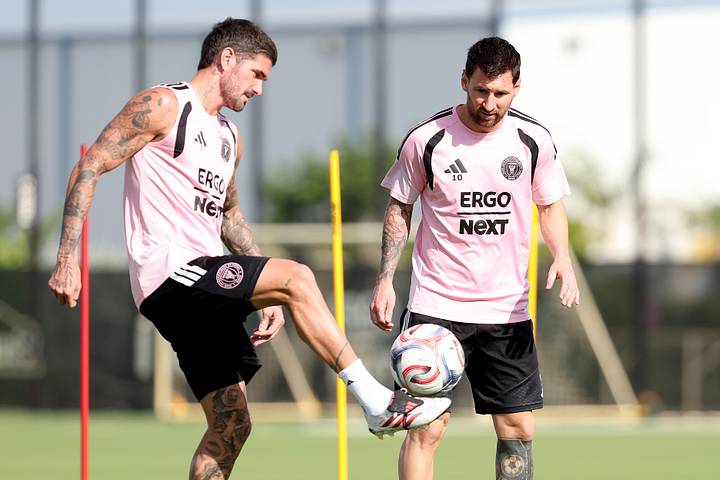
Messi will attract Ballon d'Or consideration this year after netting eight goals at the World Cup and steering Argentina to the final. He may even claim the MLS Golden Boot once again. He's an exceptional footballer—but he's not a particularly effective recruiter.
One could argue Inter Miami weren't especially strong in 2025 either, but Messi's output and the remaining quality of the now-retired Sergio Busquets and Jordi Alba were sufficient to carry them to the MLS Cup.
This year, it's become apparent the squad is fundamentally flawed, and errors keep compounding as a result. Fellow 39-year-old and close Messi confidant Luis Suárez has contributed 10 goals, but offers little else, while the combination of Ian Fray, Noah Allen and Sergio Reguilón has fallen well short of replacing what Alba provided.
Miami have shown remarkable ingenuity in maximizing their financial power despite MLS salary and roster constraints, yet nearly every signing has been made with no objective beyond keeping Messi content. It has become glaringly apparent that Miami need attack-minded fullbacks, a more dynamic presence in midfield transitions and younger attacking depth capable of contributing beyond just goals.
Yet in the winter window, they splashed a near-club record $15 million on Germán Berterame—a powerful striker who isn't a prolific scorer, lacks pace and doesn't press—rather than signing someone who could offer a completely different dimension to Suárez. Then this summer, Miami made their latest blunder: bringing in Casemiro fresh off a disappointing World Cup campaign with Brazil.
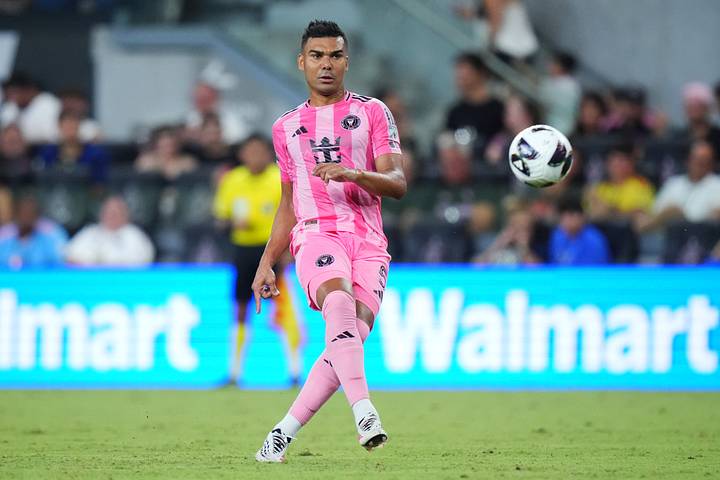
Across five appearances so far, he has been dispossessed as often as he has won tackles (three times) and has created just four chances from central areas. He has conceded an own goal and collected two yellow cards, showing none of the composure that had Manchester United supporters chanting, "One more year, one more year, Casemiro!" from the Old Trafford stands last spring.
In his most recent MLS appearance, he trudged off visibly stunned and drained in the 73rd minute, struggling to cope with the physical demands of the league—as though he had expected an easier ride.
Casemiro sale del partido.
Esta no es la imagen que muchos esperaban del brasileño con Inter Miami.
Insólito. #InterMiamiCF pic.twitter.com/BtDfGKI9Ku
Led by the arrivals of Casemiro and Berterame—and Rodrigo De Paul to a degree—Miami's recent signings have been deeply disappointing, and the club's standout performers, most notably Yannick Bright—the team's only MLS All-Star—were not brought in through a Messi-centric approach.
Almost every recent acquisition has been made with Messi as the primary consideration, deepening the team's dependence on the aging superstar while weakening the supporting cast around him—even if it does make training sessions more pleasant.
What's Next for Inter Miami?

Inter Miami are the most ambitious club in MLS, but meaningful improvement will remain elusive until they overhaul their transfer and recruitment philosophy entirely. The ownership group, Messi included, must prioritize identifying players who fulfill the team's actual needs, rather than those who simply keep their aging star comfortable in the final chapter of his career. There's no reason Miami can't leverage their creative roster management to attract proven, younger talent.
A change in direction will become more apparent as roster restrictions are anticipated to loosen slightly ahead of the 2027 sprint season or the 2027–28 campaign under the revised calendar. Before that point, however, offloading some aging players at a loss and identifying key role players could help salvage the 2026 season.
Difficult conversations will be unavoidable, though. It's evident that the Messi-driven project is no longer producing a winning team, but disentangling the squad-building process from Messi's business interests, ownership stake and personal influence could prove an enormous challenge.
Regardless, Messi could depart as early as this offseason and has hinted at retirement following his father's passing. Without him, Miami face a monumental battle to stay relevant, maintain success and avoid reverting to the big-spending yet bottom-dwelling club they were before his arrival.