
 ไทย
ไทย English
 中國人
中國人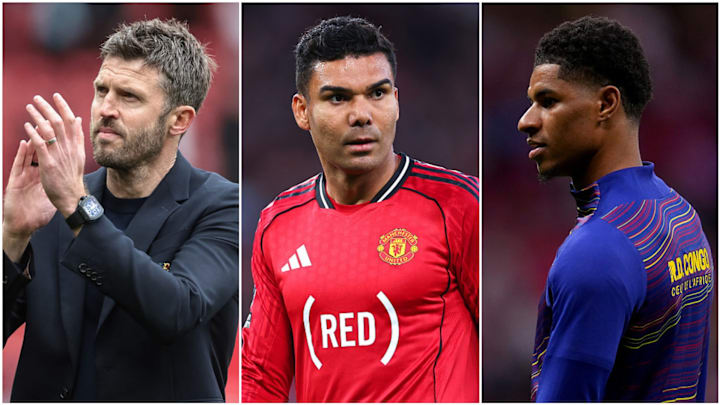
Coming off Manchester United's most dismal season in the Premier League era—and their worst overall since being relegated from the top flight in 1973–74—the club's return to the Champions League for 2026–27 is certainly cause for celebration, yet plenty of work remains ahead.
The Red Devils locked up a top-five Premier League finish with Sunday's Old Trafford victory against Liverpool. That marked a 10th win in 14 games under interim boss Michael Carrick, who has fulfilled the mandate handed to him when he stepped into Ruben Amorim's role back in January.
United cannot drop below fifth place and are virtually assured of finishing third after building a six-point buffer over Liverpool and Aston Villa immediately beneath them.
It marks only the sixth time in the 13 seasons since Sir Alex Ferguson's retirement in 2013 that United have earned Champions League qualification through their Premier League standing—the club secured entry on one other occasion by claiming the Europa League title in 2016–17 after finishing sixth in the domestic table.
The influx of Champions League revenue back into the club provides a significant and well-timed financial lift as an ambitious rebuild aims to reclaim the Premier League title by or before the club's 150th anniversary season in 2027–28. Here is where United must now direct their focus.
Hire a Manager
As things stand, it remains unconfirmed who will be at the helm of Manchester United next season and beyond.
Michael Carrick's tenure only extends through the final match of 2025–26 on May 24, after which the club must determine who their next permanent manager will be.
All signs point to Carrick getting the nod. The 44-year-old former United skipper has done everything necessary to earn a permanent contract since taking on the role on a temporary basis.
From delivering the kind of steady results that proved elusive under Amorim, to implementing a style of play far more aligned with United's storied identity, Carrick checks all the right boxes. Simply 'knowing the club' is often dismissed by skeptics as a trivial advantage, but it has clearly proven its worth.
United held off on making a hasty decision to keep the focus squarely on the task of securing Champions League qualification. In retrospect, a previous sporting hierarchy rushed into giving Ole Gunnar Solskjær a permanent deal in 2019. The Norwegian ultimately oversaw two of the strongest Premier League finishes of the post-Ferguson era, but the momentum from his outstanding interim spell quickly faded once his appointment became official. The club was determined not to repeat that error.
By taking that cautious approach, United's hierarchy has not held talks with alternative candidates. Departing Bournemouth manager Andoni Iraola is the only other credible name to have surfaced, and while the Spaniard is respected as a tactician, he lacks the specific experience Carrick brings, or the stature at this point in his career. Oliver Glasner presents a similar situation, having never managed at the elite level. Mauricio Pochettino's name feels more like speculation than a genuine possibility.
Sign Midfielders
Bolstering squad depth will be absolutely critical. This season's 40-match schedule was Manchester United's lightest in a single campaign since 1914–15, and the fixture list is set to become considerably more demanding.
The Champions League alone will add a minimum of eight matches from the league phase, and it is highly improbable the club bows out of both domestic cup competitions at the first hurdle again.
The midfield area is in particular need of reinforcement. Casemiro departs when his contract expires next month, leaving Kobbie Mainoo and Manuel Ugarte as the only central midfield options—and even Ugarte's future is uncertain after falling out of favor this term.
Replacing Casemiro is one priority, but bringing in three or even four central midfielders before the summer window closes is likely necessary—consider Liverpool's 2023 transfer window, when Alexis Mac Allister, Dominik Szoboszlai, Ryan Gravenberch and Wataru Endo all arrived within two months and played a pivotal role in their eventual Premier League title triumph last season.
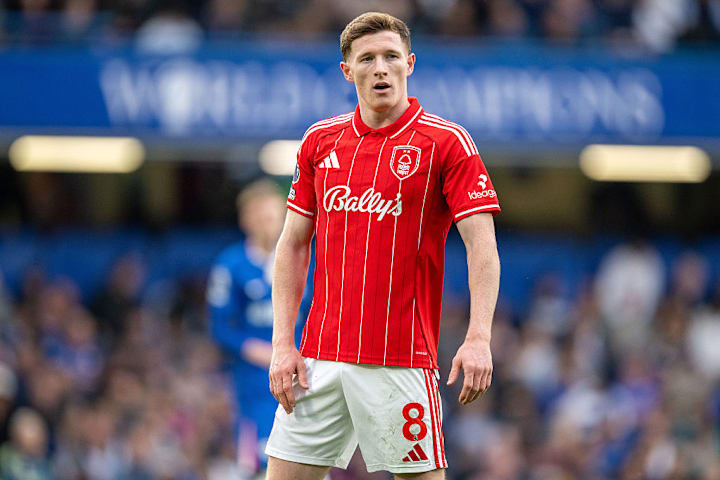
Elliot Anderson, Sandro Tonali, Adam Wharton, Carlos Baleba, Éderson, Angelo Stiller, Tyler Adams, Adam Scott and Mateus Fernandes have all been linked at various price points, and it will likely take a combination of several to fill both starting and rotational/depth roles.
Decide Rashford, Onana Futures
Among United's high-profile players currently on loan elsewhere this season, Jadon Sancho will become a free agent within weeks, while a purchase obligation on Rasmus Højlund is expected to be triggered by Napoli's anticipated Champions League qualification.
The more pressing matters involve Marcus Rashford and André Onana. Both high-earners will also soon be entitled to a contractual pay increase tied to the club's return to the Champions League.
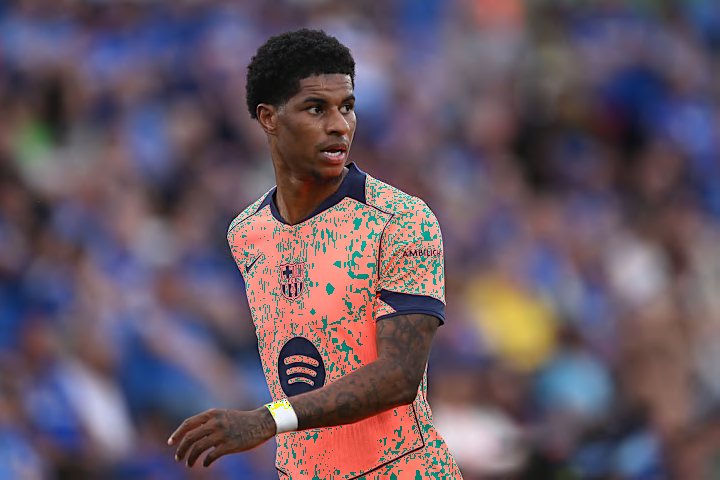
Rashford has spent the season at Barcelona, who hold a purchase option that has been widely reported for months as likely to go unexercised. The perpetually cash-strapped Catalans are unwilling—or unable—to meet the $35.1 million (€30 million, £25.9 million) clause, and it has long been established that United have no intention of renegotiating or offering any discount on a figure already below market value.
The campaign has not been quite the success either Rashford or United had envisioned. The Englishman has shown glimpses of his best form but has equally struggled for consistency, appearing to fall short of an audition for a permanent move when Raphinha was recently sidelined.
A return to Old Trafford for reintegration is not entirely out of the question. Rashford has not featured for United since December 2024, and Ruben Amorim—whose falling out with the forward triggered this 18-month exile—is now long departed. Carrick was a senior United player and later club captain when a teenage Rashford burst onto the scene a decade ago, meaning the prospective manager knows him better than most.
United, while generally well-covered in attacking areas, have lacked a natural fit for the left-wing role that Rashford typically occupies. The one concern is that, with a salary that would make him the squad's highest earner next season, welcoming the 28-year-old back for anything short of a regular starting berth is not necessarily cost-effective. United must be certain he is worth the investment.
Onana faces a steeper path to reintegration, largely due to his position on the pitch. Senne Lammens has firmly established himself as the No. 1, offering a more reliable presence than the naturally flamboyant Onana and underpinning United's renewed consistency. Altay Bayındır may seek a move elsewhere in pursuit of regular starts—likely back home in Türkiye—but it seems improbable that Onana would be willing to return simply to accept a backup role.