
Man Utd's Wake-Up Call: Three Critical Takeaways From West Ham Stalemate
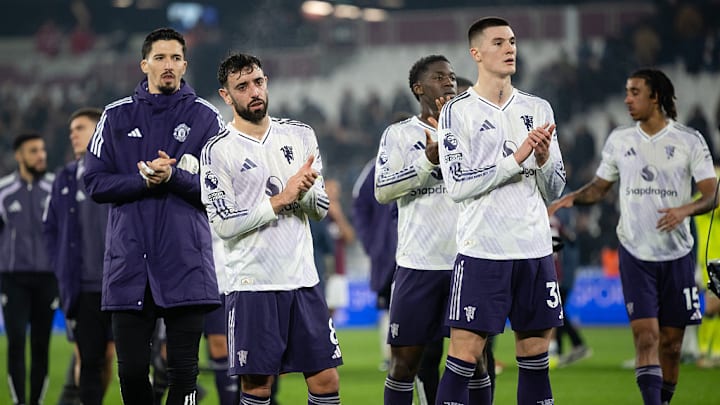
Though many anticipated Fulham's trip to Old Trafford would serve as the ultimate examination of Manchester United's revival under Michael Carrick, their alleged progress faced its greatest challenge from Nuno Espírito Santo's West Ham United instead.
The Red Devils arrived at Tuesday evening's match having secured four consecutive victories at the beginning of Carrick's temporary tenure, yet the London Stadium has consistently been a troublesome venue in recent seasons.
And it appeared United would fall victim once more in East London. Tomáš Souček's strike early in the second period gave West Ham an advantage they rarely seemed likely to surrender until Benjamin Šeško skillfully leveled in the final moments.
Though Carrick's team confronted a stubborn adversary with growing confidence, Tuesday's 1–1 stalemate exposed the problems that have undermined previous management eras. Here are three key takeaways Man Utd must absorb from their London Stadium experience.
Benjamin Sesko Deserves Increased Role
Benjamin Sesko Deserves Increased Role
With fixture scheduling not presenting concerns, Carrick has predictably chosen not to modify his attacking setup since Patrick Dorgu suffered a hamstring problem against Arsenal. He's maintained the identical four-player formation.
The positions have been adjusted slightly since Bryan Mbeumo and Bruno Fernandes collaborated brilliantly against Manchester City, with the former shifting to the left in United's recent matches while the latter continues to roam freely across the pitch.
United have previously managed to dominate opponents through rapid combination play in central zones, supported by Carrick's tactical setup, but West Ham showed no intention of permitting the visitors such freedom between defensive lines. Nuno's compact 4-5-1 defensive structure disrupted United's central link-up play, pushing Fernandes wider and deeper than preferred to maintain his impact.
The shortage of forward runs enabled West Ham to preserve a safe gap between their defensive and midfield lines, while the missing focal point made crossing an ineffective strategy.
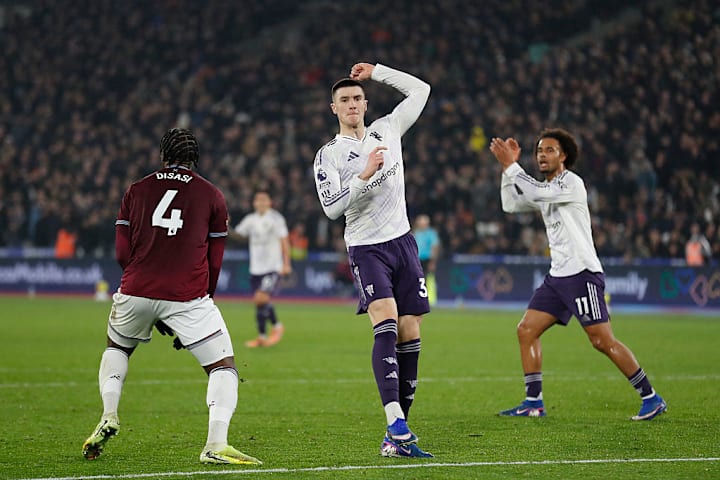
Nevertheless, this situation transformed when Šeško joined the action after sixty minutes. Initially, the Slovenian faced similar difficulties to his colleagues around the West Ham penalty area, but he enabled United to modify their approach. With Mbeumo shifting wide right, they discovered a clear attacking route on what had been an extremely frustrating evening lacking genuine scoring chances.
With under two minutes remaining, Mbeumo cut infield from the right and sent a speculative delivery into the penalty area. Recognizing the chance, Šeško outmuscled Axel Disasi to reach the ball and finished brilliantly with a single touch to salvage a draw. The young forward has now secured late results on two occasions since Carrick's return, with four of his six Premier League strikes coming across the previous five matches.
Man Utd will face additional defensive setups of this nature before the season concludes, and Šeško's characteristics make him a valuable weapon in such circumstances.
Luke Shaw No Longer Reliable Attacking Outlet
Luke Shaw No Longer Reliable Attacking Outlet
Carrick has stressed central progression and combination play to an even greater extent since losing Dorgu to a serious hamstring setback. They've subsequently operated without a designated left winger, with Mbeumo and Matheus Cunha splitting the responsibility.
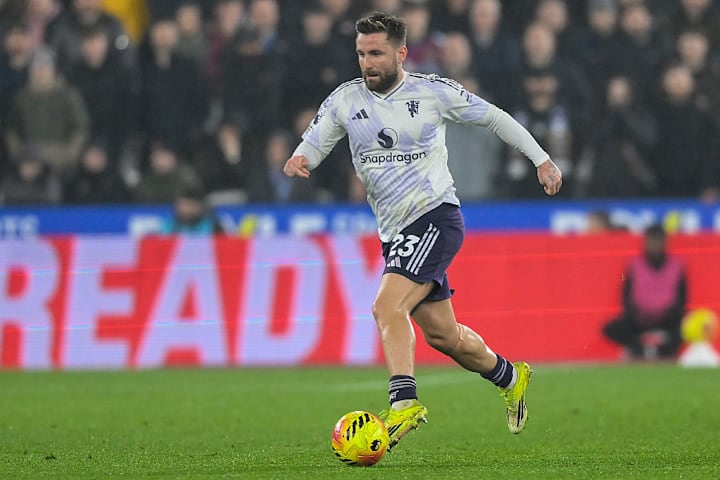
Yet neither player is comfortable maintaining width. Instead, they prefer to work centrally. On Tuesday evening particularly, the responsibility fell to left-back Luke Shaw to push forward from his position and serve as a crucial attacking threat down his flank.
Unfortunately, the veteran left-back isn't the attacking force he previously was. Shaw has been consistently reliable for Man Utd this campaign, but is susceptible to mental lapses and was at fault for creating the opportunity that resulted in Souček's opening goal. He defended solidly otherwise, but his offensive limitations were evident in East London.
While Shaw, at his peak, was an energetic left-back capable of surging along the touchline, he's never been a consistent final third contributor. The Englishman was deployed as a center-back rather than a wing-back under Amorim, with accumulated injuries over time reducing his physical capabilities.
And Carrick cannot depend on him now to resurface as an attacking weapon. Shaw hadn't required anything beyond steady possession play under the new manager before Tuesday evening, but match circumstances and United's formation placed him in a crucial role when the visitors were pursuing an equalizer in the second half.
However, Shaw concluded the match completing merely one of four attempted crosses. He lacks the pace to beat defenders individually and no longer appears confident in his forward ventures. Certainly, there's a place for the Englishman in this squad, but United desperately missed a dependable source of width down their left against a well-organized defense.
Intensity Paramount Out of Possession
Intensity Paramount Out of Possession
Defensive discipline has been the foundation of Man Utd's approach during the opening phase of Carrick's temporary management. There's been nothing revolutionary in their methodology, with simply solid execution and increased energy sufficient to neutralize teams like Man City and Arsenal.
Nevertheless, problems emerged in the narrow victory over Fulham, with an attacking Cottagers side successfully manipulating United's pressing and circumventing their midfield. On Tuesday evening, particularly during the opening period, there were additional defensive concerns for the visitors.
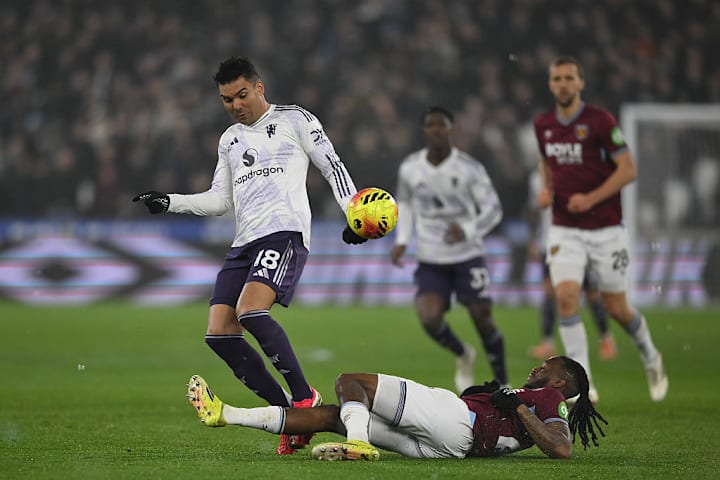
A Nuno-coached team typically doesn't build from deep positions, but they apparently identified a weakness in United's setup and attempted to capitalize. In reality, the away team often appeared well-positioned to regain possession high up the field, but they were undermined by insufficient intensity at crucial moments.
Fernandes and Kobbie Mainoo were especially ineffective defensively, allowing runners to bypass them. Mainoo was caught off-guard for West Ham's opener, but both he and Fernandes were guilty of losing concentration when Man Utd pressed aggressively in the first half, which provided the hosts with momentum.
According to Opta, both teams won 84 duels and 22 aerial contests, while United recorded two additional ball recoveries. This wasn't necessarily a situation where West Ham "desired victory more" than their possibly overconfident opponents, but Carrick will review the footage knowing that, despite how well-organized his pressing system was on Tuesday evening, it was compromised by too many individual errors from his players.