
 ไทย
ไทย English
 中國人
中國人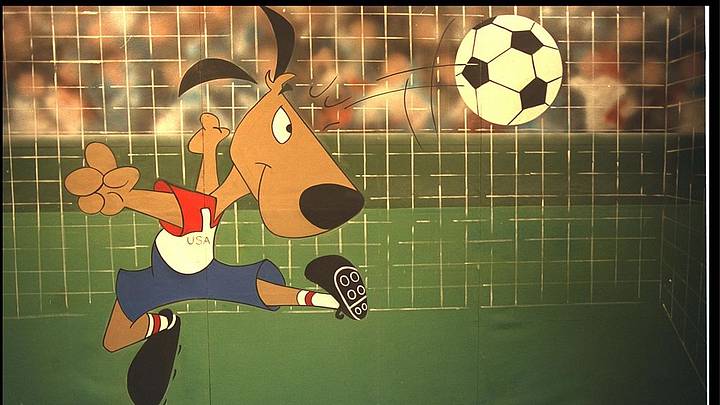
Just as there exists a hall of fame for legendary World Cup players, there is equally a hall of fame for iconic World Cup mascots, and Striker the animated dog undeniably earns his place among them.
Cast your mind back to 1994, the last time soccer's grandest stage was set on American soil. Bill Clinton occupied the White House, Forrest Gump was drawing crowds to cinemas, and a dog sporting a U.S. men's national team jersey was making its way into the cultural zeitgeist.
Striker began as simply the official mascot of the 1994 World Cup but rapidly came to dominate the entire tournament. From television commercials and marketing campaigns to merchandise and children's toys, the dog transcended the sport itself, winning over even the most casual soccer enthusiasts across the United States.
Brazil may have claimed the crown that summer, edging Italy in a penalty shootout to secure a fourth World Cup title, but Striker was the true champion of the 1994 edition—despite never setting foot on the field for a single second.
World Cup Previews

All 48 Teams
Bespoke Illustrations
Striker Breaks the Mold
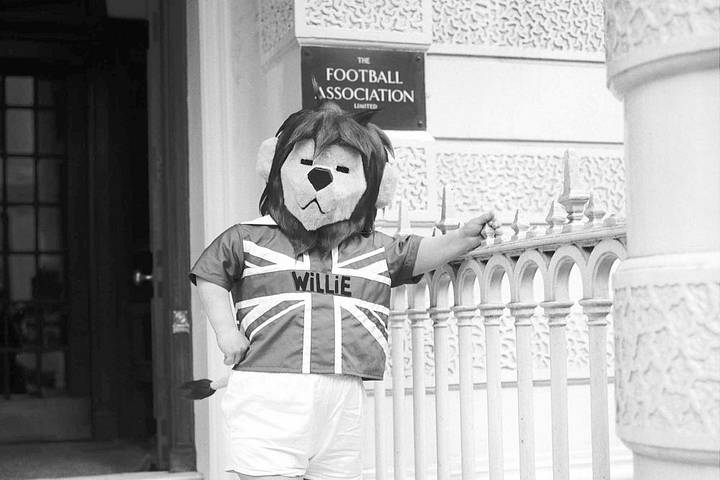
Mascots are so deeply embedded in sports culture, particularly across the United States, that it's difficult to imagine a world without them. But every tradition has an origin, and World Cup Willie holds the distinction of being the very first World Cup mascot, debuting back in 1966.
The lion, clad in a Union Jack shirt, served as the symbol of the World Cup hosted—and won—by England. World Cup Willie was a trailblazer, though not necessarily an inspiration for what followed. Subsequent mascots moved away from animals entirely, embracing a wide range of different characters instead.
West Germany introduced two young boys named "Tip" and "Tap" as mascots for the 1974 World Cup. Naranjito, the face of the 1982 World Cup in Spain, was a cheerful talking orange. Mexico followed four years later with a chili pepper called Pique. Italy pushed boundaries further in 1990, unveiling Ciro, a stick figure who played soccer.
It wasn't until Striker arrived in 1994 that the pattern was truly disrupted, reintroducing an animal as the face of the tournament for the first time in 28 years.
The Public Has Its Say
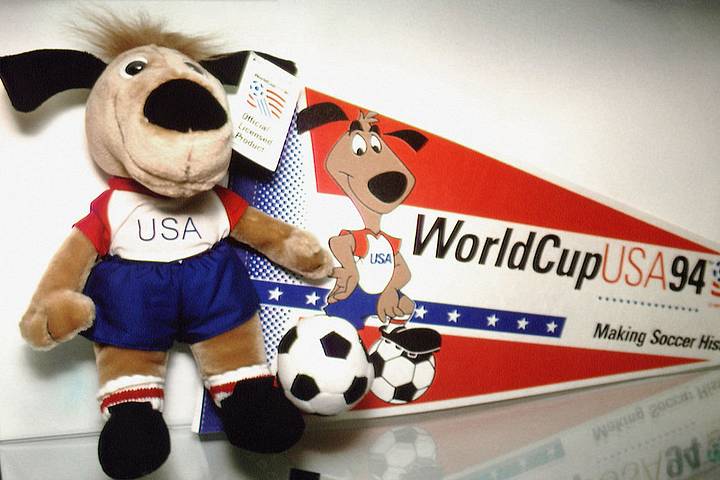
When the time came to select the mascot for the 1994 World Cup, the decision was handed directly to the public. Americans were invited to cast their votes for their favorite candidate, and Striker emerged victorious.
It's hardly surprising the dog came out ahead; one glance at him tells you everything. Designed by Warner Bros. Animation, Striker donned a red and white jersey bearing "USA 94" across the chest, paired with blue shorts. The uniform alone radiated American patriotism, with his red and white socks rounding out the ensemble perfectly.
Then there's his warm, inviting expression. Who could resist a lovable dog? His cartoonish appearance also had the added benefit of resonating with both children and adults alike.
It was an unmissable opportunity for Warner Bros. Animation and FIFA, and they delivered without hesitation.
Striker Becomes Larger Than Life
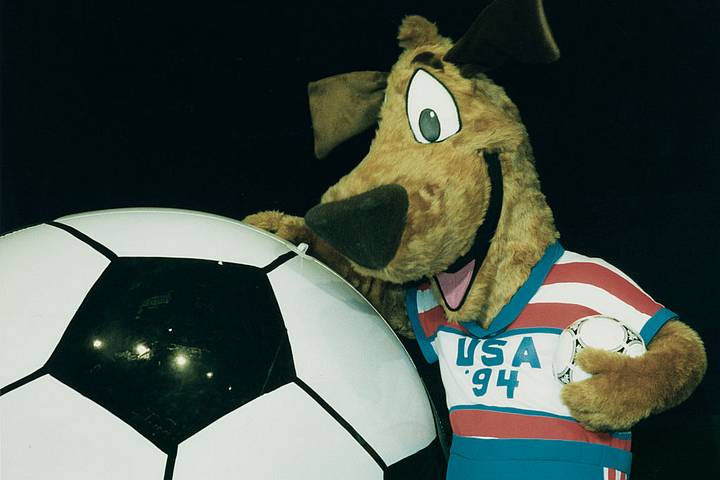
Having a likable, easily recognizable mascot was likely FIFA's primary goal. After all, the World Cup was ultimately about (spoiler) soccer. The 24 nations competing for glory in the United States commanded the spotlight ... but they had an unexpected companion sharing it with them.
Striker and his droopy ears took the world by storm. The dog, affectionately nicknamed the "World Cup Pup," soon found himself starring in his own commercials, promoting the tournament by demonstrating his knack for flicking a soccer ball onto his elongated snout and keeping it airborne, much like a player showcasing his technical skills on the field.
The mascot also graced an extensive range of merchandise, from shirts and cups to glasses, magnets and pins. Striker-themed toys and stuffed animals were widely available. Some of these items, now regarded as vintage collectibles, can still be found for sale on secondhand platforms today.
Throughout it all, Striker carried out his core mascot responsibilities—showing up to matches. People had to wear the mascot's heavy wool costume beneath the scorching heat of an American summer, peering through eye holes in the dog's snout as they posed for countless photos with enthusiastic fans while the sounds of World Cup action echoed in the background.
It was clear that Striker had grown into something far greater than a mere mascot. The dog became a symbol not just of the tournament, but of the United States and the sport of soccer as a whole.
Striker's Legacy
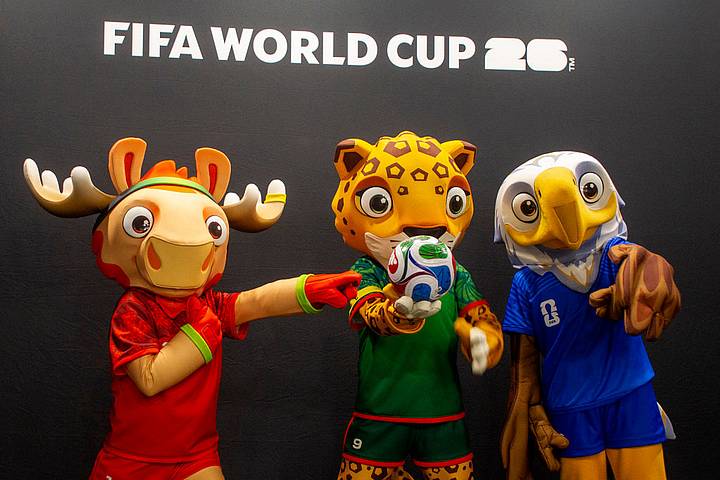
It has been 32 years since Striker became the defining face of the 1994 World Cup, yet the dog's influence continues to leave its mark on soccer's greatest tournament. Following his enormous popularity, animals became the standard choice for World Cup mascots.
Goleo VI, a lion, took the spotlight in 2006, followed by Zakumi the leopard four years later when South Africa played host to the World Cup. Russia then introduced Zabivaka the wolf for the 2018 edition.
Looking ahead to 2026, the United States, Canada and Mexico revealed three mascots—all animals—for this summer's marquee event. Maple the moose represented Canada, Zayu the jaguar stood for Mexico, and Clutch the bald eagle flew the flag for the U.S.
The trio was greeted with a divided response, with many fans finding them overly safe and uninspired. They seemed to fall short of the creative ambition expected for the largest World Cup in history, featuring 48 teams for the very first time.
It's remarkable that Striker avoided similar criticism, given that there was nothing particularly groundbreaking about the dog at first glance. Yet he became nothing short of a phenomenon—a rare breed, so to speak—in a nation that was only just beginning to truly embrace soccer into its living rooms, where it has remained ever since.