
 ไทย
 English
 中國人

Major League Soccer ranks among the fastest-expanding soccer leagues on the planet.
With each passing year, new multi-million dollar clubs are being added, the league's fanbase continues to grow, and talented players—both emerging and seasoned—are flocking to compete in the division.
From Inter Miami's Lionel Messi to fellow World Cup champions like Thomas Müller and Antoine Griezmann, MLS is now brimming with elite talent, many of whom collect enormous weekly paychecks as Designated Players.
Not every player in the league enjoys such financial rewards, however. Some earn only a small portion of what the top names command, as clubs carefully balance their payrolls under the league's stringent salary cap and roster regulations.
So, what does a typical MLS player actually earn?
MLS Player Salary Averages

Based on the most recent 2026 MLS Players Association salary data, MLS has hit unprecedented levels of player expenditure. Average annual guaranteed compensation has jumped 18% from $632,809 in 2025 to $746,936 in 2026, while median compensation has climbed 6.4% from $338,347 to $360,042. The league's total wage bill has soared by over $127 million to a record-breaking $724.5 million.
Those figures become even more staggering when viewed against the backdrop of a decade ago. In 2016, the typical MLS player earned around $317,000 per year, while median compensation sat at just $117,000 and the league's total payroll totaled $175.8 million. A decade later, average compensation has more than doubled and median compensation has more than tripled.
Meanwhile, the combined wage bill has grown more than fourfold, highlighting the remarkable financial evolution of North American soccer. These figures, however, don't fully capture the real earnings of most MLS players, as the average is heavily distorted by a small group of exceptionally high earners.
Designated Player Rule and High Earners

Unlike most other professional soccer leagues worldwide, MLS operates under strict roster and salary regulations. The league enforces a "soft salary cap," with the majority of the 30 players permitted on each team's roster capped at a maximum salary of $803,125 per season, totaling $6,425,000 for the full roster.
There are, however, several exceptions to this framework, including U-22 Initiative players, TAM (Targeted Allocation Money) players, Homegrown Subsidy Players and, most prominently, Designated Players. U-22 Initiative players must satisfy specific age criteria to qualify, and their salaries are charged to the cap at a fixed, discounted rate, enabling clubs to recruit young talent more affordably.
TAM players—typically experienced veterans or those whose market value would otherwise breach the salary cap—can have a portion of their wages covered by the league. This arrangement allows teams to bolster their squads without pushing past the salary cap threshold.
Designated Players, meanwhile, are marquee signings who are exempt from salary cap restrictions, giving MLS clubs the ability to recruit global stars. Each team may have up to three, with only $803,125 of their salaries counting against the cap. The club covers the remaining amount.
Highest-Earning MLS Designated Players 2026

Below is a list of the 10 top-earning Designated Players in MLS for 2026, along with their salaries, as reported by the MLS Players Association Fall 2026 Salary Guide.
Player | Team | Annual Salary |
|---|---|---|
Lionel Messi | Inter Miami | $25,000,000 |
Robert Lewandowski | Chicago Fire | $16,000,000 |
Antoine Griezmann | Orlando City | $10,443,243 |
Heung-min Son | LAFC | $10,368,750 |
Breel Embolo | Atlanta United | $9,740,000 |
Rodrigo De Paul | Inter Miami | $7,569,000 |
Miguel Almirón | Atlanta United | $6,056,000 |
Hirving Lozano | LA Galaxy (on loan from San Diego FC) | $6,000,000 |
Allan Saint-Maximin | Charlotte FC | $5,679,200 |
Emil Forsberg | Red Bull New York | $5,405,000 |
Minimum Salaries and Entry-Level Contracts
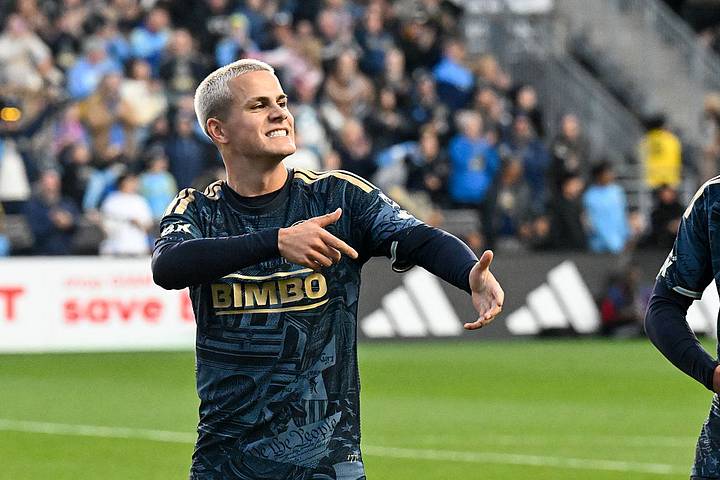
Just as MLS sets a salary ceiling for most players, it also establishes a floor—though the precise amount varies depending on a player's roster classification.
Per MLS's 2026 Roster Rules and Regulations, players occupying a senior roster spot (slots 1–20) must receive a minimum of $113,400 annually. This minimum also applies to players in slots 21–24, which may include Homegrown Players, Generation Adidas players, or those specifically designated as eligible for the MLS SuperDraft.
For the final six positions (slots 25–30), the reserve minimum salary is set at $88,025 per year. Players on the reserve minimum must be 24 years of age or younger during the league year, and these slots may also be filled by eligible Homegrown and Generation Adidas players.
It's admittedly a complex system, but MLS's salary floors and ceilings are designed to ensure financial stability, foster competitive balance, and support the growth of young talent while still giving clubs the flexibility to pursue marquee signings through various exemptions.
MLS Salaries: International vs. Domestic Players

Across MLS, there are 241 international roster spots distributed among the league's 30 clubs. These spots are not permanently assigned to any one team—they can be traded between clubs, giving teams the ability to acquire extra international slots as required.
As a general rule, international players tend to command higher wages than domestic players, largely due to the fact that many of the league's top-paid Designated Players are recruited from abroad. That said, American players can also hold Designated Player status, with the likes of Jordan Morris, Matt Turner, Miles Robinson, Brandon Vazquez, Justen Glad, and Đorđe Mihailović all listed among the league's Designated Players in 2026.