
Michael Carrick's First Loss Reveals Four Crucial Lessons for Man Utd's Future
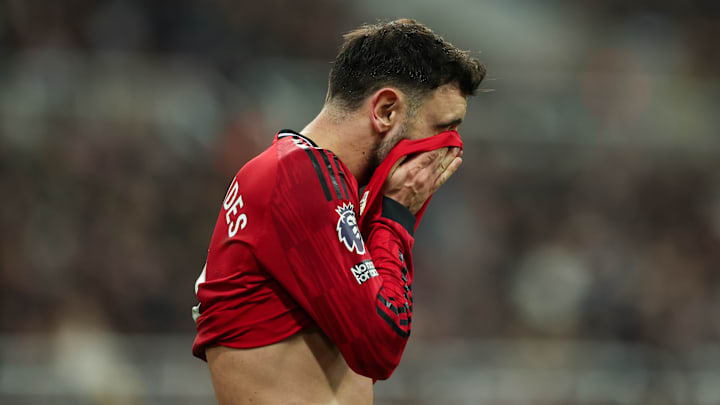
Manchester United faced a harsh wake-up call on Wednesday evening, suffering their first defeat since Michael Carrick took over as interim manager in January.
After Ruben Amorim's exit—and Darren Fletcher's short but unsuccessful caretaker period—Carrick swiftly restored optimism at United with impressive victories over Manchester City and Arsenal in his opening two fixtures.
Everything displayed by the squad in those matches embodied 'the United way' that forms the core of the club's philosophy: passion, offensive play and an unwavering spirit.
Subsequently, additional triumphs against Fulham, Tottenham Hotspur, Everton and Crystal Palace resulted in six victories from his initial seven matches, placing the Red Devils at the summit of the Premier League's recent form standings.
Having also secured a stalemate against West Ham United during that sequence, Carrick had maintained his unbeaten record and—including his 2021 temporary tenure—was still without a league defeat in nine matches as Manchester United manager. Only two other temporary leaders of the men's squad in the club's past had gone undefeated in their opening 10: Herbert Bamlett (1927) and Ole Gunnar Solskjær (2018–19).
However, goalkeeper Senne Lammens described the display at St James's Park as "a collective off-day" that the squad must now "learn from." So what insights can be gained?
Fine Line Between Winning, Losing
Narrow Margin Between Success and Failure
Since defeating Arsenal on Jan. 25, Manchester United haven't been exceptional. The continuation of largely positive outcomes reflects more on determination and tenacity than on an ability to dominate supposedly inferior opponents.
The Fulham triumph was clinched with a 94th-minute winner from Benjamin Šeško, while Spurs competed with just 10 men for over half their match after captain Cristian Romero received a red card. Another tight victory came against Everton—Šeško once more, while they trailed against Palace until the Eagles were also down to 10 players early in the second period.
The Newcastle encounter unfolded similarly to those three previous games, even including the Magpies having a player dismissed in the opening half. However, where United had previously managed to secure hard-fought wins, a Newcastle spot-kick and an unexpected moment of individual brilliance from William Osula transformed a potential narrow victory into a narrow loss.
As a collective, United are still discovering their identity, with these players having operated under three different coaches in just a brief timeframe.
Not every squad performs excellently when victorious, though the genuine hallmark of elite teams is the capacity to succeed regardless of circumstances. Completing the task matters most, but when you're not consistently performing well, it doesn't require much to slide into defeat.
Currently, United are walking that narrow margin.
Clinical Is King
Finishing Prowess Rules Supreme
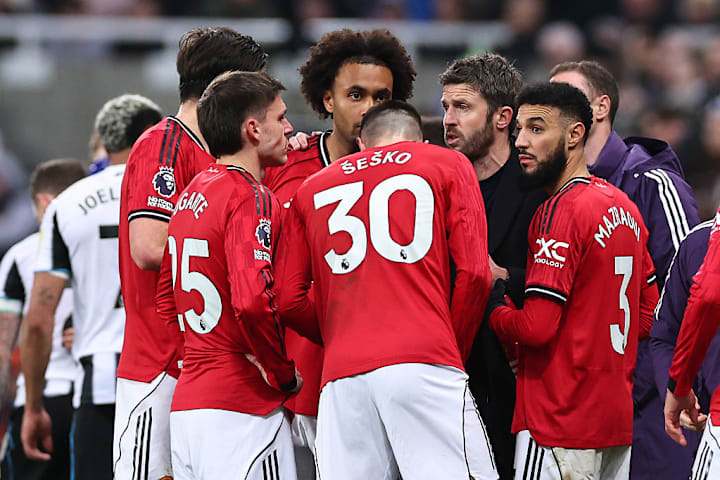
Converting opportunities at every tier of football is crucial and frequently determines outcomes.
United surpassed Newcastle in total goal attempts (14–12), shots on target excluding spot-kicks (5–4) and 'major opportunities' (4–3). However, the decisive statistic—according to FotMob—was 'major opportunities' squandered, where the Red Devils had three compared to Newcastle's two.
That equals as many 'major opportunities' wasted in one match as in the three preceding games combined—one each against Crystal Palace, Everton and West Ham.
Simply put, with everything else remaining constant, converting two of those 'major opportunities' transforms a 2–1 defeat into a 3–2 victory, irrespective of the team's overall performance quality.
Ideal Midfield Target Under Man Utd's Nose
Perfect Central Target Right Before Man Utd's Eyes

The requirement for central reinforcement has been evident for considerable time. Compared to Newcastle's midfield presence—Sandro Tonali—United were deficient.
Casemiro netted United's leveling goal late in first-half injury time, remarkably his 36th goal contribution since joining the club as a defensively-oriented midfielder. However, the Brazilian, departing within months regardless, is a conventional No. 6. Kobbie Mainoo has been outstanding since returning to the starting eleven but functions more as a deep-lying creator.
What United lack is a complete box-to-box powerhouse similar to Arsenal's Declan Rice, Chelsea's Moisés Caicedo and Manchester City's Tijjani Reijnders.
On Wednesday evening, that role belonged to Tonali for Newcastle.
During Sir Alex Ferguson's era, United frequently acquired other Premier League clubs' finest talents—consider Wayne Rooney, Roy Keane, Andy Cole, Dwight Yorke, Teddy Sheringham, Robin van Persie and even Carrick himself. It especially benefited when a player had excelled against them, which strengthens the argument that Tonali should be a genuine summer target.
Elliot Anderson has been mentioned as the primary focus and he showcased his ability this week with a spectacular strike for Nottingham Forest that might ultimately derail Manchester City's championship ambitions.
The Time to Rest, Reflect
Moment for Recovery and Contemplation
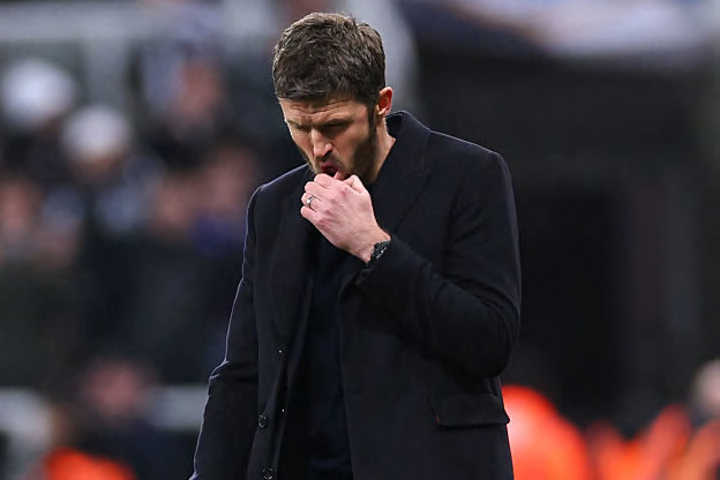
Mid-season time is typically precious. Teams involved in multiple tournaments after Christmas generally experience fixture congestion to breaking point, providing minimal opportunity between matches for recuperation, physically speaking, or to genuinely assess performances.
United have no fixture this weekend as the Premier League halts for the FA Cup quarterfinals, creating a 10-day interval until confronting Aston Villa in what amounts to a Champions League qualification 'six-pointer' on March 15.
"We must make it beneficial," Carrick reflected in his post-match media session. "[It's] about extracting lessons and comprehending why tonight unfolded as it did and how it occurred, how it turned against us. We must learn from that ... there's much at stake."