
MLS Commissioner Reveals Three Game-Changing Metrics That Prove the League's Explosive Growth After Three Decades
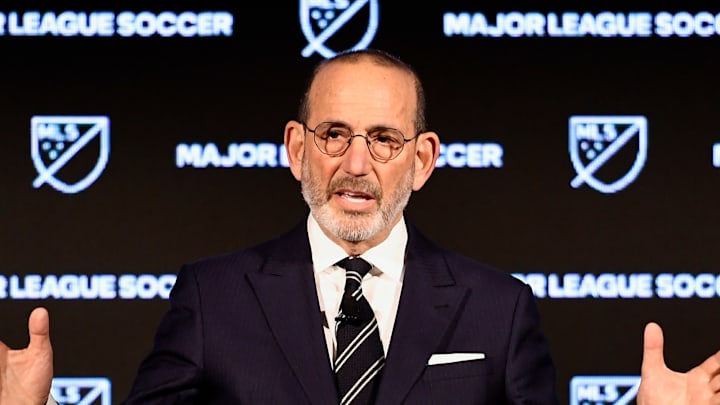
MLS Commissioner Don Garber approaches the conclusion of his current contract with optimism about the American top division's prospects following Inter Miami's 2025 MLS Cup victory, marking the league's 30th campaign.
During a media session before announcing Messi as the league's inaugural consecutive MVP winner, Garber detailed three essential metrics MLS employs to assess expansion and the fundamental principles guiding the league's development.
He identified cultural impact, competitive standard, and the sole quantifiable element: the worth of the league's franchise organizations.
Garber envisions MLS rivaling the world's premier soccer competitions while establishing itself within America's mainstream sports conversation, currently led by the NFL, MLB, NBA, and NHL.

"The goal is making your franchises significant," Garber explained. "This drives soccer passion in Argentina, Brazil, the UK, Italy, Spain, and globally, yet we face tremendous competition domestically. We aim for our teams to have meaning, so walking through streets here, you'll observe people wearing Vancouver and Miami uniforms."
Though cultural impact lacks traditional measurement methods, MLS presence in mainstream sports coverage and rising match audiences provide valuable indicators. Friday's announcement revealed 4.6 million viewers watched the 2025 MLS Cup final between Miami and Vancouver, establishing a new record for the most-viewed championship match in league history.
Simultaneously, merchandise sales demonstrate clear expansion. After joining LAFC in August, Son Heung-min's jersey became among Fanatics' best-sellers—a platform managing merchandise operations for America's major professional leagues and select collegiate athletics.
Competitive Standard in MLS

Though not easily measured, the 68-year-old commissioner emphasized the league's competitive quality as crucial, referencing analytics like Expected Goals (xG), ball-in-play duration, and additional statistics examined by the league's analytical team.
Transitioning to a winter calendar to synchronize with elite European competitions and their transfer periods, MLS seeks to enhance its on-field quality while leveraging certain ownership groups' financial resources. As of November, the league holds 10th position in Opta's Football League Rankings.
"I consider us among the world's elite leagues currently, so whether we're matching the Premier League, La Liga, or Serie A isn't particularly important to me. I cannot predict the landscape in ten years. I do know we'll become more popular, more competitive, and attract more players to Major League Soccer," he stated.
"Three new venues in major metropolitan areas will open within the coming years. We're adjusting our schedule to align closer with FIFA's international calendar, making us significantly more competitive with top leagues."
MLS Franchise Valuations
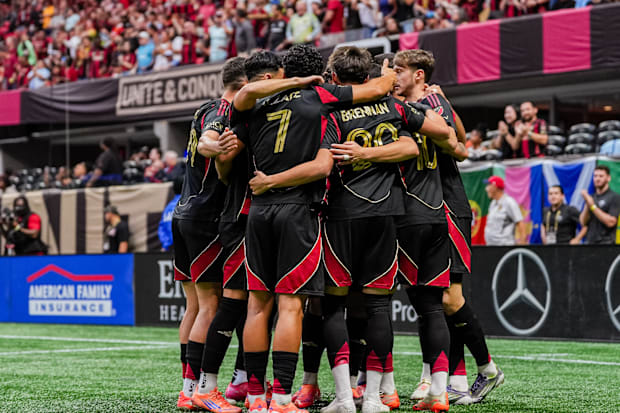
Garber identified franchise valuations as the third priority, though for the league's 30 ownership entities, they represent critical concerns.
"Supporters don't focus on this, but we must," he noted. "Higher team valuations encourage greater investor commitment to players and infrastructure."
Based on Sportico's latest May 2025 assessments, LAFC leads at $1.28 billion, while Inter Miami, LA Galaxy, Atlanta United, and New York City FC all surpass the billion-dollar mark and rank within the global Top 20.
Among Sportico's Top 50 most valuable franchises, 19 represent MLS organizations. The rankings, headed by La Liga's Real Madrid, consider revenue, property assets, and additional business factors.
"I'm certain this sport will become the most popular, or among the most popular in America," Garber declared. "We're merely 30 years established, while others span over a century. Our framework enables strategic thinking and encourages intelligent, thoughtful investment."