
MLS Teams Shake Up Home Field Advantage with Bold Venue Transformations
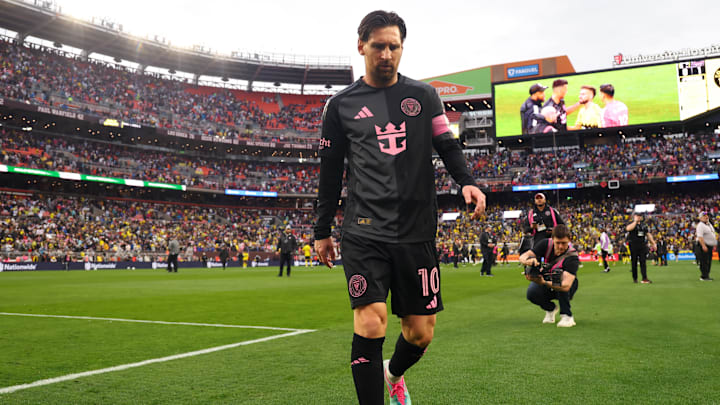
Who would have thought Lionel Messi would become so familiar with the AFC North division?
The Inter Miami icon is scheduled to take the field at M&T Bank Stadium this Saturday. Usually home to the NFL's Baltimore Ravens, this weekend the venue will temporarily host D.C. United, who relocated their match against the Herons approximately 40 miles north.
The choice to relocate the game from the 20,000-capacity Audi Field to the 10th largest NFL venue (holding 71,000 spectators) echoes a similar decision made last year by the Columbus Crew, who share ownership with the Cleveland Browns. Instead of hosting their Eastern Conference clash at their home ground in Ohio's capital, they moved it over 140 miles north to the 64,000-plus capacity Huntington Bank Field.
These relocations have drawn criticism from some of MLS's most devoted supporters, but when implemented sparingly, it serves as an effective strategy that introduces the league's biggest draw to fresh markets.
What Drives Clubs to Relocate Games to Football Venues?
What Drives Clubs to Relocate Games to Football Venues?
Let's be straightforward: These relocations are driven by financial gain.
That's hardly surprising. The Crew regularly fills their beautiful 20,371-seat facility, but the Cleveland match attracted over 60,000 spectators. Even with identical ticket pricing, tripling the available inventory translates to substantially higher profits. However, with expanded capacity, owners frequently charge premium prices for matches at NFL venues. Cleveland game tickets began at $95, according to the Columbus Dispatch, though resale options for $63 were available before kickoff.
In Baltimore, the most affordable ticket on the official resale platform costs $71 including fees, while some lower bowl sellers are asking over $500 per seat. D.C. incorporated the game into numerous season ticket packages and urged supporters to purchase seats for additional matches beyond Inter Miami's appearance.
Another year, another special stadium unlocked for @InterMiamiCF. 🔐
DC hosts MIA at M&T Bank Stadium on Saturday at 4:30pm ET: https://t.co/sZ7GSSpJxC pic.twitter.com/iGgammAWRB
Nevertheless, despite efforts to attract fans to multiple matches, it's clearly about maximizing revenue. Messi ranks among the world's biggest attractions, regardless of entertainment sector. Witnessing his brilliance on the pitch appears on countless bucket lists, and while he maintains MVP-caliber performance, time is running out as he nears his 39th birthday this summer.
Do These Venue Relocations Provide Benefits?
Do These Venue Relocations Provide Benefits?
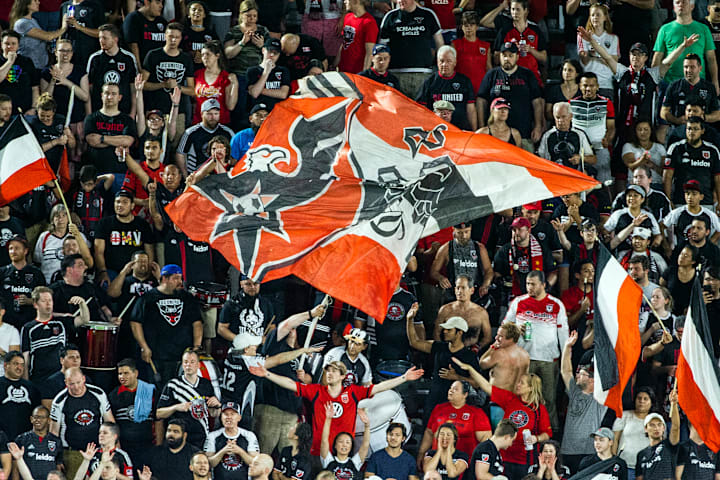
There are advantages for American soccer beyond just enriching already wealthy owners.
While some Baltimore fans might regularly travel to Audi Field in Buzzard Point, many are discouraged by the distance. Now, MLS is arriving in their city—one of America's largest without an active professional franchise.
Others might attend solely to see Lionel Messi but could become sufficiently interested in the on-field action to consider subscribing to Apple TV or exploring the MLS section if they already subscribe for Formula 1 or Shrinking. With the league's complete television content on a streaming platform, it must bring matches to new audiences rather than expecting supporters in non-MLS markets to discover its offerings accidentally.
Messi serves as the primary draw motivating teams to secure larger venues and increase revenue, but he's not the sole reason for location changes. The San Jose Earthquakes have relocated rivalry games against LA Galaxy or LAFC to bigger stadiums and will again face the Galaxy at Stanford Stadium this year while hosting Son Heung-min's LAFC at Levi's Stadium. Last season, both matches attracted over 50,000 attendees.
SON HEUNG-MIN SCORES INSIDE THE FIRST MINUTE AT LEVI'S STADIUM!!
ELECTRIC. 😱
📺 #MLSSeasonPass: https://t.co/a7szswweyh pic.twitter.com/6DiVqTprQl
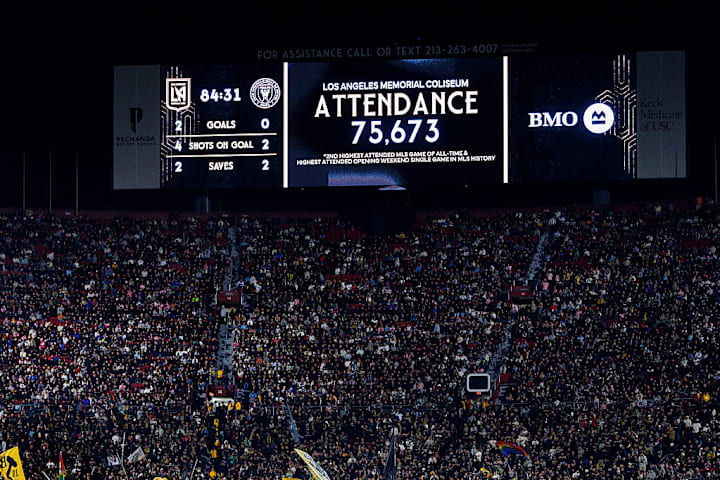
One of 2024's most unforgettable matches was a July 4 "Tráfico" between Galaxy and LAFC played before over 70,000 fans at Pasadena's Rose Bowl. Just weeks ago, LAFC relocated its season opener to the Los Angeles Memorial Coliseum, facing Inter Miami before a record-breaking 75,673 spectators just hundreds of feet west of their usual home, BMO Stadium.
That represents a much shorter journey than what D.C. United asks of its supporters or what the Crew hoped fans would undertake.
What Causes Some MLS Supporters to Oppose Venue Changes?
What Causes Some MLS Supporters to Oppose Venue Changes?

There's significant value in the consistency and tradition of supporters who visit the same venue weekly, occupy identical seats, encounter familiar faces, and chant traditional songs. This regularity fosters community bonds that unite people. It's what transforms many global soccer teams into genuine clubs rather than mere franchises.
Relocating one of 17 home dates that enables fan gatherings shouldn't be decided casually, but the chance to attract new supporters and expand the community remains something most MLS teams cannot ignore.
While community matters regardless of size, numerous MLS teams still battle for market relevance. This might not apply to LAFC, whose supporters filled the Coliseum wearing black and gold instead of large sections sporting Inter Miami's pink. However, M&T Bank will host far more neutrals—or Messi admirers—on Saturday.
That serves as a starting point.
These Choices Represent Progressive Thinking for the League.
These Choices Represent Progressive Thinking for the League.
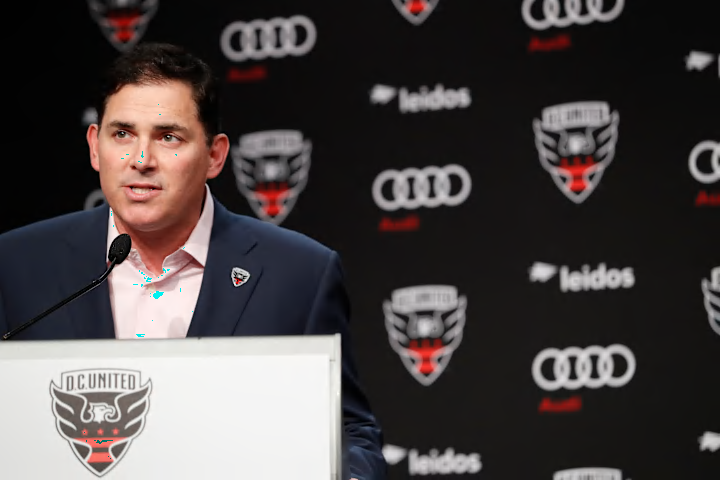
D.C. United was formerly MLS's most distinguished franchise, capturing three MLS Cup championships and a Concacaf Champions Cup before 2000. Since then, they've typically been disappointing to support. They represent one of many original MLS teams stuck in a cycle of poor performance, with regional fans concluding it's not an organization comparable to other major local sports franchises.
Their Baltimore initiatives extend beyond a single game, with CEO Jason Levien aiming to construct a small soccer facility where a professional women's team and lower-division men's team could provide Charm City with global soccer representation.
If teams can persuade fans in visiting cities that they deserve another chance, the risk is worthwhile. Some will purchase tickets, watch Messi, and leave. Others might be relatively neutral, ready to be convinced.
D.C. United's match against Inter Miami tomorrow — being played in Baltimore at the Ravens home of M&T Bank Stadium — has sold more than 62k tickets and club is expecting to be a sellout of the 71k capacity stadium, I'm told. pic.twitter.com/ZkmTDgo9Jq
This won't occur simply because one match changes venues, but it could happen through robust, sustained promotional efforts.
As owners continue recognizing opportunities to expand their audience—both for single games featuring a global icon and long-term if new supporters are converted—expect Messi and teammates to continue touring NFL stadiums and exploring new territories. If executed properly, it will also mark the opening chapter of countless supporters' origin stories for years ahead.