
 ไทย
ไทย English
 中國人
中國人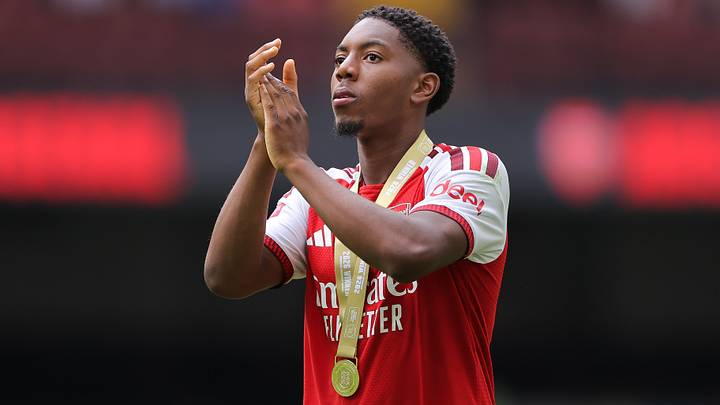
"Maybe I should have done it sooner," Mikel Arteta reflected in May following Myles Lewis-Skelly's impressive performance in Arsenal's midfield during a commanding 3–0 victory against Fulham.
It had taken the Gunners boss a full 19 months to finally deploy the academy product in the position where he had long established himself as one of the standout talents in youth football, with those who had tracked his progress surprised by nothing more than how long it took Arteta to acknowledge the obvious.
Just a handful of games later, the wider world has now woken up to Lewis-Skelly's capabilities as a central midfielder. His assist for Arsenal's opener in the 3–0 Community Shield triumph over Manchester City was breathtaking—the kind of play you'd typically associate with far more seasoned professionals. That's simply what Lewis-Skelly brings to the table.
What is abundantly clear now is that, even in this modern era where fullbacks double as midfielders and tactical jargon dominates football discourse, Lewis-Skelly's long-term future must lie at the center of the pitch. For the 19-year-old, however, that reality is both an opportunity and a complication.
The Conundrum Facing Lewis-Skelly

Lewis-Skelly's transition into senior football was always viewed as a matter of when, not if.
Having joined Arsenal's academy at just 8 years old, Lewis-Skelly quickly made it clear he was among the finest young players in England. He was frequently overshadowed by the exceptional talent of close friend Ethan Nwaneri, whose potential seemed loftier yet less certain, but those monitoring Lewis-Skelly's growth have long agreed that a career at the elite level was virtually inevitable.
The staff at Arsenal's Hale End academy did an outstanding job readying Lewis-Skelly for first-team football, so much so that Arteta could no longer overlook the teenager come September 2024. The manager was, however, confronted with a challenge not unlike the one he faces today.
Back then, Arsenal had little need for another midfielder. Declan Rice had arrived for $137.5 million (£105 million) the year prior, and Mikel Merino joined just weeks before Lewis-Skelly's debut to complete a midfield unit that already featured club captain Martin Ødegaard and Thomas Partey.
The Arsenal Spine. pic.twitter.com/Sed5xLGdxg
Consequently, Lewis-Skelly was repurposed as a left back, asked to fill a role that was largely foreign to him beyond a few emergency outings at youth level. He acquitted himself well but ultimately succeeded in convincing Arteta that he merits opportunities in his preferred central midfield role.
"Honestly, I was buzzing," Lewis-Skelly said of his return to midfield in May. "Being back in that midfield, getting the trust from the gaffer and the players again, just allows me to play my game and play it simple but also be effective."
With Lewis-Skelly now recognized as a midfielder once more, he finds himself embroiled in a fierce competition for playing time in an Arsenal engine room that is even more congested than before.
Martín Zubimendi was last summer's marquee signing, while Bruno Guimarães made the move from Newcastle United this year. Both players, along with Merino, are vying for the single spot alongside Rice at the base of Arteta's midfield—a position also firmly in Lewis-Skelly's sights after shedding his left back label.
Lewis-Skelly is determined to make it at Arsenal, but must now weigh whether he is willing to risk losing the fight for midfield minutes at the Emirates—especially given that the left back berth through which he broke into the team is now firmly occupied by Riccardo Calafiori and Piero Hincapié.
Should Lewis-Skelly Stay or Go?
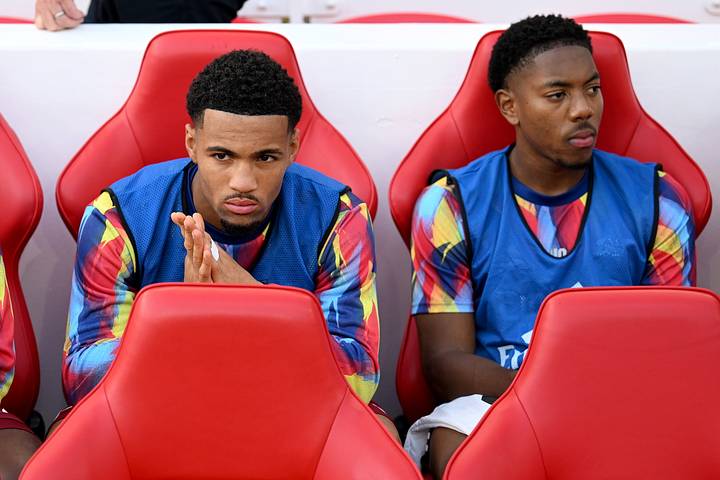
Recent reports indicate that both Chelsea and Manchester United have been presented with the opportunity to sign Lewis-Skelly as part of their respective quests for midfield reinforcements. He previously spent time at Chelsea's Cobham academy before making the move across London.
Regular minutes elsewhere may seem more attainable, particularly if Lewis-Skelly develops into the caliber of high-value player he is currently competing against at Arsenal—though such opportunities might not carry the same weight as representing the club to which he has devoted the past 11 years of his life.
Arsenal are clearly reluctant to part with Lewis-Skelly either, but the teenager will have closely observed Nwaneri navigate this very same crossroads last season.
Nwaneri, five months Lewis-Skelly's junior, was a dazzling attacking midfielder at youth level but was squeezed into a right wing role under Arteta, serving as backup cover for Bukayo Saka. He ultimately got lost in the mix, spending six months sidelined and another six on loan at Marseille before heading toward yet another uncertain exit this summer.
Lewis-Skelly will be eager to avoid a similar fate, even if staying at Arsenal appears to be the tougher path on paper. The stakes are greater, but the prospect of winning silverware with his boyhood club may be reward enough to justify the risk.