
 ไทย
ไทย English
 中國人
中國人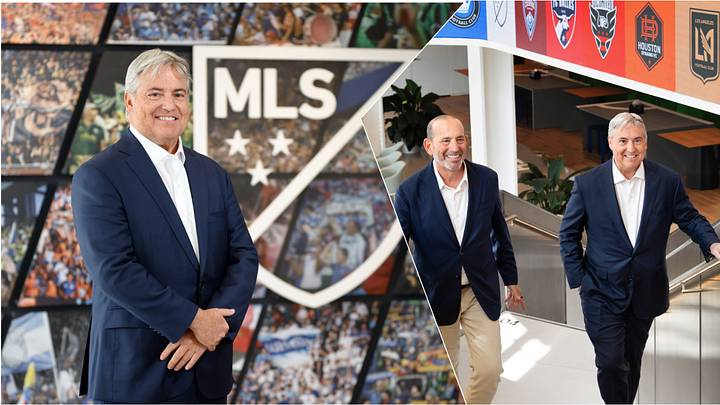
Major League Soccer is poised to enter a new chapter.
Known as MLS 3.0 and highlighted by a schedule overhaul to align with Europe's elite competitions, the league is approaching a critical juncture as it transitions from longtime commissioner Don Garber, 68, to incoming commissioner and LAFC co-owner Larry Berg, 60.
With soccer's surging popularity following the 2026 World Cup, MLS is aiming to reach unprecedented heights, and many of the most consequential decisions will rest with Berg in the early years after he assumes the role in January 2027.
Set to relinquish his ownership stake in LAFC and step away from his private equity position at 26North, Berg will dedicate his full attention to expanding MLS as the league navigates some of its most transformative years.
Here, Sports Illustrated examines four ways MLS could evolve—and the crucial decisions awaiting Berg in his new position.
New Divisions
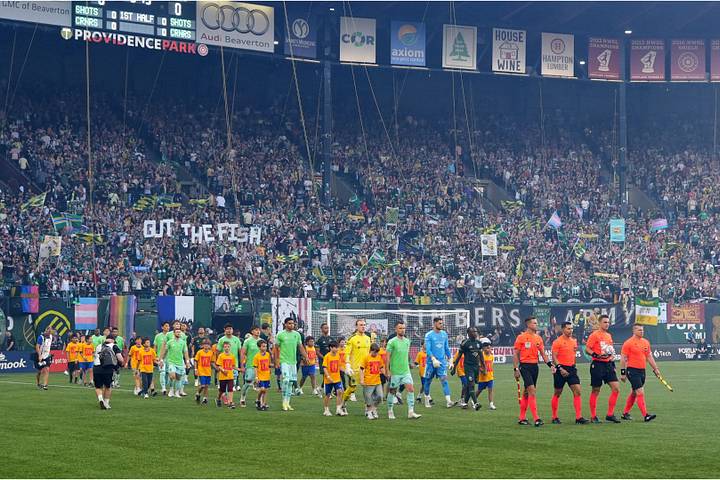
It was a passing remark from Berg during his first address as commissioner-elect. Nevertheless, the mention of "divisions" in the league's future could fundamentally reshape how MLS functions as a competitive product, potentially as early as the 2027–28 season when the league transitions its schedule.
As previously reported by The Athletic, a divisional restructuring was approved by MLS owners in 2025, which could see the league adopt a format of five six-team divisions competing in a single table, with potential advantages for teams finishing atop their respective divisions.
While specifics on how the divisions or competition format would operate in practice remain scarce, the setup is expected to highlight many of the league's established regional rivalries, though it could make certain matchups even less frequent than under the current Eastern and Western Conference model, which already sees teams potentially go three or more seasons without meeting cross-conference opponents.
"The league has done a ton of work with outside parties, with inside parties looking at those very questions for the regular season, for the division, for the playoffs, and there's a lot of analysis that's gone in," Berg told CBS Sports.
"There's a lot of research and fan research that's gone in and there's a lot of discussion at committee levels that's gone in so what's important to me is we ultimately achieve consensus and move forward together. But the good news is that I think the things we're thinking about certainly will move our league forward, make it entertaining, make it interesting and I'm pretty excited to roll it out."
Eased Roster Rules

In his capacity as co-owner of LAFC, Berg was part of one of the most ambitious clubs in MLS—one that brought in Son Heung-min last season, retained the services of Denis Bouanga and welcomed the likes of Gareth Bale, Hugo Lloris and other high-profile stars over the years. While the league is unlikely to embrace unrestricted spending comparable to top global competitions, roster regulations could be loosened to allow clubs to invest more heavily in their squads.
"At the end of the day, it's quality on the field, which means the roster investment model in part, and that's something that the owners need to decide collectively," Berg told Sports Business Journal.
"I would say that's my number one job ... I think if I do that well, we will have more transfer revenue and more media money, and that'll all lead to a better product on the field. It'll become a flywheel that leads to more transfers, more revenue and more media money."
As for what an expanded roster-building framework might look like, it could involve a raised salary cap, additional designated player slots or a stronger focus on developing young talent, building on the existing U-22 initiative slots. Meanwhile, the acquisition process and the widely-criticized Discovery Rights system could also undergo changes.
For any of these reforms to take effect, MLS would likely need to reach an agreement with the MLS Players' Association in the next Collective Bargaining Agreement—a pivotal negotiation that will shape the league's next phase, with the current CBA scheduled to expire on January 31, 2028.
A New Media Deal

The media rights deal represents the single most defining element of MLS's next era and the only realistic path toward competing with global leagues. Currently, the average American sports fan has easier access to Premier League matches on linear television than to games from the MLS club potentially just a short drive from their home. That disparity must be addressed.
The existing deal, which broadcasts MLS and Leagues Cup as part of Apple TV's standard subscription, is set to expire in the summer of 2029—midseason in the new calendar's 2028–29 campaign. It will be essential for MLS to strike a balance between evolving streaming platforms—it remains the only top-five U.S. sports league with all games housed on a single primary service—and securing a presence on more widely accessible sports channels.
The Apple agreement seemed like a bold gamble when first signed, with MLS projected to earn $250 million annually while the tech giant bet on the league's growth. Through the deal, MLS was able to creatively structure Lionel Messi's contract with Inter Miami and, in its first three years, offered substantial supplementary content including pregame shows, post-match recaps and a wraparound program—nearly all of which have diminished considerably in season four, 2026.
Under the new calendar, MLS Cup playoff matches will fall in the spring, placing them in direct competition with the NBA and NHL playoffs, while avoiding clashes with the NFL and MLB postseasons and benefiting from more favorable weather conditions.
Sports leagues worldwide have come to understand just how transformative media rights agreements can be—not only for distribution, but for generating substantial revenue. MLS must get this right, and doing so could fundamentally alter how fans experience the game.
Grow in Major Cities and Solve Vancouver Whitecaps

In the largest cities across the United States and Canada, MLS continues to be an afterthought. Berg helped elevate MLS's profile in Downtown Los Angeles through LAFC's rise, yet the club still lags well behind the city's two NBA franchises, two NFL teams, NHL team and MLB teams in terms of market relevance.
Enable functional cookies to see this feature.
While soccer faces an uphill climb even as it continues to gain traction, building stronger local relevance in major markets such as Houston, New England, Dallas, Denver, Montréal, Toronto and New York City will be a critical priority.
In certain markets, MLS clubs already rank as the first or second most popular team, and it is equally important that the league preserves that standing while elevating other clubs into similar positions. The Vancouver Whitecaps serve as a notable example, trailing only the NHL franchise in local popularity and consistently ranking among the top five in average MLS attendance.
Their stadium situation at BC Place, which fails to generate meaningful revenue, must be resolved—and it is imperative that MLS does not lose one of its most valuable clubs in its marketplace, particularly a Pacific hub like Vancouver, which can serve as a gateway to broader appeal in Asian markets.