
 ไทย
ไทย English
 中國人
中國人
Two of MLS's longest-standing franchises received encouraging news this week, as the Vancouver Whitecaps and CF Montréal each made progress on stadium plans that could, if successful, secure the clubs' futures in their respective cities and prevent any potential relocation.
For Vancouver, the focus is on exploring a new operational arrangement at BC Place alongside the possibility of constructing a dedicated facility, while Montréal continues to navigate challenges surrounding the aging 1976 Olympic Stadium, which the club hopes to utilize given the city's harsh winters and MLS's transition to a predominantly winter-based schedule.
The Whitecaps face the more pressing concern, having been listed for sale for 19 months without attracting a local buyer — a situation largely attributed to what MLS Commissioner Don Garber has described as an "untenable" arrangement with BC Place Stadium, a provincially owned facility operated by PavCo, a Crown corporation functioning independently from the government.
Although reports of local interest have begun to surface, the absence of matchday revenue, limited control over scheduling home fixtures, and difficulties generating income from non-soccer events at the venue have all emerged as critical issues. Compounding matters, sponsorship income has fallen well below expectations, with the club reporting a $40 million gap compared to the average MLS club's annual earnings.
Whitecaps Interested in BC Place Operational Takeover

Despite ranking among the top MLS clubs in attendance and player investment, the Whitecaps sit at the bottom of the league when it comes to matchday revenue. A tempting offer from Las Vegas remains on the table, with Garber noting that "the pieces are in place" should it come to that. However, a new proposal unveiled this week could shift the outlook considerably.
According to veteran local journalist Michael McColl of AFTN, the club has formally requested that PavCo allow it to assume management of the stadium. This would enable the Whitecaps to boost revenue across all streams and gain control over scheduling, while providing PavCo with a share of the proceeds. The arrangement would resemble the NFL's Seattle Seahawks' setup at Lumen Field and Toronto FC's management of BMO Field — both government-owned venues.
Following BC Place's well-received role as a World Cup host venue — which drew praise from Belgian midfielder Kevin De Bruyne — and Vancouver's strong showing as a host city, many believe a viable long-term solution within the market is within reach.
"They're not going anywhere." FIFA vice-president Victor Montagliani said regarding the matter, while Garber had previously stated: "We'll take [BC Place] over in a heartbeat ... We'll take over the commercial operations and sell sponsorships if we're given the opportunity. I think the club would be great at that."
CF Montréal Get Olympic Stadium Lifeline
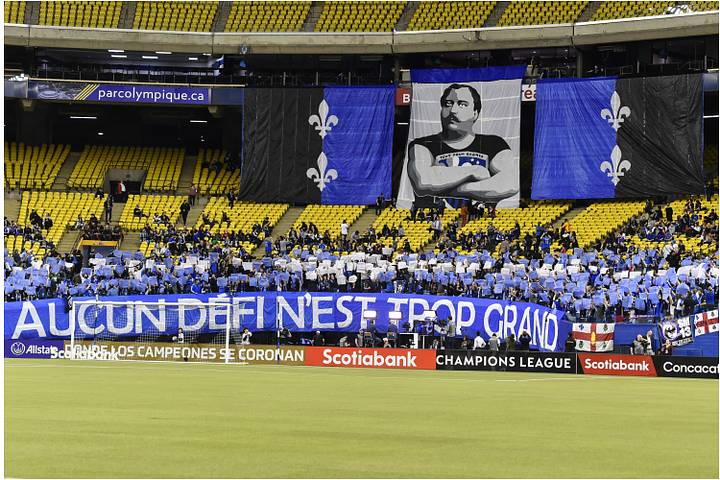
While Vancouver's stadium negotiations remain in their early phases, CF Montréal received a major boost on Thursday when the Province of Québec approved plans to renovate and modernize the interior of the Olympic Stadium, which has fallen into a state of disrepair.
The renovation project would involve refurbishing the seating areas, introducing premium hospitality spaces, and upgrading all washroom and concession facilities, while maintaining a capacity close to the existing 56,000-seat figure. If the work proceeds on schedule, the stadium is set to reopen in 2028, enabling CF Montréal to take up residence for the 2028–29 MLS season.
Up until 2023, CF Montréal had used the Olympic Stadium for early-season home matches and, in 2015, hosted the final rounds of the Concacaf Champions League there — the same year the venue welcomed the FIFA Women's World Cup.
Although the renovation timeline will affect Montréal's scheduling during MLS's inaugural winter-based season in 2027–28, the project would ultimately provide the club with long-term stability and a modern facility, which Garber has already spoken highly of.
"What I saw when I toured the stadium was just incredible; it was an incredible vision for the province, for the park, for the city, and for a soccer market that absolutely loves the game," Garber said during his visit in May. "Montréal deserves a world-class stadium that reflects the ambition of the city and represents its future on a global stage.
Enable functional cookies to see this feature.
"If this vision can be fully realized, Montréal will have one of the great stadiums in the entire world. That might sound ambitious, and might sound a little odd for all of you who have been living with the Olympic Stadium since the Olympics. Still, great cities pursue ambitious projects, and what I saw today was absolutely remarkable."
While Montréal's situation appears to have avoided reaching the same level of relocation concern as Vancouver's, both cities have taken meaningful steps toward retaining their historic clubs — franchises with roots stretching back to 1992 and 1974 respectively — for the long term.