
 ไทย
ไทย English
 中國人
中國人
Soccer teams can employ a wide range of playing styles.
From the elegant, possession-oriented tiki-taka pioneered at Barcelona's La Masia academy, to the high-energy, pressing game championed by Ralf Rangnick and built around rapid ball recovery, the contemporary game presents a broad tactical landscape.
Another style, though far less celebrated among soccer traditionalists, is commonly referred to as "parking the bus."
Here, we explain what it means to "park the bus" in soccer, where the expression originated and why it continues to be such a prevalent tactic in today's game.
"Parking the Bus" in Soccer Explained
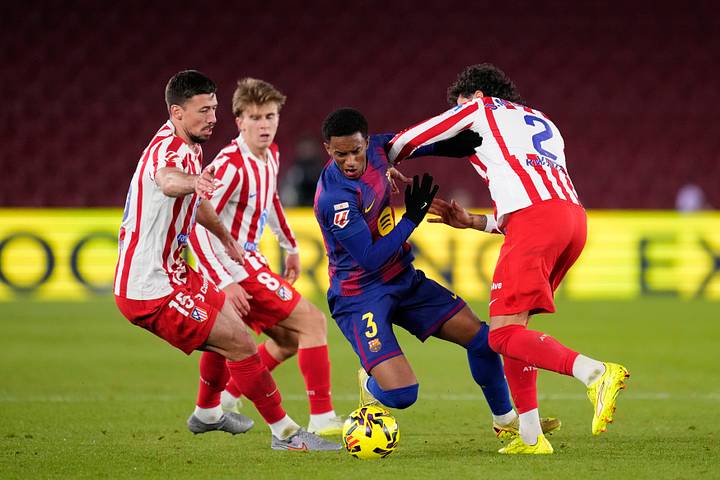
In soccer, when a team "parks the bus," it means they adopt an intensely defensive strategy, typically pulling the majority—if not all—of their players behind the ball in order to stop the opposing side from finding the net.
This approach is most frequently employed when a team is holding onto a lead, opting to sit deep, defend in numbers and look to exploit opportunities on the counter rather than continuing to push forward.
Teams may also "park the bus" when reduced to fewer players following a red card, or when facing a considerably stronger opponent—especially in knockout or cup competitions, where securing the result takes precedence over the quality of play.
The Origins of "Parking the Bus" in Soccer
The idea of ultra-defensive soccer predates the modern game by a considerable margin. In the sport's early days, when formations frequently included as many as seven forwards, defensive organization was something that developed gradually rather than being an established starting point.
One of the most notable early examples emerged in mid-20th century Italy with catenaccio, a system whose name translates to "door bolt" or "chain." This method prioritized defensive solidity above everything else, often incorporating a libero—or sweeper—stationed behind the defensive line to deal with danger, cover teammates and provide an additional layer of protection in front of goal.
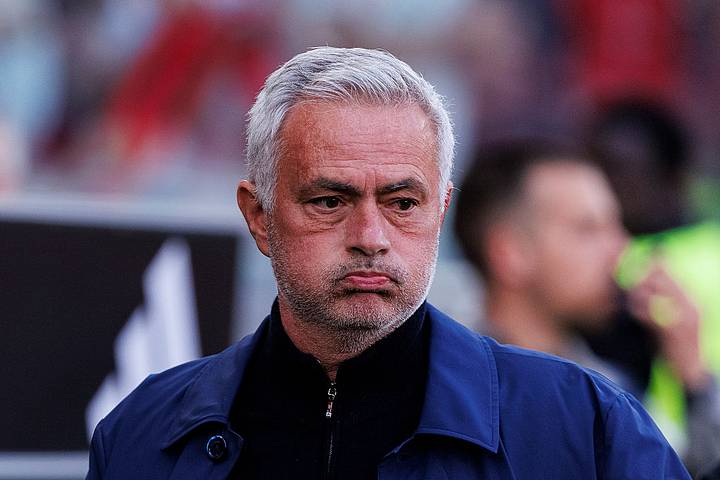
The phrase "parking the bus," however, is a far more recent entry into soccer's lexicon, entering widespread use in 2004.
It was popularized by José Mourinho following a goalless stalemate between his Chelsea side and Tottenham Hotspur at Stamford Bridge. Irritated by what he perceived as Spurs' total absence of attacking ambition, Mourinho accused them of setting up purely to defend.
"As we say in Portugal, they brought the bus and they left the bus in front of the goal," Mourinho told reporters after the 0–0 draw. "I would have been frustrated if I had been a supporter who paid £50 to watch this game because Spurs came to defend. I'm really frustrated because there was only one team looking to win, they only came not to concede—it's not fair for the football we played."
As Mourinho noted, the specific expression was already in use in Portugal and Spain well before it made its way into English soccer. It is widely believed to stem from a media response to former Racing Santander manager José María Maguregui, who enthusiastically deployed negative tactics in an attempt to survive fixtures against Real Madrid and Barcelona in 1984.
"It was impossible to get past them; Maguregui parked Racing's bus right in front of their goal."
Teams Famous for "Parking the Bus"
In a somewhat ironic turn, it is José Mourinho's own Chelsea side that ranks among the clubs most closely linked with "parking the bus."
Under the Portuguese manager, Chelsea conceded a record-low 15 goals on their way to the 2004–05 Premier League title, built upon a foundation of defensive discipline and tactical organization. Mourinho would later return to the club in 2013 and once again rely on a pragmatic, defense-first philosophy to secure another league championship.
Between those two stints, he transformed Inter Milan into one of Europe's most defensively formidable sides, steering them to a historic treble in 2009–10. Their Champions League semifinal victory over Barcelona is frequently cited as a masterclass in elite defensive soccer.
Following that tie, Mourinho even took his well-known phrase a step further.
"We won the tie in Barcelona but everyone talks about Barcelona winning and says we parked the bus in front of the goal," he said. "We didn't park the bus, we parked the plane and we did it for two reasons. One, because we only had 10 men and two, because we beat them 3–1 at San Siro, not by parking the bus, or the boat or the airplane but by smashing them."
Beyond Mourinho, a number of other teams and managers have become synonymous with this style of play. Diego Simeone's Atlético Madrid are well known for their compact defensive structure, absorbing sustained pressure before countering with devastating precision.
Likewise, sides managed by Sean Dyche—most notably Burnley—built a reputation for disciplined, deep-lying defensive setups that enabled them to compete effectively against more powerful opponents.
Looking further back in history, Helenio Herrera is widely regarded as a pioneer of such tactics. During his tenure at Inter Milan in the 1960s, he popularized a catenaccio system inspired by Austrian Karl Rappan, laying the foundations for modern defensive soccer.
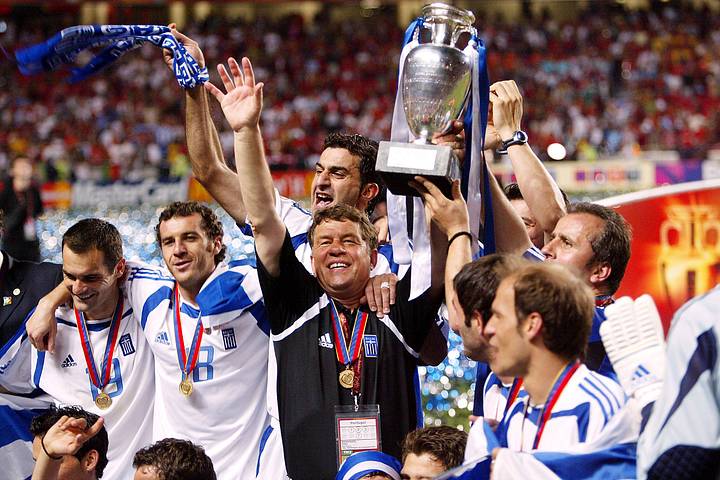
Perhaps the most celebrated international example came at Euro 2004, when Greece shocked the world. Anchored by a deep defensive block, strong organization and clinical set-pieces, they recorded three consecutive 1–0 victories in the knockout rounds—eliminating France, the Czech Republic and ultimately hosts Portugal—to complete one of the greatest underdog stories in soccer history.