
 ไทย
ไทย English
 中國人
中國人
The 2026 World Cup has come and gone. After years of anticipation and five weeks of competition spanning 104 matches, Spain claimed its second men's world championship.
Ferran Torres netted the decisive extra-time goal in a final against Argentina that won't go down as a memorable classic, though the beautiful game ultimately triumphed over defensive tactics.
This was the grandest World Cup in history—the most-watched edition ever and the one generating the greatest revenue, with roughly $15 billion flowing into FIFA's coffers.
Here are five key takeaways from the tournament.
Three Co-Hosts Is O.K.
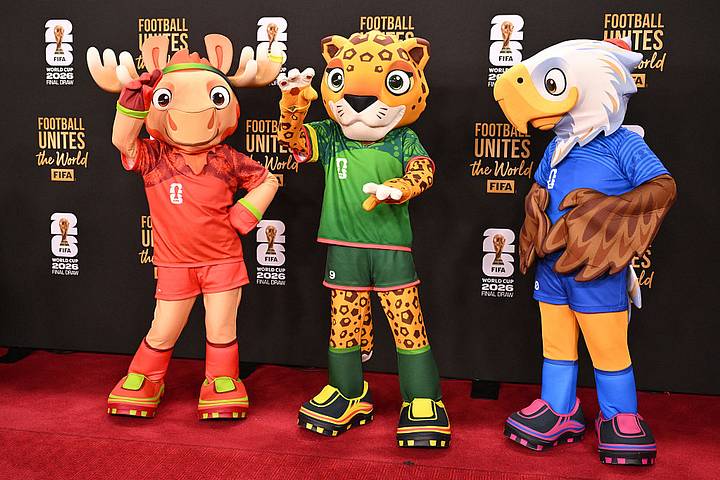
This marked the first time more than two nations had shared World Cup hosting responsibilities, and the arrangement proved successful. The only prior co-hosting example in men's competition was the 2002 tournament shared by South Korea and Japan—this time around, three countries stepped up.
While it somewhat dilutes the hosting experience, spreading the tournament across multiple nations brought greater variety and cultural richness, with each host country contributing its own distinct flavor. It also likely makes the proposition more financially attractive to future bidding nations.
Though travel distances were considerably longer—Bosnia and Herzegovina alone moved from Toronto to Los Angeles to Seattle during the group stage—a clear precedent for triple hosting has now been established.
In 2030, a similar setup awaits as Spain, Portugal, and Morocco jointly host the soccer world. Those three nations occupy a far more compact geographic footprint than what we saw in 2026, though certain teams will still face significant travel demands in the early rounds.
With the next edition marking the tournament's centenary, three matches will also be staged in South America—in Uruguay, Argentina, and Paraguay—to honor the continent's foundational role in World Cup history and acknowledge the CONMEBOL federation.
48 Teams Felt Like Too Many
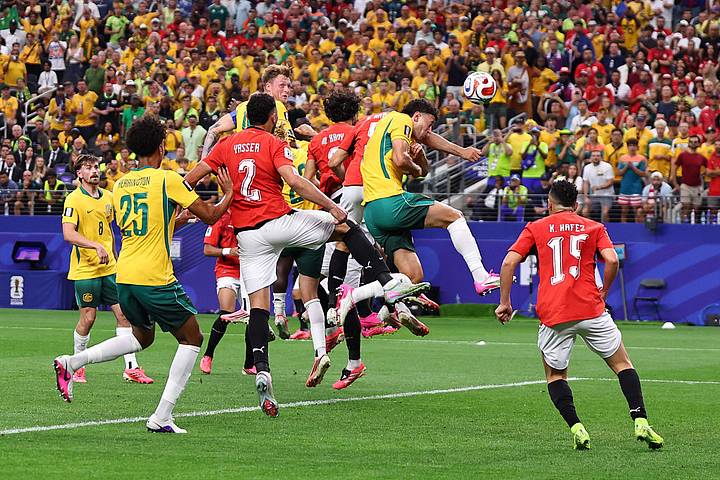
It was a hotly debated topic from the moment it was confirmed. More teams and more matches than ever before didn't necessarily translate into a better product.
To be fair, it was genuinely exciting to see certain nations competing either for the very first time or after a lengthy absence. Africa sent twice as many qualifiers as in 2022, and Oceania finally received its own automatic berth. There were compelling storylines too, with the entire world rallying behind Cabo Verde on its remarkable run to the knockout rounds.
Following an exhausting group phase in which only 16 teams were knocked out, too many matches in the round of 32—the additional stage introduced for this expanded tournament—lacked quality or meaningful stakes. Cabo Verde versus Argentina stood out as the highlight, though that fixture could have occurred in a 32-team format given Uruguay and Saudi Arabia's dismal showings in Group H.
Many teams made some form of "history" thanks to the expanded opportunities rather than genuine sporting merit—though Scotland still managed to avoid that distinction. Of the eight third-place teams granted knockout berths, only Paraguay advanced beyond the first knockout round. The overall quality simply isn't deep enough to justify the expansion.
FIFA president Gianni Infantino, who has championed World Cup expansion as a way to court smaller soccer nations—and likely their votes—is already openly considering growing the next tournament to 64 teams, literally double the 2022 field. While that wouldn't add extra rounds and would eliminate the messy third-place rankings, it would mean 128 matches and potentially close to six weeks of competition. Even good things have their limits.
Too Much Politics
FIFA insists soccer should remain free from political interference. At this World Cup, that principle felt constantly under threat.
From the complications caused by the Trump administration's divisive travel ban—which, among other consequences, denied Somali referee Omar Artan a once-in-a-lifetime opportunity—to the Iran controversy, to Infantino's apparent willingness to entertain the U.S. President's request to intervene in Folarin Balogun's red card decision, to the rekindling of decades-old Falkland Islands tensions between Argentina and England, politics repeatedly overshadowed what should have been a pure celebration of sport.
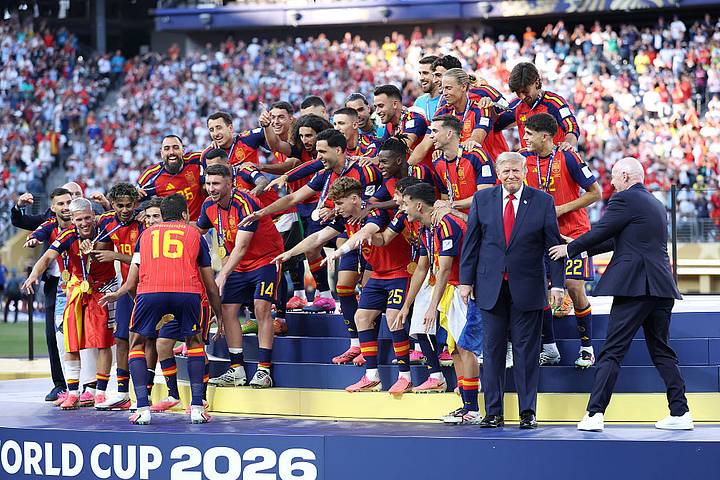
After the final, Trump awkwardly lingered on the trophy podium as Spain captain Rodri waited for the President to step aside before lifting the World Cup. Infantino eventually guided him away, but the moment was emblematic of politics' growing appetite to exploit sport for its own ends.
This World Cup may reflect the current political climate, but FIFA has serious work ahead of the next tournament in four years to ensure the soccer itself remains the sole focus.
Legends Bow Out
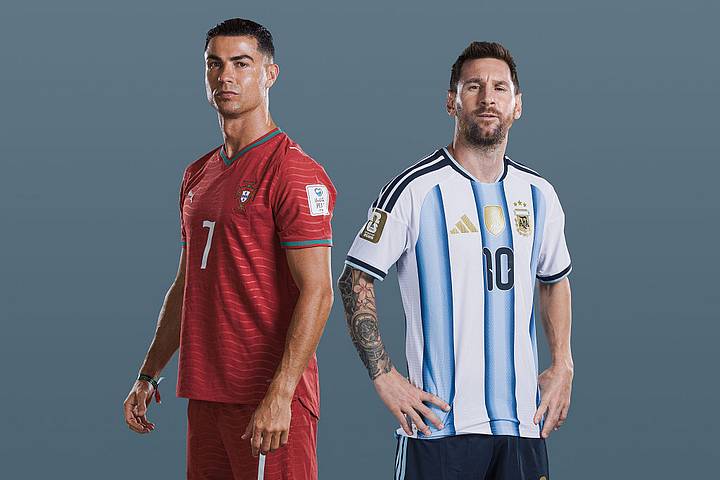
For Cristiano Ronaldo and Lionel Messi, this was their final curtain call on the world stage.
Heading into this summer, both had appeared at five World Cups dating back to 2006—a shared record in the men's game they also hold alongside retiring Mexico goalkeeper Guillermo Ochoa.
Ronaldo will be 45 by 2030, while Messi will turn 43 during that tournament. It's virtually certain neither will feature, despite the appeal of playing a World Cup at least partly on home soil.
Ronaldo's hint that he plans to retire for good in 2027, combined with Messi's tearful gaze around MetLife Stadium after the final whistle, suggests both men know their international journey is over. For Messi, there's an added sting—he won't even carry the title of World Cup all-time top scorer into the next four years, after Kylian Mbappé surpassed his record in the third-place playoff.
For others, 2026 may also have been a final World Cup appearance. England captain and 2018 Golden Boot winner Harry Kane hasn't closed the door on 2030, but with his 37th birthday falling in July of that year, significant doubts remain. Son Heung-min, Romelu Lukaku, Kevin De Bruyne, Thibaut Courtois, Manuel Neuer, Mohamed Salah, Casemiro, Neymar, Virgil van Dijk, Sadio Mané, James Rodríguez, Luka Modrić, and Raúl Jiménez are all icons of their nations and are unlikely to return.
Securing a Legacy for North American Soccer
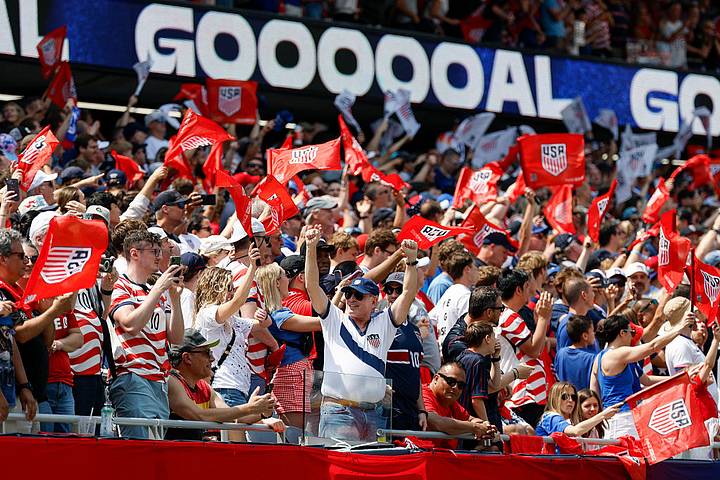
Speaking while the tournament was still underway, Canada Soccer CEO Kevin Blue said: "The 2026 World Cup was always meant to be a catalyst, not a finish line."
The situation is somewhat different for Mexico, where soccer already reigns supreme. But for nations like Canada and the United States, where the sport doesn't yet command the same devotion, hosting the World Cup is about far more than five weeks in the summer. The stakes are much higher.
While the Premier League and La Liga enjoy enormous popularity with North American audiences thanks to widespread television access, the real question is what lasting effect this tournament will have on domestic leagues like Major League Soccer, the United Soccer League, and the Canadian Premier League.
The Canadian Premier League averaged just under 4,000 fans per match in 2025. MLS is thriving in select markets largely due to the Messi effect, but struggles elsewhere. Vancouver Whitecaps and CF Montréal remain in precarious positions.
Enable functional cookies to see this feature.
There is also the question of impact on the next generation of potential players. Throughout the World Cup, the recurring conversation centered on how dominant the United States could be if its elite athletes—think LeBron James, Lamar Jackson, Aaron Judge—had chosen soccer over other sports.
So how does soccer capture the imagination of young children before other sports do? Part of the answer lies in cost. Youth soccer in the U.S. operates differently, with "pay to play" models that can cost families hundreds or even thousands of dollars per child annually. This creates barriers to entry and risks pushing talented players out of the game entirely.