
 ไทย
ไทย English
 中國人
中國人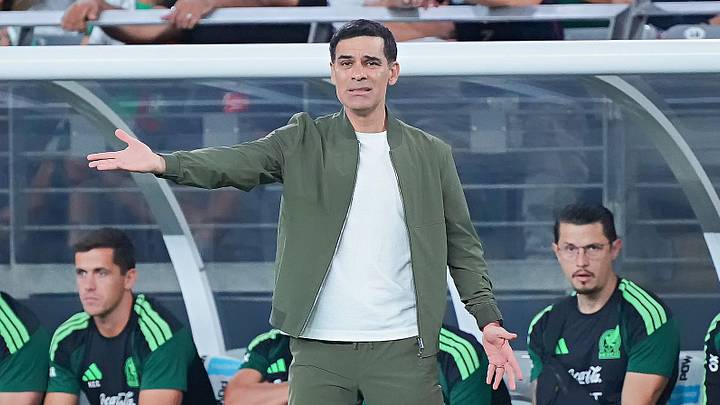
Rafael Márquez's tenure as Mexico national team head coach began on a troubling note, with El Tri collecting just two draws and suffering two defeats throughout the September-October international window.
Optimism was running high heading into the international window following Mexico's impressive 2026 World Cup showing. Even after a draw against Colombia in Márquez's first match—where El Tri dominated possession for extended periods—fan enthusiasm and overall confidence remained intact, as there was genuine belief the team was continuing to build on the foundation established over the summer.
Things fell apart quickly after that, however. A lackluster draw against Peru was followed by a humiliating loss to fierce rivals the USMNT. Rather than bouncing back from that painful defeat, El Tri then dropped its final window match against a weaker Chile side.
The positive energy carried over from the World Cup evaporated within just two weeks. Only four matches into his reign, Márquez and his entire squad are facing heavy criticism. It remains early days, but it has been anything but a promising beginning to a new chapter for Mexico.
Time to Return to Reality After Dream World Cup

It's not simply that some of the luster from Mexico's magical 2026 World Cup run has faded—it has become evident that El Tri's exceptional form during the tournament, in which it pushed an England-caliber side to the very brink, was the exception rather than the rule. Over the past two weeks, Mexico has undergone a harsh reality check.
Let's not overlook the fact that Mexico entered 2026 mired in a six-game winless run stretching across the final six months of 2025, practically limping into the World Cup. Early summer results were encouraging, but it wasn't until the second half of the final group stage clash against Czechia that former boss Javier Aguirre finally found the right formula, enabling Mexico to perform at its peak.
Aguirre identified his strongest XI at precisely the right moment as the knockout stage began and, driven by extraordinary crowd support and the imposing Estadio Azteca, Mexico produced two of its finest World Cup performances in history against England and particularly Ecuador in the round of 32.
Historically, Mexico has demonstrated an ability to elevate its game when the stakes are highest. It needed a playoff victory over New Zealand to secure its spot at the 2014 World Cup following a dismal qualifying campaign, yet it drew against host nation Brazil and came within five minutes of eliminating the Netherlands in the round of 16.
It's the stretches between major tournaments where Mexico and its coaches tend to struggle most, and Márquez is already proving no exception. In just four games, any sense that El Tri could sustain its summer-level performances has vanished. The rebuilding process must begin now.
Doubts Over Player Profiling, Overall Depth
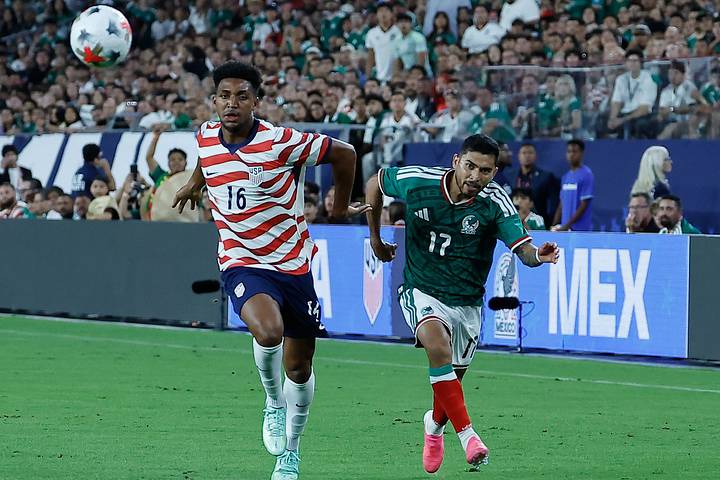
Beyond the home-field advantage, it also became rapidly apparent that Mexico's summer success was largely built around a well-defined starting lineup that Aguirre stumbled upon during the tournament. Remove a few key pieces, and El Tri's lack of squad depth and talent gaps become painfully obvious.
Mexico's talent pool is simply too shallow. Against Colombia, with seven players who had started both World Cup knockout matches, Mexico produced its best football of the fall. Márquez fielded an entirely different lineup against Peru three days later, and El Tri could only manage a draw against a significantly weaker opponent.
Ultimately, the results from Márquez's first four friendly matches were never that critical. What mattered most to assess at the outset of his tenure was how El Tri functioned on the pitch under his guidance and how he utilized the players available to him. This is perhaps the most alarming aspect of what was observed.
#VocesTricolor after our game in LA. 🗣️ pic.twitter.com/0bStF5bgnE
Aside from 50–60 minutes against Colombia and the opening 25 minutes against the USMNT—when the team resembled its World Cup self—Mexico was nearly unwatchable for the remainder of the window. One of the primary culprits? Márquez misreading his players' best positions.
Orbelín Pineda has been among the finest organizing midfielders in Liga MX this season, yet Márquez deployed him almost exclusively as a wide winger, where he struggled. Álvaro Fidalgo earned three Liga MX titles as Club América's answer to Pedri, yet Márquez continues to use him predominantly as a No. 10. Newcomers such as Jeremy Márquez, Santiago Sandoval, and even Inter Miami's Germán Berterame were regularly played out of their natural positions for extended spells.
Without sufficient quality depth, it is vital for Márquez to get the most out of the talent at his disposal—not undermine it by deploying players in the wrong roles.
Broadly speaking, El Tri's impressive World Cup form was held together by a starting XI that, without a handful of key contributors, risks crumbling entirely. That was made abundantly clear at one position in particular.
Life After Raúl Jiménez Will Be Very Difficult

Remove 35-year-old Raúl Jiménez from the equation and Mexico faces a serious void at center forward. The Wolverhampton Wanderers striker missed the opening stretch of Márquez's tenure through injury, and El Tri managed just two goals across four matches. The first was a stunning solo strike from 17-year-old Gilberto Mora, while the second came via a center back winning a header from a set-piece.
Armando González, Santiago Giménez, and Berterame each had the opportunity to make an impression on Márquez and did precisely the opposite. While it's true that Mexico—particularly without Mora—struggles to generate chances, the three strikers failed to convert the few they received and were largely ineffective in every other facet of the game.
Jiménez is a complete center forward, an outstanding focal point who excels at linking play with fellow attackers and midfielders. No other Mexican striker possesses those qualities. Giménez perhaps came closest to replicating that style during his start against the USMNT, but he also squandered by far the two clearest opportunities any El Tri striker had throughout the window.
Since the start of the 2025 Gold Cup, the trio of strikers has combined for just four goals across 40 appearances for El Tri, none of which came in competitive fixtures. Jiménez alone scored three goals at the 2026 World Cup.
What is perhaps even more alarming is that Márquez has no other viable options. These are currently Mexico's best alternatives in the absence of Jiménez, and there are no young center forwards emerging to challenge for a spot either.
Jiménez will be 39 by the time the 2030 World Cup arrives, making it difficult to picture him leading El Tri's attack four years from now. The pressing concern is that there is currently no player in Mexico's pipeline capable of coming anywhere close to what he provides and, crucially, delivers.
Too Early to Panic
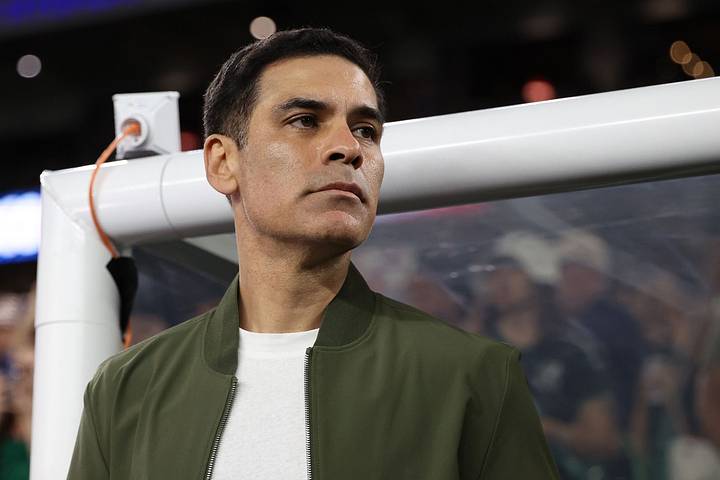
There's no sugarcoating it—the Márquez era has gotten off to a deeply disappointing start. Overreacting to it, however, would be a serious error in judgment.
These were Márquez's first four matches not only in charge of Mexico, but in his entire senior managerial career. He was also without key personnel including Jiménez, Julián Quiñones, César Montes, and Mora—the latter missing the final three games of the window.
Growing pains were always to be expected with a first-time manager, and patience was always going to be a necessity. Yes, there were worrying signs, but this also represents a valuable learning curve for Márquez. How he responds to his own shortcomings will be very revealing.
Mexico will take on Jamaica in the two-legged Concacaf Nations League quarterfinals in November. In the first competitive matches of his tenure, Márquez must secure his first wins as a senior manager against a lesser opponent to keep El Tri's title defense on track.
He has a month to prepare and should continue to receive full backing during that time. It's easy to imagine Mexico comfortably dispatching Jamaica, gaining a much-needed confidence boost and restoring positive momentum as 2026 draws to a close.
A defeat to Jamaica, however, could carry severe consequences for Márquez given Mexico's turbulent recent history with its managers.