
 ไทย
ไทย English
 中國人
中國人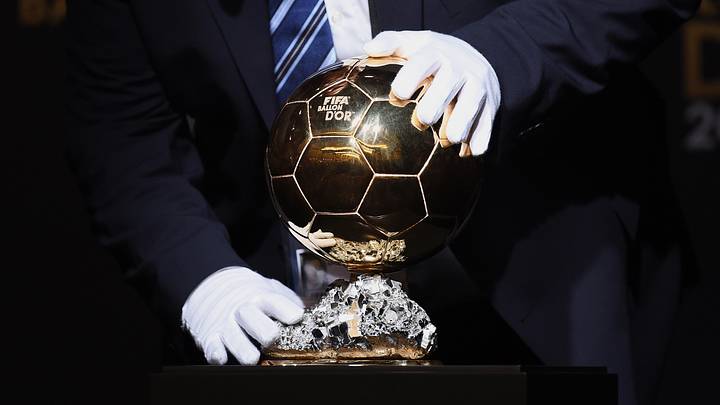
When sports journalists Gabriel Hanot and Jacques Ferran devised an award to recognize the best European soccer player of the year back in the mid-1950s, they could scarcely have imagined what they were setting in motion.
The Ballon d'Or, organized annually by France Football magazine and decided by a selection of journalists, has grown considerably in stature over the years to become the most prestigious individual accolade in world soccer. Nothing else—not even FIFA's official equivalent, awkwardly known as The Best Awards—comes anywhere near it.
Amplified by the Messi-Ronaldo era and an ever-increasing focus on individual brilliance, the Ballon d'Or carries special weight as the ultimate benchmark of excellence. In 2026, stars like Kylian Mbappé and Lamine Yamal openly campaign for votes, while each year's outcome is passionately contested.
No edition of the award has ever been won unanimously and, despite its prestige, the Ballon d'Or has not been immune to questionable decisions, glaring omissions and shifting criteria.
Here are the greatest controversies in the award's storied history.
10. The Lack of Non-Europeans

Originally conceived as an award exclusively for European players competing in Europe, it remained that way until 1995, when the world's remaining stars were finally considered eligible.
The reasoning behind the European-only focus initially made sense given the limited reach of global broadcasting. But that rationale began to crumble well before the '90s, as the finest South American and African players naturally moved to Europe's top leagues—yet still couldn't be considered.
As a result, the all-time winners list is missing the likes of Pelé, Diego Maradona, Mario Kempes and Romário.
Complicating matters further, Argentine-born players such as Alfredo Di Stefano and Omar Sívori did manage to win the award thanks to dual nationality.
9. Keegan's Back-to-Back Awards

Kevin Keegan was an outstanding forward; one of just four Englishmen to claim the Ballon d'Or and one of only nine players to successfully defend the trophy back in 1979.
Yet King Kev's first win was undeniably a peculiar one. The former Liverpool striker had struggled to recapture his best form following a British transfer record move to Hamburg, and he claimed no club silverware whatsoever in 1978. To make matters stranger, England failed to qualify for the World Cup that year.
That same year, Kenny Dalglish, signed as his replacement at Liverpool, netted 31 goals, including the decisive strike in the European Cup final—and finished a mere eighth in the voting.
8. Haaland Snubbed

Erling Haaland could barely have done more in his debut season at Manchester City. The prolific striker found the net 52 times in 53 appearances as City claimed a historic treble.
Even so, voters favored Lionel Messi (by a considerable margin) for his eighth award, following his heroics at the World Cup.
7. Sneijder Misses the Podium

Messi dominated once again in 2010, capitalizing on a split vote between Spain's World Cup-winning midfield maestros Andrés Iniesta and Xavi.
Most strikingly, however, Wesley Sneijder—a treble winner under José Mourinho at Inter Milan and a pivotal figure for the Netherlands in their run to the World Cup final—failed to make the podium at all, finishing fourth with just 14.5% of the vote.
Meanwhile, in a crowded field, Diego Milito—Serie A Footballer of the Year and scorer in the Champions League final—wasn't even nominated.
6. Owen Wins Over Raúl

Michael Owen remains the last Englishman to claim the trophy, doing so in 2001 following a treble of sorts with Liverpool.
The then-21-year-old striker dazzled voters with his goalscoring exploits for club and country, highlighted by a stunning hat-trick against Germany in a World Cup qualifier.
However, Owen's 2001 campaign pales considerably when set against Raúl's, who dominated La Liga with Real Madrid and was named both the best player and leading scorer that season.
The typically restrained Spanish media responded with headlines like "Stolen Ballon d'Or," and the decision continues to be debated in Madrid to this day.
5. Henry Overlooked

2003 was another peculiar year for the Ballon d'Or that largely flew under the radar due to the absence of social media.
Elegant Czech winger Pavel Nedvěd claimed the golden ball after an impressive campaign with Juventus, during which he won Serie A and reached the Champions League final—though his individual numbers appear relatively underwhelming by today's standards.
Meanwhile, Thierry Henry had to settle for second place despite a remarkable 2002–03 season, becoming the first player to score 20+ goals and contribute 20+ assists in a single Premier League campaign.
Paolo Maldini, another overlooked great, finished third in the voting.
4. Ferenc Puskas Misses Out

Luís Suárez (not that one) claimed the award in 1960 after shining for Barcelona, but how Ferenc Puskás finished only second in the voting is almost incomprehensible.
The Galloping Major was Spain's top scorer with Real Madrid and put up a frankly extraordinary tally of 47 goals in 36 matches across 1959–60—four of which came in the European Cup final.
The Hungarian icon never lifted a Ballon d'Or, though he surely would have had the award been introduced a few years earlier during his peak.
3. Real Madrid Throw a Tantrum

Two decades after the Raúl controversy, Madrid escalated their grievances when Vinícius Jr was passed over for the Ballon d'Or in favor of Rodri.
The Spanish midfielder had been central to Spain's Euro 2024 triumph, but Real Madrid firmly believed their Brazilian talisman—who was instrumental in their La Liga and Champions League victories—was the rightful winner.
Los Blancos's outrage was such that the club boycotted the ceremony in Paris.
"It is clear that Ballon d'Or-Uefa does not respect Real Madrid. And Real Madrid does not go where it is not respected," read a notably petulant statement from the club.
2. Voting Extension Hands Ronaldo the Win
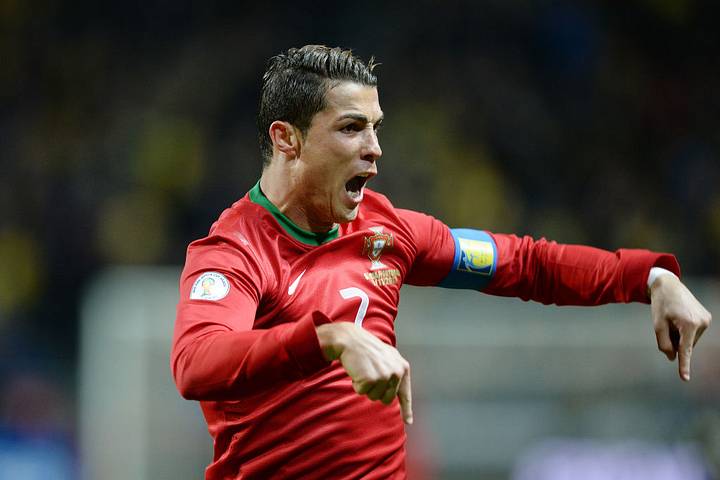
Cristiano Ronaldo remains the last player to win the award without claiming any club trophies in the same calendar year.
The Portuguese star did rack up a remarkable 55 goals in 55 appearances in 2012–13, making him a legitimate contender.
However, he received a significant boost when France Football extended the voting deadline to encompass the 2014 World Cup playoffs, during which Ronaldo scored four goals against Sweden—potentially earning him the additional votes needed to edge out Lionel Messi and Bayern Munich treble winner Franck Ribéry in a tight three-way contest.
1. COVID Cancellation

The greatest controversy of all came when there was no award at all. France Football scrapped the entire ceremony in 2020, citing logistical challenges brought on by the pandemic.
The decision was a cruel blow to Robert Lewandowski. The Polish striker had just delivered extraordinary numbers during Bayern Munich's latest treble-winning campaign and was the overwhelming favorite before the cancellation was announced.
Lewandowski pushed even harder the following year, obliterating Gerd Müller's Bundesliga scoring record with 41 goals in 29 games. It was all in vain, however, as voters chose instead to reward Messi for his Copa América triumph.