
Real Madrid's Spanish Super Cup Collapse Exposes Three Critical Lessons for Alvaro Arbeloa
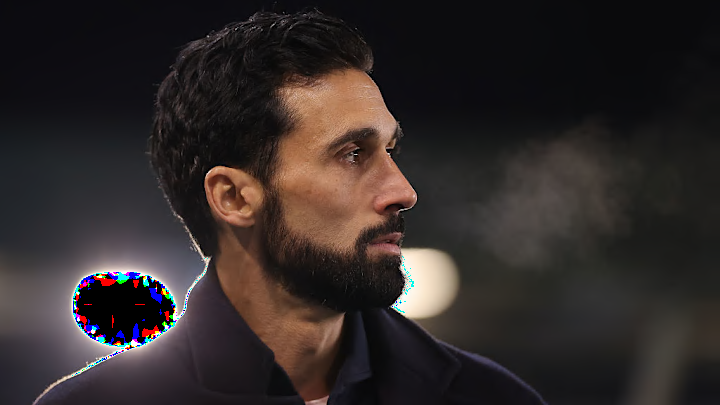
Having fewer than 72 hours to get ready for his debut match as Real Madrid's head coach, newly appointed manager Álvaro Arbeloa needs to extract every possible insight from the team's Spanish Super Cup disappointment.
For the consecutive campaign, Los Blancos came up short versus Barcelona in their quest for the Spanish Super Cup title, suffering a 3–2 defeat at Alinma Bank Stadium on Sunday night. This match marked Xabi Alonso's final game managing his former team before his unexpected departure the next day.
Real Madrid reached a "mutual understanding" with the Spanish coach that resulted in his departure after merely seven months at the helm. The organization subsequently appointed Real Madrid Castilla manager Arbeloa as his direct successor.
The ex-defender now faces the burden of taking on what many consider the most challenging position in football. Arbeloa's initial challenge arrives Wednesday against second-division club Albacete in the Copa del Rey round of 16.
Below are three key takeaways the new manager can learn from the team's failures in Jeddah, Saudi Arabia.
Real Madrid Lack the Foundation for Deep Defensive Play
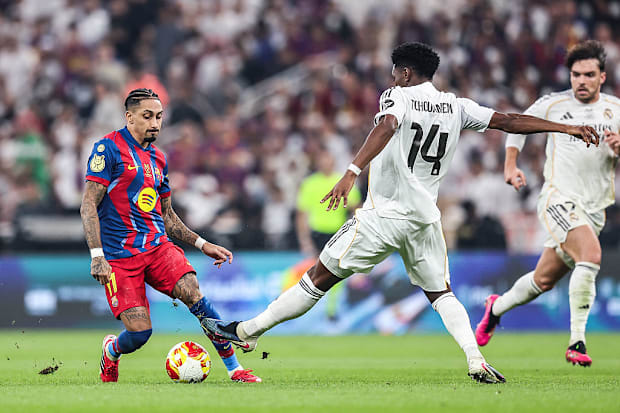
Alonso again opted for a puzzling tactical approach during Sunday's Clásico. For the season's first time, Real Madrid operated with a five-man defense, featuring Aurélien Tchouaméni retreating as an additional center-back.
Theoretically, deploying an extra defensive player against Barcelona's caliber of attack appears logical, except that supplementary defender is actually a midfielder. While Tchouaméni might perform adequately at center-back versus weaker opposition, the French player is clearly overwhelmed when facing talents like Robert Lewandowski and Raphinha, as repeatedly demonstrated during Carlo Ancelotti's tenure.
A defensive line featuring two midfielders in Tchouaméni and Federico Valverde, an underperforming Dean Huijsen, an unreliable Raúl Asencio and Álvaro Carreras simply cannot endure such extended periods under pressure.
Making things worse, this defensive strategy creates significant team imbalance that offers little assistance to the offensive unit. While Real Madrid excel in transitional play due to Vinicius Junior and Rodrygo's pace and dribbling skills, it becomes meaningless if the squad cannot deliver the ball to their wide players.
Toni Kroos and Luka Modrić are no longer available to collect possession from the back line, survey the pitch with ball control, and initiate counter-attacks. Currently, Real Madrid possess players more prone to losing possession immediately upon contact, cheaply returning possession to opponents and destroying any transitional opportunities before they begin.
Real Madrid Display Greater Unity With an Authentic No. 9
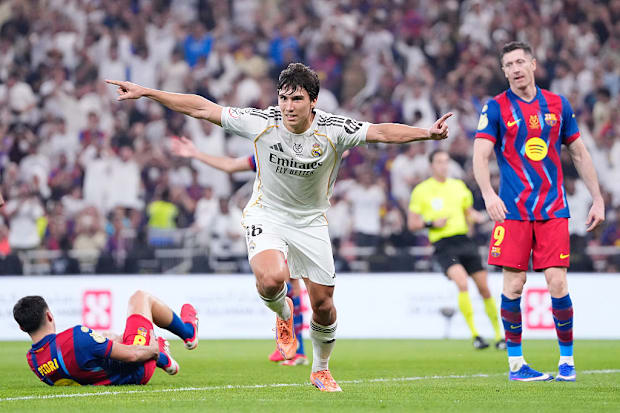
Missing Kylian Mbappé at full fitness for a Clásico final never benefits Real Madrid, particularly when the French star has netted 29 goals this campaign. However, it's increasingly apparent that the squad operates more harmoniously with Gonzalo García—or any natural striker—spearheading the attack.
Gonzalo creates runs toward goal, poses an aerial danger, and crucially, draws defenders away from Vinicius Jr. The Brazilian enjoys greater operating space when defenders must track a No. 9 awaiting service within the penalty box.
Mbappé frequently positions himself at the penalty area's edge, motionless and waiting, without ball possession. Consequently, Los Blancos' offense becomes predictable and easily neutralized: contain Vinicius Jr on the left wing and the Frenchman never approaches the action.
More than eighteen months have elapsed since Mbappé transferred to the Spanish capital, yet the team remains more unified without his presence. Obviously, the answer isn't benching the club's top scorer, but Arbeloa requires his new striker to begin performing more like an instinctive No. 9—both with and without possession—or Real Madrid will never claim their desired trophies.
Valverde Cannot Fix Real Madrid's Midfield Problems
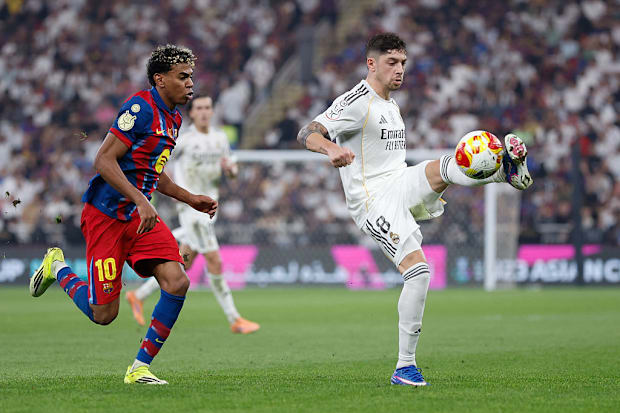
While being tasked with significant defensive responsibilities during the Spanish Super Cup final, Valverde also experienced periods in his natural midfield role ... and accomplished very little.
The Uruguayan international managed just nine successful passes during his 68-minute appearance, a figure that would appall the previous holder of his No. 8 jersey. Among those nine, only one constituted a completed forward pass. It's concerning when a goalkeeper achieves more—indeed, Thibaut Courtois finished with 10 completed progressive passes.
Clearly, Valverde represents Arbeloa's most adaptable squad member, but he must rediscover his midfield form to maximize his long-term team contribution. Los Blancos desperately need the Uruguayan's cross-field diagonal passes and transitional vision.
Should Valverde wish to maintain his midfield position once a proper right-back returns, he must demonstrate his worth to Arbeloa, something a player of his reputation and ability might not anticipate needing to prove.