
Southgate Backs Struggling Coaches Amorim, Maresca, and Alonso in High-Stakes 'Power Battles'
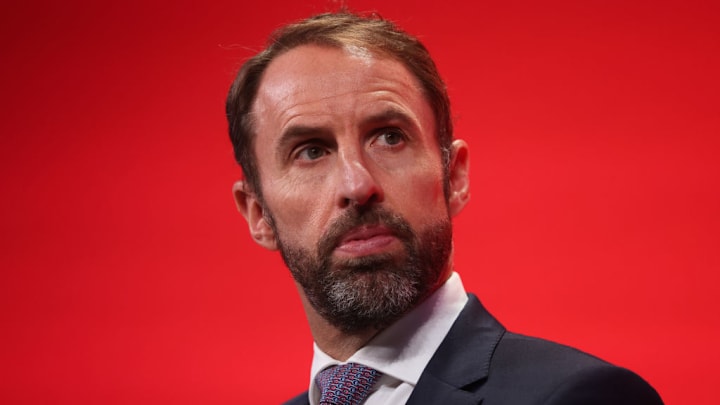
Ex-England boss Gareth Southgate has offered his perspective on the recent departures of managers Enzo Maresca, Ruben Amorim and Xabi Alonso, suggesting that "internal conflicts" were the "primary factor" behind all three dismissals.
Following these notable managerial changes, Southgate published an extensive post on his LinkedIn profile addressing the situation, while also discussing the challenges facing today's football coaches.
"Over the past two weeks," Southgate wrote. "Three of Europe's most prominent football institutions Real Madrid, Manchester United and Chelsea have separated from their managers. Among the three, Maresca had the longest stint at 18 months.
"While each manager departed under somewhat different conditions and for multiple reasons, internal conflicts whether with club leadership (Amorim), staff members (Maresca) or squad players (Alonso) were fundamentally the primary factor behind each dismissal."
The ex-England chief appears well aware that on-field performance and match outcomes represent only a small portion of what contemporary managers are evaluated on. He continued by acknowledging that the managerial position has transformed recently, reducing the influence of the person on the sidelines.
Many coaches struggle to last at Real Madrid and Xabi Alonso was among them. pic.twitter.com/IqsdFc0qi5
"The weakening of a manager's influence has been a slow development spanning numerous years. This has intensified with the common adoption of football, technical or sporting directors, who now manage long-term football planning, answer directly to CEOs or ownership (or both), and are positioned hierarchically above the manager."
While some might interpret this as criticism, Southgate recognized this as part of broader transformations reshaping how team structures operate in contemporary football, stating: "I personally have no problem with this development.
"Vision, culture, preparation, and stability are essential for success in any organization—and a football club is no exception. A manager lacks both the time and, often, the specialized knowledge to handle complex player agreements, manage worldwide scouting systems, or operate advanced data analytics.
"Similarly, it's impractical to restructure medical or sports science teams whenever there's a managerial change."
Southgate Suggests Manager Role is Harder Than Ever
Southgate Believes Coaching Position More Challenging Than Before
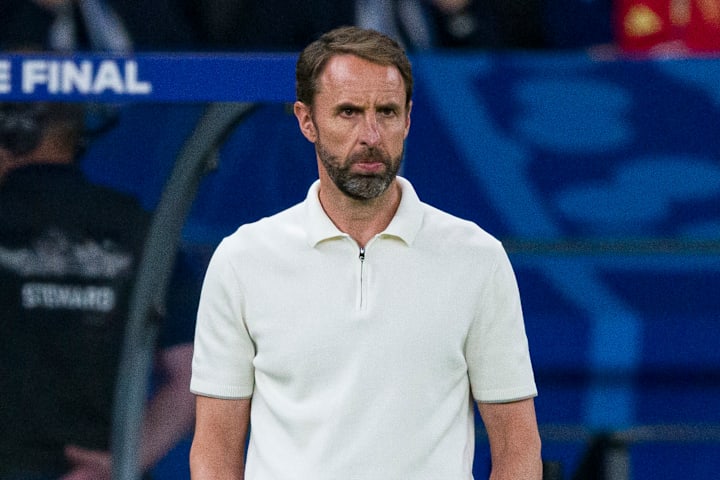
Despite Southgate noting that managers today have reduced influence regarding decision-making, he also thinks several other elements make succeeding in the position more challenging than previously.
"Against the assumption of certain supporters that the position has become easier ('they just need to train'), the reality is reversed," Southgate explained. "Include the challenge of handling today's players (many of whom are essentially personal brands), combined with the financial pressures on clubs, and the constant examination from both conventional and social media, and you create a substantial combination of challenges and stress.
"Today's manager must now handle bigger squads, expanded support staff, much greater analytical requirements, and continuously growing media and commercial responsibilities.
Manchester United's difficulties since Sir Alex Ferguson's departure persist... pic.twitter.com/uunvWz77qS
"This situation isn't improved by the gradual, sometimes accidental, change in authority and standing suggested by transitioning from the designation of manager to head coach."
The distinction between these roles is crucial according to Southgate and numerous other coaches throughout the sport—just consider Amorim's situation.
"As I previously told my supervisors at England: players aren't simply pieces on a strategy board that can be easily repositioned. They are people. And handling that truth lies at the core of contemporary football management," Southgate concluded.