
 ไทย
ไทย English
 中國人
中國人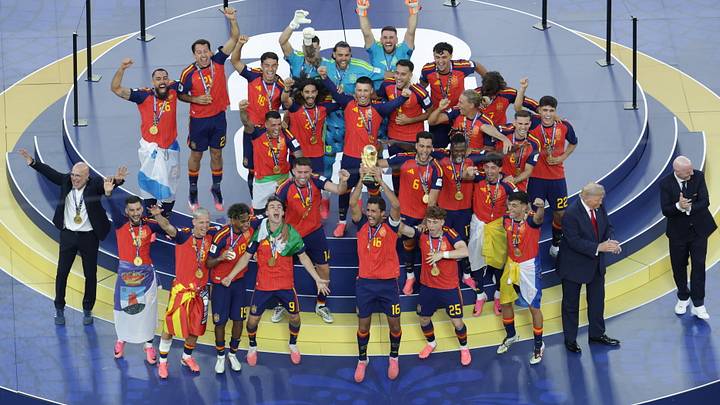
It's often said that history belongs to the winners, but those who triumph also have considerable influence over what the future holds. Nowhere is this more apparent than in soccer.
This is a sport in perpetual motion. As the iconic Manchester United striker Denis Law once remarked, "The only thing that has never changed in the history of the game is the shape of the ball."
The inspiration for these shifts almost always comes from the most successful teams. Who better to emulate than the sides achieving what everyone else is chasing: victory. And there is no brighter stage than the World Cup.
Spain presents itself as a particularly compelling model for the world to follow. Luis de la Fuente's squad showcases a theoretically straightforward style of play that has already drawn widespread admiration. Former German World Cup winner Toni Kroos was far from alone in responding to Spain's triumph over Argentina with the verdict, "Football won."
But for the world's clubs to attempt replicating what Spain achieved this summer would be an enormously risky endeavor—particularly if they have a distorted understanding of what actually made the team world champions.
History's Unflattering Copycats
For as long as tactics have existed in any meaningful sense, there have been teams eager to replicate those methods—and distort them in the process.
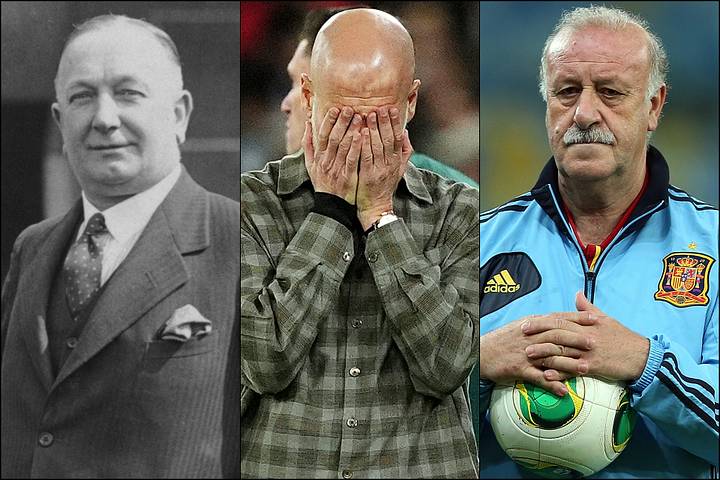
Herbert Chapman is regarded as one of the earliest managers to ever concern himself with something as deliberate as devising an organized blueprint for success. While his methods at clubs like Huddersfield Town and Arsenal during the 1920s were initially dismissed as eccentric folly, it soon became clear that the former munitions factory manager had stumbled onto something significant.
Among his numerous contributions, Chapman is most closely associated with pioneering the WM formation at Arsenal. This arrangement, a 3-2-2-3 system in place of the prevalent 2-3-5, effectively introduced a third defender by withdrawing one of the forwards.
As the Gunners embarked on a trophy-laden era in the 1930s, most clubs followed Chapman's lead by adding an extra player at the back. Yet, lacking the tactical sophistication of the blunt Yorkshireman or his understanding of his players' strengths, this trend gave rise to a wave of largely negative soccer—for which Chapman was unfairly blamed. Arsenal, however, were anything but defensive. The system change gave them a more solid base, but the side that claimed the league title in 1930–31 still netted 127 goals.
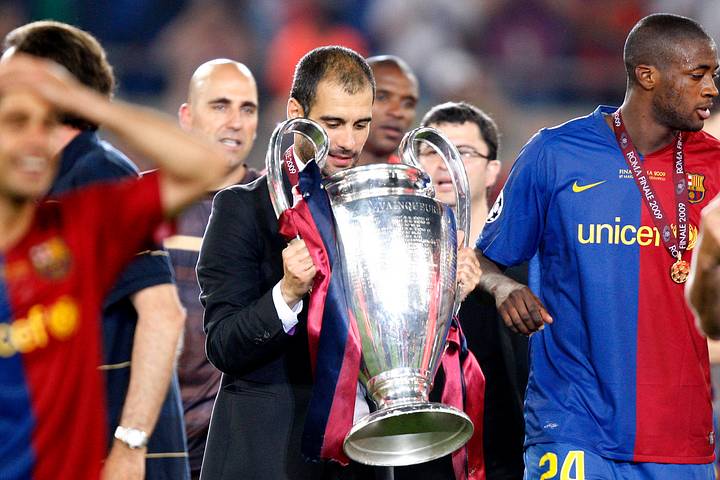
This cycle of failed imitation has repeated itself across the decades since. Even today, countless coaches attempt, above all else, to reproduce the style Pep Guardiola first introduced at Barcelona in 2008. Notably, Spain's previous men's world champion was among them.
The 2010 World Cup-winning manager Vicente del Bosque openly acknowledged that his team's fixation on possession was "a simplification" of Guardiola's intricate approach. Yet the club game still rushed to copy Spain.
Blackpool manager Ian Holloway made no effort to hide his ambitions following promotion to the Premier League in 2010: "After watching the World Cup, I've realized that we need to get more like Spain." The Tangerines duly enjoyed a sparkling first half of the season, rising as high as seventh and handing eventual champions Manchester United a sobering afternoon.
Passing the ball suddenly became an end in itself.
When David Moyes succeeded Sir Alex Ferguson at Manchester United, he made a point of highlighting passing statistics. "He'd say, 'Today I want us to have 600 passes in the game. Last week it was only 400,'" center back Rio Ferdinand recalled. "Who cares? I'd rather score five goals from 10 passes."
Those reservations proved well-founded. Blackpool's system was built around a single quality passer, Charlie Adam, rather than an entire squad of them like Spain. There were only three wins after Christmas as Blackpool were relegated. "The fat lady has finished singing and unfortunately I don't like her tune," Holloway lamented.
Guardiola himself was the harshest critic of this global obsession. "I loathe all that passing for the sake of it, all that tiki-taka," he would say. "It's so much rubbish. I hate tiki-taka. Tiki-taka means passing the ball for the sake of it, with no clear intention, and it's pointless."
It's easy to overlook, but this Spain side does not necessarily play tiki-taka.
Spain's World Cup Success Is Not All Down to Passing
La Roja reign again. pic.twitter.com/mWvSmeKEOl
Passing is just one element of Spain's identity, but the manner in which De la Fuente's team presses the ball is far more significant.
Türkiye, who departed in the group stage amid fears of a furious public backlash, actually recorded a higher possession figure than the champions this summer. Spain's finest performance of the entire tournament—the most complete display from any team—came against France in the semifinal. La Roja held just 51% possession that day.
Spain's success lay in where those passes were played, not in how many of them there were.
Rodri offered a concise summary of his team's philosophy: "Stop them [the opposition] playing and bring the game to our terrain." That terrain was as far from Unai Simón's goal as possible.
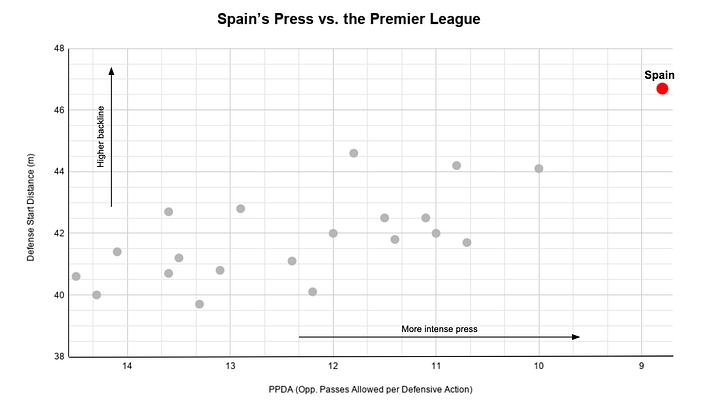
Spain maintained the highest defensive line of any team this summer, pushing more than 46 meters up the pitch to keep the ball consistently out of their own half. Once the opposition gained possession, it was swiftly reclaimed through a press that recorded a tournament-leading number of high turnovers.
If any club side is going to draw lessons from Spain, they should focus on what the world champions did without the ball rather than what they did with it. No team in last season's Premier League, for instance, came anywhere close to matching Spain's press intensity at the World Cup.
No New Solutions
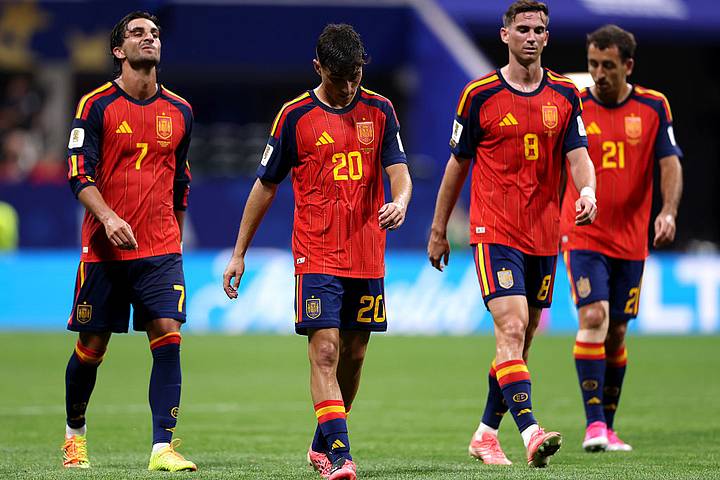
For all of Spain's considerable strengths, nobody was reinventing the wheel in North America. If anything, De la Fuente was compelled to adopt a less dynamic approach compared to the thrilling success of the 2024 European Championship, because his two standout players from that summer, Lamine Yamal and Nico Williams, were not fully fit this time around.
Another pitfall for any elite club side attempting to emulate Spain would be overlooking the nature of their opponents. Uruguay, Austria, Portugal, Belgium and France all pressed forward against the eventual champions. The one side that sat back in a disciplined defensive block—the kind of challenge the vast majority of top domestic teams routinely encounter—was Cabo Verde, who held Spain to a goalless draw.
Argentina also sat deep and pushed Spain to extra time. It was telling how much more threatening La Roja became when Williams came off the bench to combine so effectively with Yamal in the final. The Athletic Club winger had the ball in the net himself, only to be denied by a soft foul, before setting up Ferran Torres's decisive winner.
Enable functional cookies to see this feature.
"At one time it was all about possession," legendary manager Carlo Ancelotti once reflected, "with all the analysts fixating on that. Why? Because it was something they could measure.
"But as Albert Einstein said: 'Not everything that can be counted counts, and not everything that counts can be counted.' Possession alone doesn't win the game." It's vital that clubs keep that lesson in mind.