
 ไทย
ไทย English
 中國人
中國人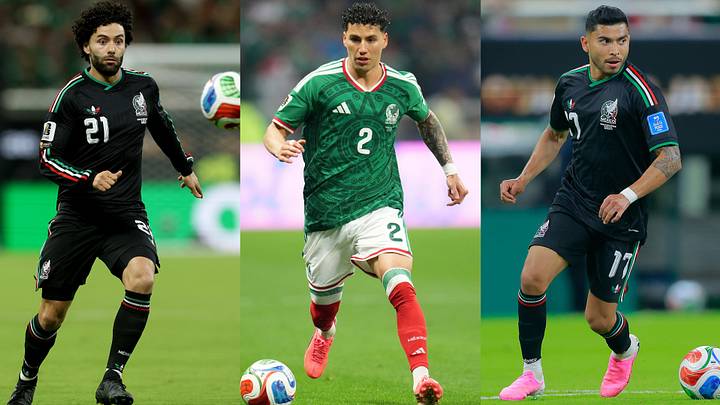
In a summer that was expected to see several Mexican players make significant career moves by departing Liga MX, the reality turned out to be quite the opposite.
Mexico delivered what many consider its finest-ever World Cup showing this summer, claiming four victories in a single tournament for the first time and pushing eventual bronze medalist England to the edge in a heartbreaking loss. Beyond the impressive results, El Tri showcased an appealing and efficient style of play, with several relatively obscure players announcing themselves on the world stage.
Liga MX players filled 12 of the 26 slots in El Tri's World Cup squad, with six of them earning starting berths in Mexico's two knockout-round fixtures. Given the strong individual and team performances, many anticipated that several of these players would land moves to prominent European clubs following the tournament.
Yet as the summer transfer window draws to a close, just one of those 12 players made the leap from Liga MX to Europe. Conversely, three Mexico internationals saw their European stints come to an end, making their way back to Liga MX after the World Cup.
Mexican Soccer's Broken System

Several factors contribute to the shortage of Mexican players currently plying their trade in European leagues, but it all traces back to Mexican soccer's obsession with maximizing revenue above all else. Consequently, Liga MX clubs inflate the asking prices for their top talents, demanding exorbitant fees to sanction any departures.
Unlike other South American leagues, player transfers are not the primary revenue stream for Liga MX clubs — lucrative sponsorship arrangements and broadcasting rights are. Elsewhere, in financially weaker leagues — Argentina being a prime example — clubs treat player sales as a financial lifeline, and in many cases, a matter of survival. This is why Argentine league players have historically moved to Europe for modest fees — top-rated prospects aside. Clubs need every penny available and therefore avoid overpricing their players, which stands in stark contrast to the approach taken in Mexico.
Major League Soccer clubs and the league itself also don't rely on player transfer income to sustain operations, yet over the past decade, American and Canadian talents in particular have moved to Europe in significant numbers, driven by a deliberate philosophy of channeling their players toward the world's top leagues.
"Mexican players don't go to Europe because teams don't let them," former Mexico manager Gerardo Martino once famously remarked.
This summer, Vancouver Whitecaps standout and U.S. men's national team midfielder Sebastian Berhalter completed a move to Championship outfit Middlesbrough for $2 million. Meanwhile, Club América reportedly turned down an offer in the region of $5 million from AS Roma for defender Israel Reyes, with the club holding out for at least $8 million. Roma never returned with a follow-up bid for Reyes, instead opting to sign proven talent and Argentina international Nahuel Molina to address their positional need.
While Liga MX and Mexican soccer's dysfunctional structure remains the primary reason Mexico fails to consistently produce European exports, it's equally undeniable that European clubs are reluctant to invest their trust in Mexico internationals when bolstering their rosters.
A Series of Unsuccessful Ventures

In recent years, success stories of Mexican players who departed Liga MX for Europe have grown increasingly rare. There are far more examples of Mexican talents who thrived domestically but then struggled to leave a mark in Europe, ultimately returning to Liga MX after brief and forgettable spells.
As a result, European clubs have clearly lost confidence in the capacity of Mexican players — and Liga MX talents broadly — to adapt to a higher level of competition, regardless of how well they performed in Mexican soccer.
César Huerta, who featured for Mexico at the 2026 World Cup, was Pumas' standout performer for the better part of two years before making the move to Belgian powerhouse Anderlecht in the January 2025 window. After a season and a half plagued by persistent injuries, Huerta returned to Pumas in the final week of the summer window and offered candid remarks as he closed the chapter on his European adventure.
"There's been a lot of talk saying that I should've tried to hold on longer over there [in European soccer]," Huerta told reporters at the airport this week upon his return to Pumas. "And I did exactly that — I waited until nearly the end of the window, which is in five days, to see if another opportunity would emerge.
"At the club [Anderlecht], they shut the door on me. They told me I was no longer part of their plans. They separated me from the group. So I endured some very difficult weeks, but held out hope of securing another chance in Europe. It never came. It was beyond my control, and now I'm genuinely thrilled to be back at Pumas."

In a similar vein, a respectable World Cup showing wasn't enough to secure El Tri fullback Jorge Sánchez's European future, as he returned to Liga MX with Atlas just six months and 11 appearances after joining Greek club PAOK.
Mexico, as a collective unit, is capable of competing with and defeating national teams stacked with elite European-based talent — El Tri's commanding victory over Ecuador in the World Cup round of 32 being the clearest illustration. Yet individually, European clubs appear largely uninterested in recruiting Mexican players — particularly not at the valuations Liga MX clubs place on them. Moreover, players who do make the move to Europe must hit the ground running, as the evidence suggests they won't be afforded a generous adaptation period.
Players in Mexican soccer also frequently opt to remain in the comfortable surroundings of Liga MX, where they command higher wages than what European clubs would offer and compete in a familiar setting where success comes more naturally.
All of these elements converge to create a perfect storm that has effectively severed any consistent route for Mexican players to make the transatlantic journey.
What Comes Next For Mexican Players in European Soccer

Armando González stands as the sole player from Mexico's 2026 World Cup squad to have made the transition to European soccer this summer, with the 22-year-old forward joining Olympiacos from Chivas following a prolific goal-scoring campaign.
Cruz Azul midfielder and World Cup standout Erik Lira is anticipated to complete a move to AS Monaco before the window shuts, though no agreement has yet been reached, and Cruz Azul has already rebuffed the French club's opening offer.
Meanwhile, beyond Huerta and Sánchez, Orbelín Pineda has also wrapped up his European chapter with AEK Athens and is back in Liga MX with Monterrey. Just as it appeared this could be the summer Mexico sent players abroad in significant numbers, arrivals have proven more common than departures — and more could yet follow. Álvaro Fidalgo is reportedly being shown the door at Real Betis and has been strongly linked with a return to Club América, just six months after leaving the club to join the La Liga outfit.
It's no stretch to say that many are pinning their hopes on 17-year-old Tijuana prodigy Gilberto Mora as a symbol of what's possible. The teenager, widely regarded as the most exciting Mexican prospect in decades, has been linked with some of the world's biggest clubs for over a year and appears destined to secure a high-profile European transfer once he reaches the appropriate age.
Su doblete nos dio una nueva victoria en casa, por ello, Gil Mora es el #JugadorEstrella ⭐️#DeLaFronteraPalMundo | @CarlsJrMx pic.twitter.com/DCYsSTk7us
Mora thriving in Europe could potentially raise the profile and overall standing of Mexican talents on the international stage. Placing such enormous expectations on the shoulders of a teenager is hardly fair, but that speaks to just how fractured the Mexico-to-Europe pipeline has become.
This is a problem that has persisted for years, laid painfully bare this summer when not even a strong World Cup run was enough to open European doors for El Tri players. Reform is needed within Mexican soccer to breathe new life into the export of talents to the world's most competitive leagues — yet given that the issue does not meaningfully impact Liga MX clubs' core objective of maximizing profits, any meaningful progress seems unlikely in the near term.