
 ไทย
ไทย English
 中國人
中國人
Argentina midfielder Enzo Fernández became the sixth player to be dismissed in a World Cup final after receiving two yellow cards during Sunday's loss to Spain. Lionel Messi did everything he could to ensure Marc Cucurella would become the seventh.
In the immediate wake of Fernández's red card—a second booking for a clumsy challenge on Pau Cubarsí, coming 10 minutes after his first yellow for dissent—Messi frantically waved at the referee, pointing directly at Cucurella and visibly accusing the Spain left back of shielding his mouth while speaking.
Paraguay's Miguel Almirón and Ecuador's Piero Hincapié were both sent off for violating the new regulation introduced for this summer's competition, which was inspired by the controversy involving Benfica midfielder Gianluca Prestianni, who was accused of racially abusing Real Madrid winger Vinícius Júnior last season. Prestianni had covered his mouth during the altercation, meaning no proof could ever be established.
So, why did Cucurella avoid a red card?
The Key Detail That Saved Cucurella
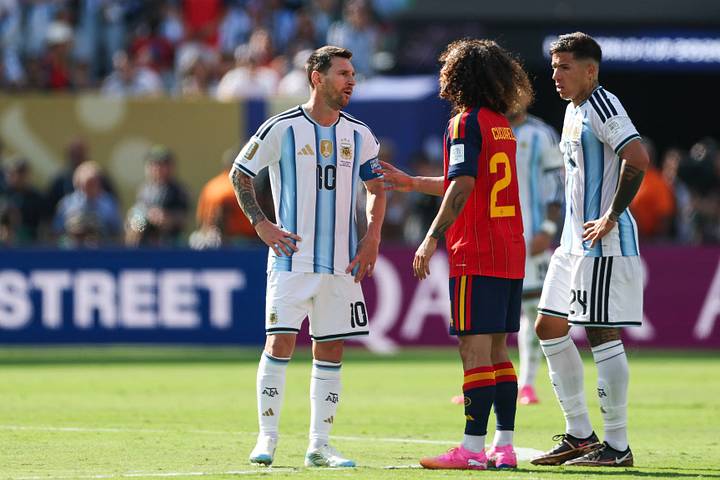
The explanation for Cucurella remaining on the field lies in the specifics of what many have labeled the 'Prestianni rule.'
FIFA did not ban players from covering their mouths while speaking, but confirmed red cards would be issued if a player was found to have done so during a confrontation. Several players have already been seen covering their mouths in routine exchanges, with England's Jude Bellingham being perhaps the most notable example during an interaction with Ghana's Jordan Ayew. No red card was produced for the Real Madrid midfielder.
A review of Sunday's final footage shows Cucurella approaching Messi and briefly touching his mouth while speaking. It is impossible to determine what the left back said, but there was no apparent aggression in the exchange.
While officials could not review what was said when Cucurella's mouth was obscured, the incident was undoubtedly examined following Messi's urgent appeal. With no evidence of a heated exchange, Cucurella was given the benefit of the doubt, and most observers agreed the correct call had been made.
"Argentina play like that, we know that's what they do," former Manchester United and England striker Wayne Rooney told the BBC. "The one thing you want is good sportsmanship. That was sad to see, Lionel Messi doing that."
Will the 'Prestianni Rule' Remain After the World Cup?
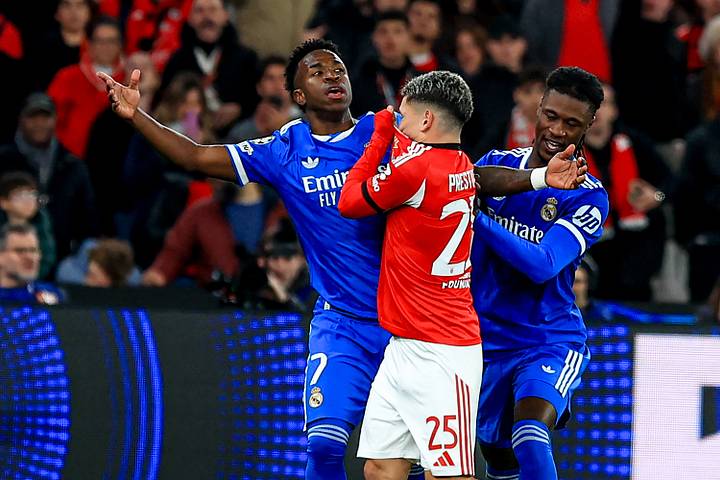
When it was first introduced, the new rule received widespread praise, with the fallout from the Prestianni and Vinícius incident still fresh in people's memories.
The concern that emerged during the World Cup centers on the subjectivity of the ruling. While Cucurella did not appear to be acting with hostility, he could still have easily covered his mouth at the precise moment he uttered an offensive word to conceal it from cameras. The lack of clarity around what constitutes a heated confrontation left room for Messi to attempt to get Cucurella dismissed.
Should FIFA opt to retain the rule for future tournaments, it may require further refinement, though it could be some time before fans and players encounter it again.
Enable functional cookies to see this feature.
In Europe, UEFA has already confirmed it will not use red cards to penalize players for covering their mouths. Instead, referees will be encouraged to issue yellow cards to anyone "attempting to conceal communication as an act of unsporting behavior." Nevertheless, the ambiguity persists.
Football authorities around the world will each need to decide whether to align with FIFA's or UEFA's approach.