
 ไทย
ไทย English
 中國人
中國人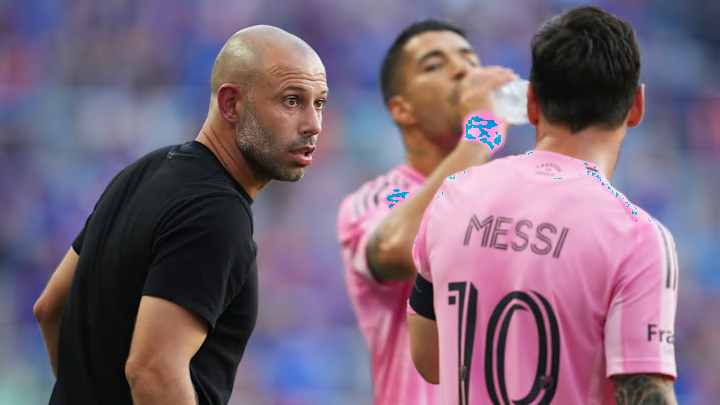
Inter Miami is entering a new chapter after Javier Mascherano stepped down as head coach citing "personal reasons," fewer than five months after guiding the club to MLS Cup victory.
The Argentine's exit comes with the club sitting 10th in the Supporters' Shield table—holding a 3-1-3 record in MLS—after being eliminated from the Concacaf Champions Cup in the Round of 16. While the season's opening stretch had been underwhelming, Mascherano's departure—as a long-standing teammate and close friend of club captain Lionel Messi—came as a surprise.
Though he was the third coach to exit his position this season in MLS, the circumstances in Miami are not as troubling as those surrounding Óscar Pareja's exit from Orlando City or CF Montréal's parting with Marco Donadel.
Here, Sports Illustrated examines three factors that may have contributed to the conclusion of the Mascherano era in South Florida.
Struggling to Adapt to Inter Miami's Organizational Setup
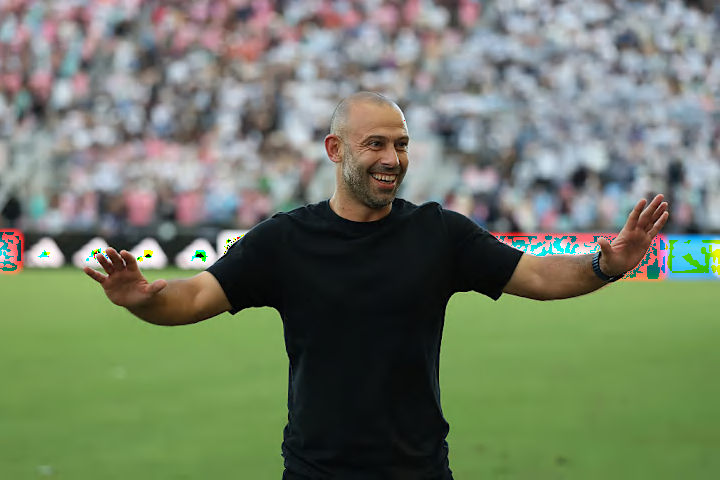
Mascherano was, by most measures, a capable coach for Miami. Despite lacking full authority over roster decisions, he managed to make meaningful adjustments while working with the players available to him, even when they didn't align with his tactical preferences.
No position better illustrates this tension than the striker role, where the club signed Germán Berterame for $15 million from Rayados de Monterrey—the second-largest transfer in club history—and renewed Luis Suárez's contract despite his declining performances.
Both players, talented as they are, failed to meet Mascherano's requirement for a dynamic, creative forward capable of enhancing Messi's role while relieving some of the burden from the eight-time Ballon d'Or winner.
Without a striker suited to his preferred system, Mascherano turned to Suárez at various points during Berterame's slow start, largely because no other viable options existed within the squad.
Meanwhile, the inability to find a forward who fit his system also prompted a positional shift for Messi—from center forward to attacking midfielder—a change the Argentine found difficult to adjust to, which narrowed Miami's attacking play, reduced the impact of the strikers, and limited both Messi's effectiveness and that of the new attackers.
This was Mascherano's first head coaching role at club level and his first experience navigating team management and ownership dynamics. It became clear that he functioned strictly as head coach, rather than having input on roster decisions in line with now-interim boss Guillermo Hoyos.
Had Mascherano been more involved in the recruitment process, the project might have flourished even further. Instead, it became apparent that his preferred style clashed with management's vision—one that largely mirrors Messi's preferences at nearly every turn—despite the team's MLS Cup triumph.
Concacaf Champions Cup and LAFC Loss Against Model Clubs
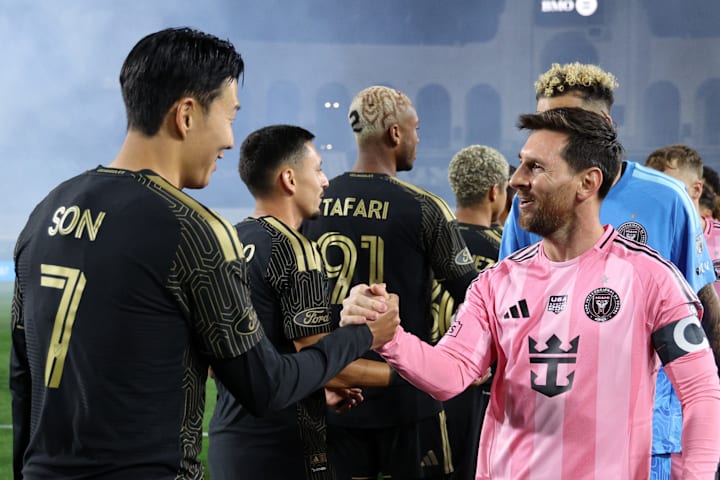
In Hoyos's first press appearance after assuming the interim role, he told reporters that he views Inter Miami as a "top 10 club in the world." A bold claim for a side currently 10th in MLS that opened the season with a 3–0 defeat to LAFC in front of 75,673 spectators before being knocked out of the Concacaf Champions Cup by Nashville SC.
The reality is that Miami is, at best, a mid-table team this season, and that stems primarily from roster construction rather than any tactical shortcomings from Mascherano. This is underscored by the strikers' difficulties, the persistently poor decision-making from center back Maxi Falcón, and the defensive vulnerability of a once-tenacious Rodrigo De Paul.
All of those issues came to a head in the recent 2–2 draw with Red Bull New York—Mascherano's final game in charge—but had been visible throughout the early portion of 2026.
Wow! 😱 Filthy connection from the young @NewYorkRedBulls.
18-year-old Julian Hall puts the defenders on skates to set up 17-year-old Adri Mehmeti for his first MLS goal. pic.twitter.com/ozH5cEd285
Against LAFC in the season opener, Miami were outclassed by a team they aspire to emulate. The Black and Gold have built around players who suit their roster philosophy and preserved tactical continuity by promoting longtime assistant Marc Dos Santos to manager following Steve Cherundolo's resignation, while reinforcing that vision with signings like creative midfielder Stephen Eustáquio and others.
Nashville, who eliminated Miami on away goals in the Champions Cup Round of 16, added Cristian Espinoza as an MLS free agent—a piece designed to elevate the already dangerous partnership of Sam Surridge and Hany Mukhtar.
Comparing those roster developments to Miami's reveals a stark contrast: Berterame, Dayne St. Clair, David Ayala, and Sergio Reguilón have all struggled to find their footing, while the team has been unable to compensate for the departures of Sergio Busquets and Jordi Alba. Though injuries have complicated the transition, no players have stepped up to fill the void, and despite Mascherano's tactical adjustments, key personnel have consistently underperformed.
At any club, poor results ultimately reflect on those in charge. The first casualty is typically the manager, as the role is easily replaced and a change in leadership often produces the well-known "new coach bump," even when the deeper issues lie within the broader roster and club structure.
The Personal Reasons Trend

Mascherano's predecessor, Tata Martino, departed after a more successful stint with the club, having set a regular-season MLS points record in 2024 to claim the Supporters' Shield—widely considered a more prestigious achievement than the MLS Cup.
Both coaches have now left following major titles, and both cited "personal reasons" in their resignations. While this could be dismissed as unfortunate coincidence for Miami, it also hints at the potential pressures of the role—navigating the Messi-driven spotlight and all that comes with it—and raises questions about whether coaching at the club is as appealing as it appears, given the organization's outsized influence on MLS.
Another parallel between the two situations is that both Martino and Mascherano took their entire coaching staffs with them upon leaving the Herons—something that rarely occurs when managers depart on their own terms.
Mascherano reportedly informed the club of his intention to leave following the 2–2 draw against a youthful Red Bull New York side, but the underlying tensions likely began brewing well before that moment—and the fact that it has now happened twice raises serious questions.