
 ไทย
ไทย English
 中國人
中國人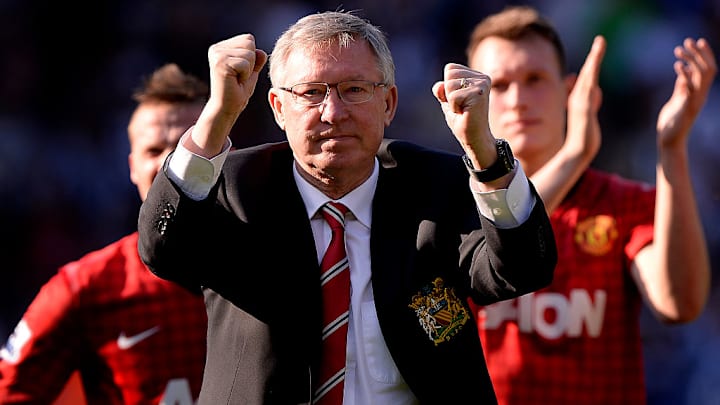
Manchester United were "99 per cent" set to sign both Cristiano Ronaldo and Gareth Bale in the summer of 2013, with former left back Patrice Evra revealing he was told this directly by Sir Alex Ferguson himself.
The reason United failed to complete a reunion with Ronaldo—a move that eventually happened eight years later—or prevent Bale from heading to Real Madrid was ultimately Ferguson's retirement.
Evra disclosed to The Athletic that the iconic Scot's departure came as a massive surprise, given that just "one week before" the announcement, Ferguson had personally briefed him on which players would be arriving ahead of the 2013–14 season.
"I went to Ferguson's office, and he said, 'Patrice, 99 per cent, Cristiano Ronaldo is coming and I'm going to bring Gareth Bale too. And those people who think I'm going to retire? I'm going to retire when I'm maybe 100-years-old.' I couldn't understand [the retirement]. It was a big shock."
The proposed signings of Ronaldo and Bale collapsed amid a simultaneous change of both manager and chief executive, with David Gill also departing United that summer. Ed Woodward stepped into the equivalent of Gill's role and notoriously struggled to complete any significant business in the opening months.
Had Ronaldo, who had been sold to Real Madrid in a world-record deal in 2009, made his return to Manchester at that point, it would have meant departing the Santiago Bernabéu before reaching the pinnacle of his career. Ronaldo's relentless drive and prolific scoring later proved central to Los Blancos achieving a Champions League three-peat: 2015–16, 2016–17, 2017–18, having also been a key figure in La Décima in 2013–14.
Bale, who recently acknowledged United's interest in 2013—and a larger transfer fee on the table—but maintained he had always wanted to join Real Madrid, also played a significant role in those European successes.

Ronaldo, Bale Transfer Could Have Changed Soccer History
The consequences of Ronaldo departing Real Madrid in 2013 and Bale never arriving would have been profound, significantly weakening the Spanish club on the brink of what would become their most dominant era in European competition since the late 1950s.
Yet the ripple effects for Manchester United would have been equally significant. By 2013, Ferguson's squad was aging, but what remained was still a formidable unit. There was no mass departure when the manager stepped down. While Rio Ferdinand, Nemanja Vidić and Evra himself were approaching the twilight of their careers, the intended squad overhaul would likely have sustained the club's momentum.
A 27-year-old Wayne Rooney, who had famously grown disillusioned enough following Ronaldo's exit to question the club's ambitions and request a transfer, might well have been reinvigorated by such arrivals.
United possessed a promising young goalkeeper in David de Gea. Michael Carrick, despite being 32, had just delivered the finest season of his career. The trajectory of Ferguson signing Shinji Kagawa—who endured injuries in his debut season but netted a Premier League hat-trick late in that campaign—might also have looked very different within a more stable setup.
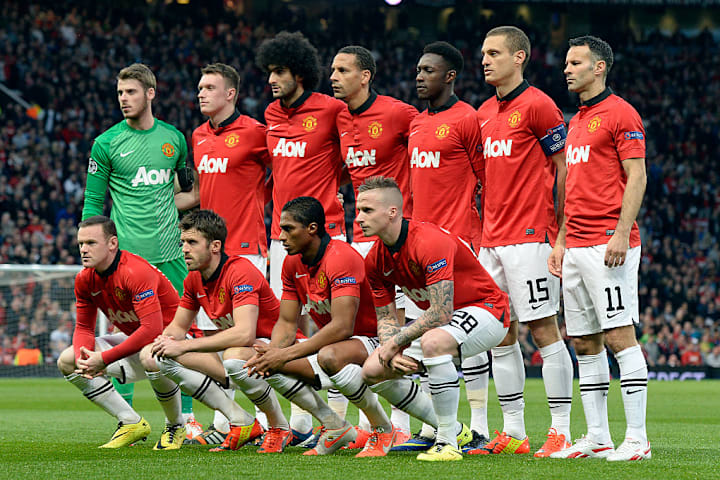
United plummeted from Premier League champions to seventh place within a single season, as a squad desperately in need of reinforcements received almost none—the late acquisition of Marouane Fellaini became a symbol of the dysfunction and lack of direction in the transfer market that would come to define the era.
A new manager, a new club executive and a squad in urgent need of rebuilding all arriving simultaneously proved to be a catastrophic combination. Any single one of those challenges might have been navigated in isolation.
But with additions of the calibre of Ronaldo and Bale—aged 28 and 24 respectively at the time—integrated under arguably the greatest manager in the sport's history, the transition could have been far more measured and considerably smoother.