
 ไทย
ไทย English
 中國人
中國人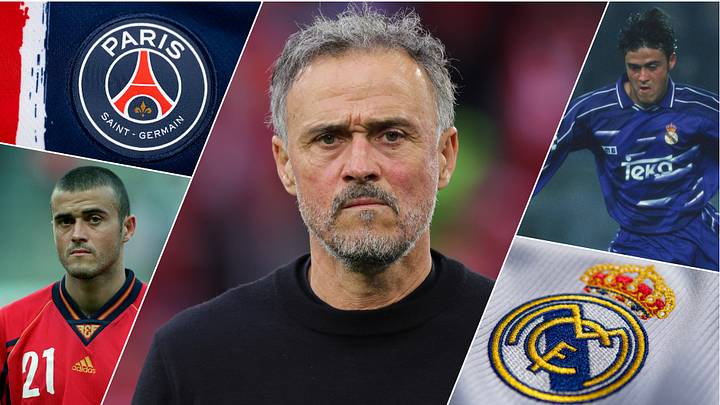
When the final whistle sounded at the Allianz Arena on Wednesday evening, it was confirmed that Luis Enrique will lead his side in consecutive Champions League finals.
The Paris Saint-Germain head coach stands at the top of his craft, and this latest accomplishment strengthens the case that he is presently the finest manager in club football.
Should PSG defeat Arsenal in the final in Budapest on May 30, he would become just the second manager to claim the trophy in back-to-back seasons—following in the footsteps of Zinedine Zidane, who famously lifted the trophy three consecutive times between 2016–18.
With Real Madrid in turmoil and widely expected to seek a new head coach this summer, questions have arisen as to why Enrique's name hasn't been more seriously mentioned in connection with the most coveted role in the sport. After all, Luis Enrique is not only Spanish, but also spent five years as a player at Real Madrid from 1991–95.
Nevertheless, there are clear reasons why such a reunion is highly improbable.
Luis Enrique in Madrid Would Be a 'Bombshell'
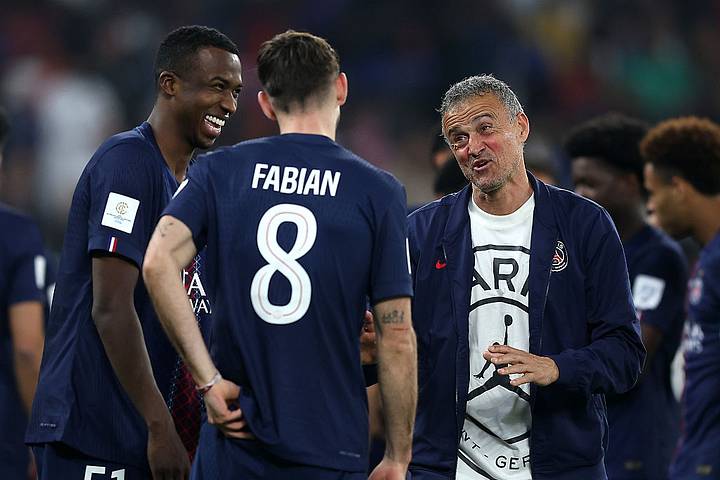
It's a subject that former Barcelona defender and ex-teammate of the PSG boss Abelardo addressed during Spanish broadcast coverage of the Champions League semifinal second leg on Movistar+.
Speaking in the post-match discussion, he said: "I wouldn't want Luis Enrique to go to Real Madrid because he's the best ... But it would be extraordinary. It would be a bombshell."
Former Madrid forward Fernando Morientes, also appearing as a pundit during the broadcast, responded: "I don't see it happening from either perspective. Florentino Pérez wouldn't consider Luis Enrique because of his history, and Luis Enrique would be even less interested in Real Madrid."
Luis Enrique remains contracted to the Paris club until 2027, but what exactly lies behind the tension between the manager and Madrid?
History on Both Sides of the Divide
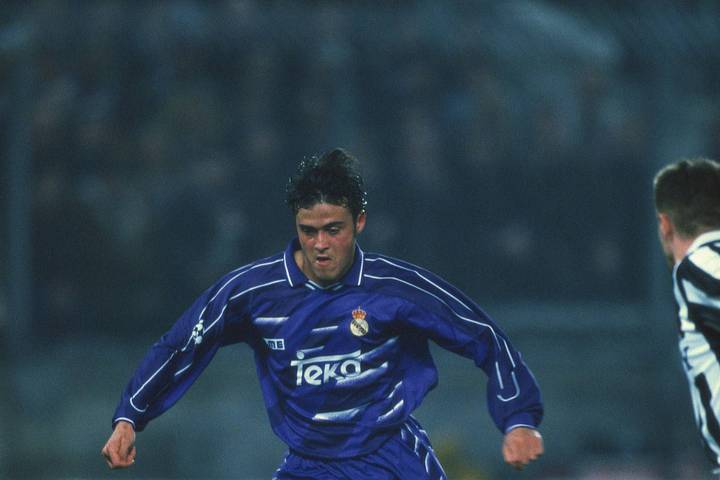
The former attacking midfielder was born in the northern Spanish region of Asturias and developed through the youth ranks at his hometown club Sporting Gijón.
Following a breakout season in 1990–91, in which he netted 15 La Liga goals, he joined Real Madrid and went on to spend five seasons at the Bernabéu.
Despite accumulating over 200 appearances for the club and claiming the La Liga title in 1995, Luis Enrique admitted to having "rarely felt appreciated by the Real Madrid supporters."
After netting in a memorable 5–0 Clásico victory, he moved to Barcelona on a free transfer in the summer of 1996—joining the likes of Michael Laudrup and Bernd Schuster in having represented both sides of the storied rivalry.
He later reflected on the transfer: "I was always a Barça fan. First a Sporting fan and then a Barça fan. After leaving Madrid and signing, I called my brother, a lifelong Barça supporter, and told him, 'Now we're really going to enjoy ourselves.'"
Further Antagonism
Titi and Luis Enrique discuss their shared connection with Barcelona and how that has influenced his coaching at PSG 🇪🇸🇫🇷 pic.twitter.com/6tQcTVQvVS
Enrique went on to spend eight years in Catalonia, establishing himself as a captain and a beloved figure at Barcelona.
Much to the dismay of Madridistas, he scored five times for Barça in Clásico fixtures, celebrating emphatically against his former club and deepening the animosity between himself and Real Madrid.
He would later remark: "For a Barça player, it's always satisfying to be booed at the Santiago Bernabéu."
Any prospect of a reconciliation between Enrique and Madrid was firmly extinguished when he took charge of Barcelona in 2014, memorably guiding the club to a treble the following year.
Furthermore, during his time as Spain national team manager, some pointed to what they saw as evidence of Enrique's Anti-Madridista leanings after he named a 2022 World Cup squad featuring just two Real Madrid players (Marco Asensio and Dani Carvajal).
More recently, when questioned about the prospect of one day managing Real Madrid, he quipped: "I don't think anyone in history has been both a player and coach for Barça and Madrid. I could make history ... but I'm not going to do it!"