
 ไทย
ไทย English
 中國人
中國人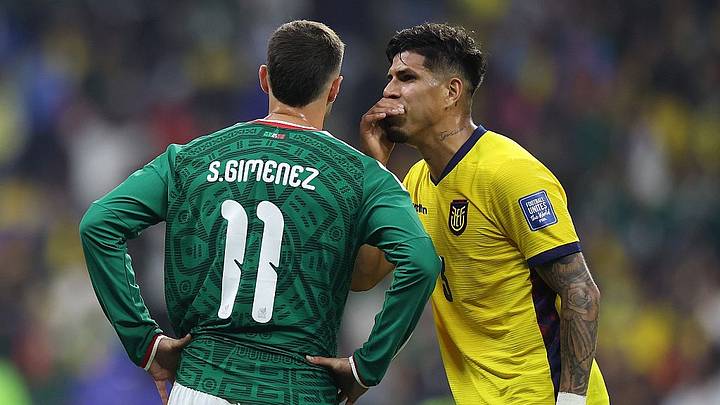
After witnessing the 'Prestianni Rule' in effect at the 2026 World Cup, UEFA announced it will not adopt the regulation that results in red cards for players who cover their mouths during confrontations with opponents.
FIFA introduced the new rule, approved by the International Football Association Board (IFAB) in April, at this summer's tournament as a means of combating discriminatory language used by players during on-pitch altercations. Those caught shielding their mouth — which conceals evidence of what is being said — during a hostile exchange are immediately shown a red card.
UEFA, however, is not following FIFA's lead. European football's governing body stated that referees should instead issue a yellow card to any player "attempting to conceal communication as an act of unsporting behavior."
UEFA added, "This is obviously without prejudice to any disciplinary investigation or proceedings that may follow as a consequence of, or in connection with, such behavior."

The reduced punishment will be applied across the Champions League, Europa League, and Conference League, as well as UEFA's international competitions — the European Championship and the Nations League — despite the original incident having taken place in Europe's top club competition.
The rule traces its origins to a confrontation between Benfica winger Gianluca Prestianni and Real Madrid star Vinicius Junior. The latter claimed Prestianni directed racist insults at him, while the accused maintained he had used a homophobic slur. Because his mouth was covered, no evidence existed to settle the matter.
FIFA moved to ensure swift and serious consequences for such actions going forward, but its trial at the 2026 World Cup failed to win over UEFA.
The 'Prestianni Rule' Enforced at the 2026 World Cup
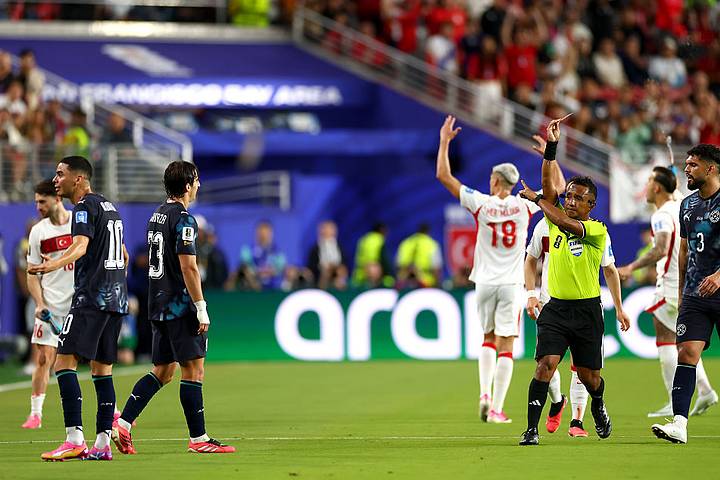
Through the round of 32 at the 2026 World Cup, two players have been dismissed for covering their mouths during heated exchanges with opponents. Paraguay forward Miguel Almirón became the first player to receive a red card under the new rule following an altercation with Mert Müldür during his side's 1–0 victory over Türkiye.
Ecuador defender Piero Hincapié was also sent off after directing remarks toward Mexico's Santiago Giménez with his hand covering his mouth. The red card was issued in stoppage time of La Tricolor's 2–0 loss to the host nation in the round of 32.
Both players received one-match bans. Future offenders may face harsher consequences, however, as FIFA's disciplinary committee holds the authority to impose longer suspensions.
While the two red cards appear straightforward, several other incidents in North America this summer have raised questions about the rule's application.
WIN FIFA WORLD CUP 2026™ FINAL TICKETS & OTHER PRIZES

Blurred Lines Cause Controversy

England midfielder Jude Bellingham drew widespread attention after being spotted covering his mouth while speaking to Ghana striker Jordan Ayew during a goalless group-stage draw. Despite this, the 22-year-old was not shown a red card, sparking widespread confusion over FIFA's interpretation of the rule.
The distinction between Bellingham's conduct and that of Almirón and Hincapié lies in the nature of the exchange — Bellingham was simply having a conversation with an opponent, with no confrontation or hostility involved. According to FIFA's head of referees Pierluigi Collina, that distinction is central to the rule.
"Players can continue to cover their mouth with an arm and the shirt because they may chat with friends," he said ahead of the tournament. "It's normal to chat before, during or after the match. So if the conversation is a friendly conversation, they can continue to do it without any problem.
"When the conversation is confrontational, covering the mouth means that you are doing something very wrong, potentially, and the sanction is the red card."
However, leaving referees to determine which conversations are acceptable and which warrant a red card is far from a reliable system. The new guideline also operates on an assumption of guilt rather than innocence — a key reason UEFA chose to step back and implement a lesser punishment in its competitions next season.